SITC of 320 kVA DG Sets in India
Introduction to Diesel Generators
How Diesel Engines Create Power
A diesel generator is essentially two main parts working together: a diesel engine and an electric generator. The engine's job is to create motion, and the generator's job is to turn that motion into electricity.
Like the gasoline engine in a car, a diesel engine is an internal combustion engine. It burns fuel inside cylinders to push pistons and create power. Most diesel engines operate on a four-step process, often called the four-stroke cycle.
The magic of a diesel engine happens during the compression stroke. Unlike a gasoline engine, which uses a spark plug to ignite a mix of air and fuel, a diesel engine has no spark plugs.
Instead, it compresses the air so intensely that its temperature skyrockets to over 540°C (1000°F). Only then is a fine mist of diesel fuel injected into the cylinder. The fuel immediately ignites in the hot, high-pressure air, creating a powerful explosion that drives the piston down.
This process is called compression ignition. It's the defining feature of a diesel engine.
From Motion to Electricity
The engine's only job is to create rotational motion. The up-and-down movement of the pistons turns a crankshaft, similar to how a cyclist's legs turn the pedals of a bike. This spinning crankshaft is the mechanical energy we need.
Now, the generator takes over. The engine's crankshaft is connected to the generator's main component, a rotor. The generator works on a principle called electromagnetic induction: moving a magnet past a coil of wire creates an electric current in that wire.
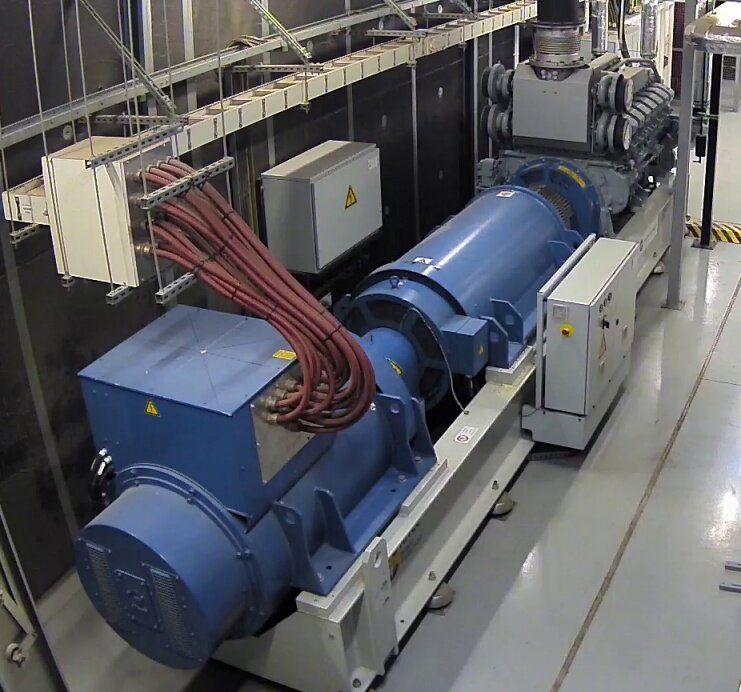
In a generator, the rotor is essentially a powerful electromagnet. The diesel engine spins this rotor at a constant speed inside a stationary housing called the stator, which is wrapped with tightly wound copper wires. As the rotor's magnetic field sweeps across these wires, it forces electrons to move, generating a steady flow of alternating current (AC) electricity. This is the same type of electricity that powers our homes and businesses.
Why Backup Power Is Crucial
In many parts of the world, including India, the main power grid can be unreliable. Power outages, or load shedding, can disrupt daily life and cripple businesses. This is where diesel generators become essential.
They provide an independent source of power, ensuring that critical operations can continue without interruption.
| Industry | Importance of Uninterrupted Power |
|---|---|
| Healthcare | Life-support machines in hospitals, refrigeration for medicines, and surgical equipment must always have power. |
| Manufacturing | A sudden shutdown can damage machinery, ruin products, and lead to significant financial losses. |
| IT & Data Centers | Servers that store our data and power online services need constant power and cooling to prevent data loss and system failure. |
| Telecommunications | Cell towers and network infrastructure rely on backup power to keep communication lines open, especially during emergencies. |
Beyond these critical sectors, diesel generators power construction sites, outdoor events, and remote communities that aren't connected to the main grid. They act as a reliable safety net, ready to supply electricity whenever and wherever it's needed.
This simple but powerful combination of an engine and a generator plays a vital role in keeping our modern world running smoothly.
Ready to check your understanding?
What is the primary function of the diesel engine component in a diesel generator set?
How does a diesel engine ignite its fuel?
By understanding how diesel generators work, we can see why they are a crucial piece of infrastructure for so many industries.