Sitar Performance and Theory
Sitar Ergonomics
Finding Your Foundation
Your relationship with the sitar begins with how you hold it. A stable and relaxed posture is not just about comfort; it's the bedrock of clear tone and fluid playing. The traditional sitting position for sitarists is a yoga posture called Siddhasana (the Perfect Pose). While variations exist, this is the ideal starting point.
Sit on the floor with your legs extended. Bend your left knee and place the sole of your left foot against your right inner thigh. Then, bend your right knee and tuck your right foot into the space between your left calf and thigh. Your spine should be straight but not rigid.
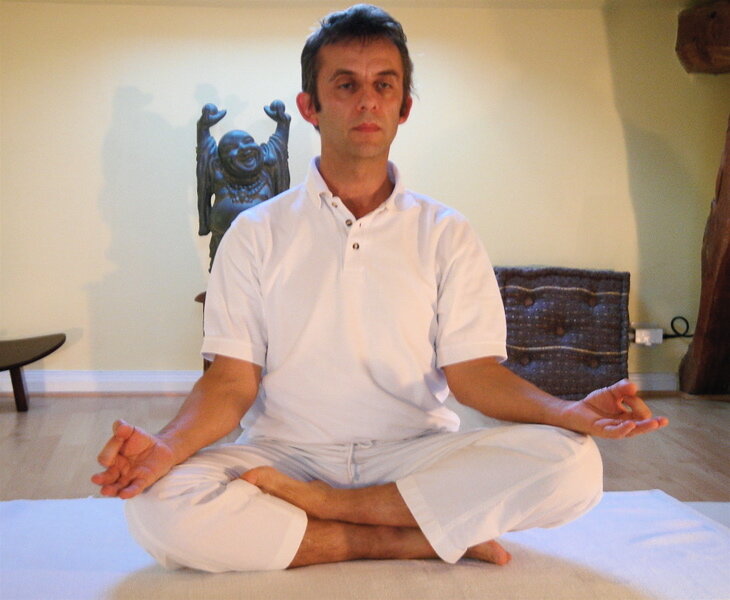
Once you're seated, the sitar rests in your lap. The main gourd, or tumba, should sit comfortably on the arch of your left foot. Your right forearm rests lightly on top of the tumba, helping to stabilize the instrument. The long neck, known as the dand, should angle upwards at about 45 degrees, pointing towards your left shoulder. This angle isn't just for show; it uses gravity to help your left hand move smoothly along the frets without having to support the instrument's weight.
The Striking Hand
In sitar playing, your right hand is the engine. It drives the sound using a wire plectrum called a mizrab, worn on the tip of your index finger. The fit is crucial. It should be snug enough not to fly off during vigorous playing but not so tight that it cuts off circulation. You may need to gently bend and shape the mizrab to conform to the curve of your fingertip.
Mizrab
noun
A wire plectrum worn on the index finger of the right hand to strike the strings of a sitar.
With the mizrab fitted, place your right thumb firmly on the neck (the dand), just behind the top gourd. This is your anchor point. It provides stability and leverage for your index finger to strike the strings. The striking motion should come from your wrist and finger, creating a quick, decisive pluck. Your goal is a sound that is full and resonant, neither too thin nor overly harsh. This anchor point allows for powerful and controlled strokes, essential for articulating the complex rhythms and melodic phrases in Bilawal and Kalyan thaats.
The Melodic Hand
Your left hand creates the melody. Unlike a guitar, where you press down directly behind a fret, on a sitar you press the string down in the space between the curved frets. The key is to use the very tips of your fingers, not the fleshy pads. Your fingers should be curved, like you're holding a ball, allowing for precision and agility.
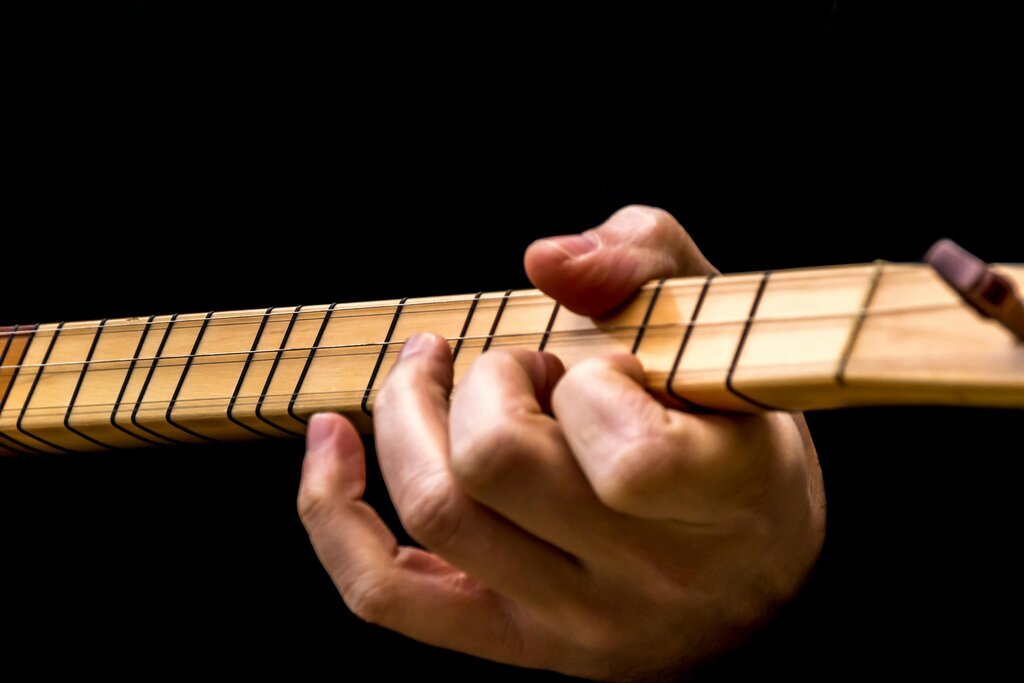
This curved posture is vital for two reasons. First, it allows you to press the string with minimal effort and maximum precision. Second, and more importantly, it prevents your fingers from accidentally touching the sympathetic strings running underneath the main frets. These sympathetic strings are not played directly by the left hand but vibrate in resonance with the notes you play, creating the sitar's signature shimmering sound. Muting them with sloppy finger placement would deaden the instrument's voice.
There is a recommended body posture and hand position for playing every musical instrument, allowing efficient and quick movements without blockage.
Now that you understand the fundamentals of sitar ergonomics, let's test your knowledge.
What is the traditional yoga posture recommended for playing the sitar?
What is the primary reason for angling the sitar's neck upwards at approximately 45 degrees?
Mastering this posture and hand positioning is the first, most crucial step. It builds the physical foundation for every note you will play.