Single-Member LLCs as Disregarded Entities
Introduction to Single-Member LLCs
Your Business, Legally Separate
If you work for yourself, you're likely a sole proprietor by default. It’s the simplest business structure, but it comes with a major risk: you and your business are the same legal entity. If a client sues your business or you rack up business debt, your personal assets—like your car, home, and savings—are on the line.
A single-member Limited Liability Company, or LLC, changes that. It creates a legal barrier between you and your business. Think of it as putting a protective wall around your personal life.
An LLC is a limited liability company, which helps protect you (the business owner) from losing your personal assets (like your home or car) if someone were to sue your business.
This separation is the core concept of "limited liability." Your business becomes its own legal person, capable of owning property, signing contracts, and taking on debt. If the business fails or gets sued, creditors and plaintiffs can generally only go after the business's assets, not your personal ones.
However, this protection isn't absolute. If you personally guarantee a business loan or engage in fraud, a court can
This protection isn't absolute. If you personally guarantee a business loan or engage in fraud, a court can "pierce the corporate veil" and hold you personally responsible. That's why it's crucial to keep your business and personal finances completely separate, with distinct bank accounts and records.
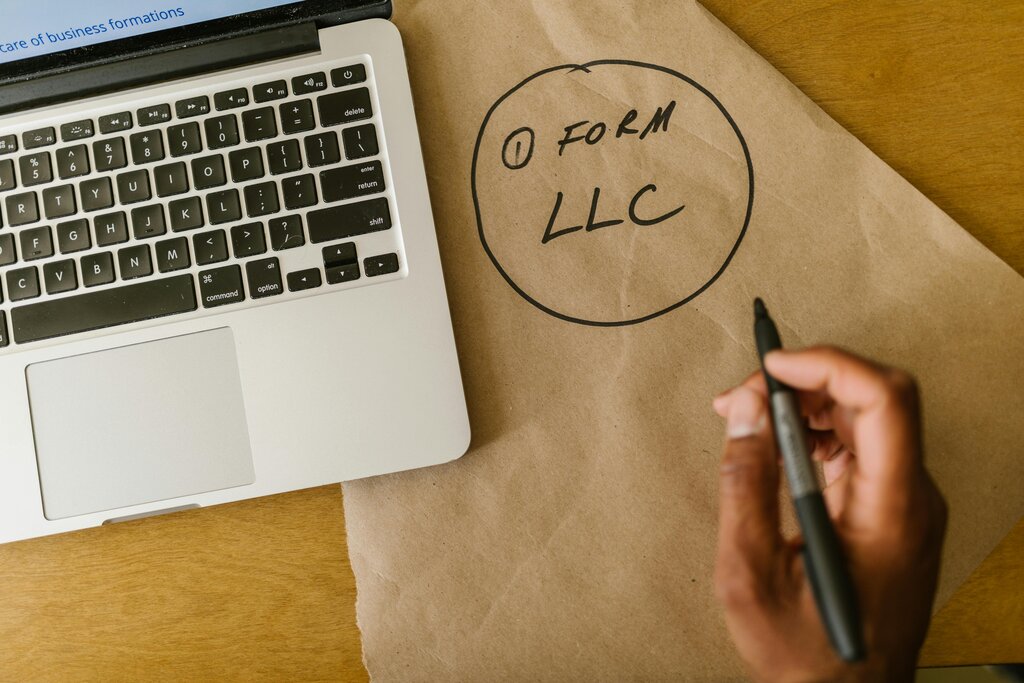
How to Form an LLC
Creating an LLC is a formal legal process that happens at the state level. While the specifics vary from state to state, the general steps are quite similar.
-
Choose a Business Name: Your LLC's name must be unique in your state and typically must end with an indicator like "LLC" or "Limited Liability Company."
-
Appoint a Registered Agent: This is a person or company designated to receive official legal and government correspondence on behalf of your LLC. You can often serve as your own registered agent if you have a physical address in the state.
-
File Articles of Organization: This is the core document that officially creates your LLC. You'll file it with your state's Secretary of State or a similar agency. It usually includes basic information like the LLC's name, address, and the name of its registered agent.
The Articles of Organization (also called a Certificate of Formation in some states) is the official document that establishes your LLC.
-
Create an Operating Agreement: While not always required by law for single-member LLCs, this internal document is highly recommended. It outlines how your business will be run, how decisions are made, and what happens in various scenarios, like if you decide to close the business. It helps prove that your LLC is a legitimate, separate entity.
-
Obtain Necessary Licenses and Permits: After your LLC is formed, you still need to comply with federal, state, and local regulations, which may include obtaining business licenses or permits specific to your industry.
Is It Worth It?
For many freelancers and solo entrepreneurs, forming an LLC is a smart move. It provides peace of mind by protecting personal assets from business risks. It can also add a layer of professionalism and credibility to your operations, as some clients prefer to work with formally registered businesses.
While there are filing fees and some ongoing compliance requirements, the legal protection is often well worth the cost and effort. It establishes a clear, legal foundation for your business, allowing you to focus on growth without worrying that a business mistake could jeopardize your personal financial security.
Ready to check your understanding?
What is the primary financial risk associated with operating as a sole proprietor?
What is the main purpose of forming a single-member LLC?
By understanding the structure and formation process, you can make an informed decision about whether an LLC is the right choice for your business.