Simulation for ULD Management
Introduction to ULDs
The Building Blocks of Air Cargo
Imagine trying to load a plane with thousands of individual boxes, suitcases, and parcels. It would be a slow, chaotic process, like trying to pack for a trip by throwing everything into the car one item at a time. In the fast-paced world of air freight, this simply wouldn't work. The solution is to group many small items into one large, manageable unit.
Unit Load Device
noun
A pallet or container used to load freight, mail, and baggage onto wide-body aircraft and specific narrow-body aircraft. It allows a large quantity of cargo to be bundled into a single unit.
Think of a Unit Load Device, or ULD, as a standardized packing box for airplanes. Its purpose is to consolidate cargo into a single unit that can be moved quickly and efficiently. This simple concept revolutionized air logistics, making it possible to load and unload an entire plane in a fraction of the time it would otherwise take.
Containers and Pallets
ULDs come in two main varieties: containers and pallets. While they serve the same basic function, they have different forms and uses.
Aircraft containers are enclosed boxes, usually made of aluminum, that protect their contents from the elements and from damage. They are shaped to fit perfectly against the curved walls of an aircraft's fuselage, maximizing the use of space.
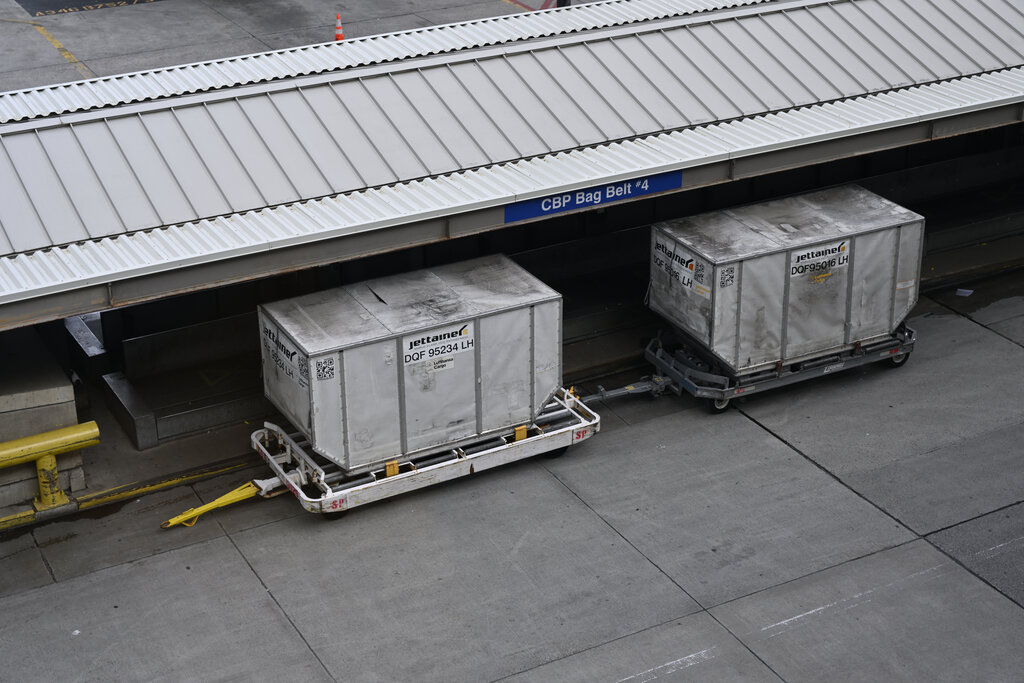
Aircraft pallets, on the other hand, are large, flat sheets of aluminum with rims designed to lock into the aircraft's cargo retention system. Cargo is stacked on the pallet, and a net is strapped over the top to secure it. Pallets are ideal for oversized or irregularly shaped items that wouldn't fit inside a standard container.
Both types are designed to interface directly with an airplane's loading system, using rollers on the floor of the cargo hold to slide into place. Here’s a quick comparison:
| Feature | Container | Pallet |
|---|---|---|
| Structure | Enclosed box | Flat base |
| Protection | High (weather, damage) | Low (covered by net) |
| Best For | Standard boxes, loose items | Oversized, irregular cargo |
| Security | High | Moderate |
| Space Use | Contoured to fit fuselage | Flexible for bulky items |
Why ULDs Matter
The importance of ULDs in air cargo operations can't be overstated. They are the key to efficiency and safety. By consolidating cargo, ULDs dramatically reduce the time and labor required for loading and unloading. A wide-body jet can be turned around in as little as 90 minutes, a feat that would be impossible without pre-loaded ULDs.
Safety is another critical benefit. ULDs are designed to lock securely into the aircraft's structure. This prevents cargo from shifting during flight, which could dangerously alter the plane's center of gravity and balance. Each ULD has strict weight and balance limits that must be followed to ensure the aircraft remains stable and safe to fly. They also protect the aircraft's interior from damage during loading.
Ultimately, ULDs allow for the safe, secure, and swift movement of goods, forming the backbone of the global air freight system.
Time to review what you've learned about these essential tools of air cargo.
Now, let's test your knowledge.
What is the primary purpose of a Unit Load Device (ULD) in air freight?
An aircraft pallet is the best choice of ULD for oversized or irregularly shaped cargo.
Understanding ULDs is the first step in mastering the logistics of air transportation. These simple devices are what make the complex dance of global air cargo possible.