Simulation Engineering Fundamentals
Introduction to Simulation Engineering
What Is Simulation Engineering?
At its core, simulation engineering is about building a virtual copy of a real-world system to see how it behaves. Think of it as a dress rehearsal for reality. Instead of building a full-scale airplane to see if it flies, engineers create a detailed computer model to test its aerodynamics. This allows them to identify design flaws, explore different scenarios, and optimize performance, all without the risk and expense of a real-world failure.
The purpose is to answer "what if" questions safely and efficiently. What if we change the layout of a factory floor? What if a new virus spreads through a population? What if a trading algorithm encounters a sudden market crash? By modeling these systems, we can predict outcomes, understand complex interactions, and make better decisions. It's used everywhere, from designing safer cars and planning efficient supply chains to training surgeons on virtual patients.
From Physical Models to Digital Twins
The idea of modeling isn't new. For centuries, engineers built small-scale physical models, like miniature ships in water tanks, to test their designs. But the game changed with the advent of computers. In the 1940s, scientists working on the atomic bomb used statistical sampling methods, later called the Monte Carlo method, to simulate complex nuclear processes that were too difficult to solve with traditional math.
As computing power grew, so did the complexity of simulations. Analog computers gave way to digital ones, allowing for more detailed and accurate models. What started as a niche tool for military and scientific research has now become a cornerstone of modern engineering and business, thanks to the exponential increase in processing speed and data availability.
Types of Simulations
Not all systems behave the same way, so we need different types of simulations to model them accurately. The main distinction lies in how the model handles time.
Discrete-event simulation tracks systems where changes happen at specific moments. Think of a checkout line at a grocery store. The state of the system—the number of people in line—only changes when a customer arrives or a customer finishes paying. Between these "events," nothing changes.
Continuous simulation is for systems where the state is constantly changing. The flow of water through a dam, the trajectory of a satellite, or the chemical reactions in a vat are all examples. These are often described by differential equations, as the variables change smoothly over time.
Hybrid simulation is a mix of the two. Consider a manufacturing process where a chemical is heated in a tank (a continuous process), but the process is interrupted when a machine occasionally breaks down (a discrete event).
Building a Simulation Model
Every simulation model is built from a few key components. Entities are the objects that move through the system, like cars in a traffic model or patients in a hospital simulation. Resources are things that entities use, such as a traffic light or a hospital bed. State variables describe the condition of the system at any given moment, like the number of cars waiting or the number of beds occupied. Finally, events are the triggers that cause the system's state to change.
Developing a simulation follows a structured process. It’s not just about writing code; it's about systematically creating a model that is both credible and useful for decision-making.
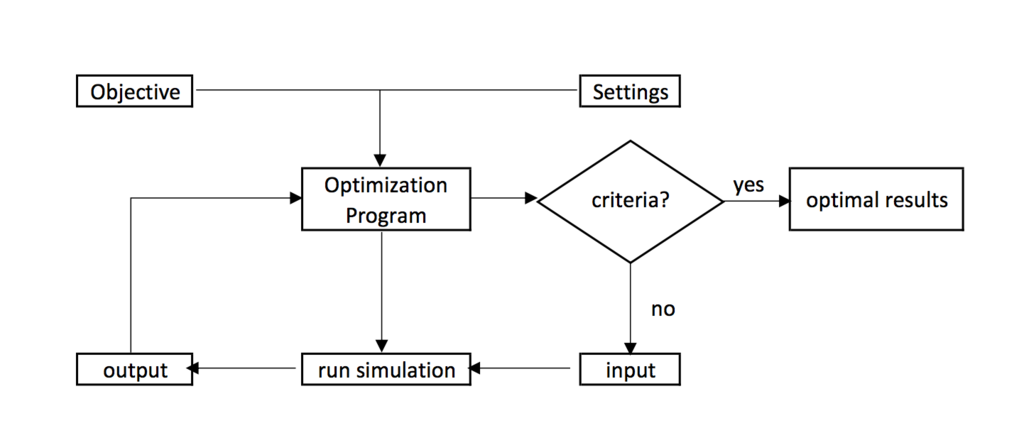
The typical workflow involves:
- Defining the Problem: Clearly state the question you want to answer. A vague goal leads to a useless model.
- Collecting Data: Gather real-world data to build an accurate model. If you're simulating a call center, you need data on call arrival rates and service times.
- Building the Model: Translate the system's logic and data into a simulation program.
- Verification and Validation: This is a crucial two-part step. Verification asks, "Did we build the model right?" (is it bug-free?). Validation asks, "Did we build the right model?" (does it accurately represent reality?).
- Experimentation: Run the simulation with different inputs to test your "what if" scenarios.
- Analyzing Results: Interpret the output data to draw conclusions and make recommendations.
By following this process, engineers can create powerful tools that provide insight into complex systems, helping to drive innovation and efficiency across countless fields.