Simulating History with Artificial Intelligence
Algorithmic Historiography
Rebuilding the Past with Code
History isn't just a collection of facts; it's a network of interconnected events, ideas, and influences. Algorithmic historiography uses computational tools not just to find information, but to reconstruct these networks. The goal is to map the lineage of ideas and the sequence of events with mathematical precision.
By treating history as a massive dataset, we can identify crucial 'branching points'—moments where a single event or idea could have sent ripples through time, creating a different future. This approach transforms history from a static narrative into a navigable, data-driven map, laying the groundwork for exploring what might have been.
AI's capacity to process immense volumes of data, identify complex patterns, and perform sophisticated analyses at speeds unattainable by humans is opening new frontiers in historical scholarship.
Tracing Ideas Through Time
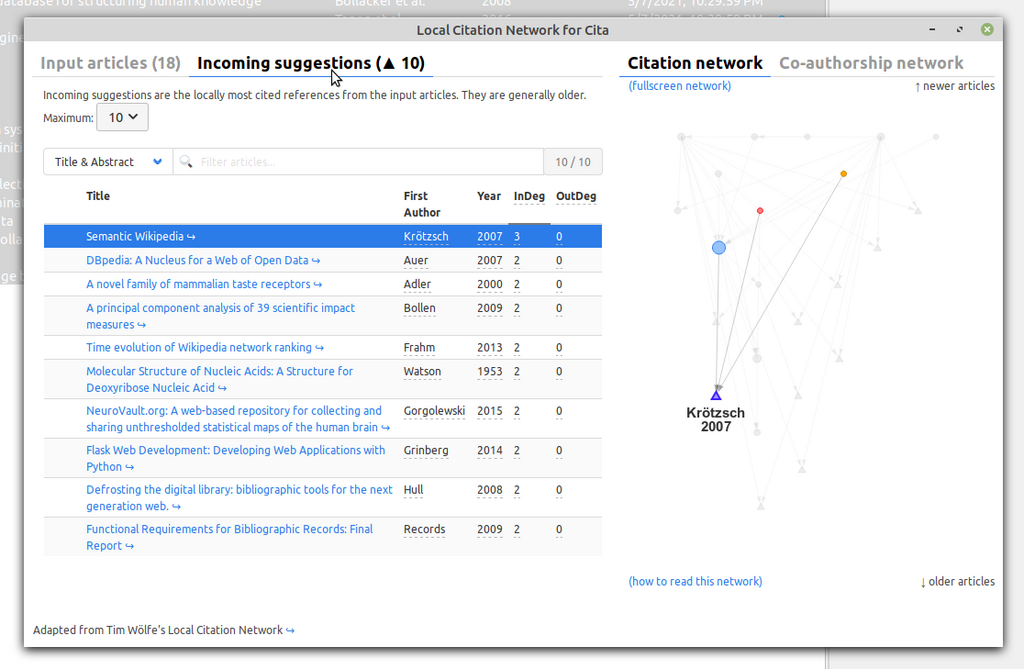
One of the most powerful methods for tracking intellectual history is citation network analysis. Think of a citation as a footprint. When one scholar references another, they create a direct link, a documented moment of influence. By mapping thousands or even millions of these links, we can visualize how ideas spread, evolve, and compete over time.
This goes far beyond academic papers. We can analyze citations in legal rulings, references in philosophical treatises, or even patterns in news reporting. These networks reveal the influential hubs—the key thinkers or pivotal events that shaped their eras. The analysis allows us to move past manual 'historiograms' to automated systems like , which can process vast libraries of text to map the intellectual landscape.
Mapping the Narrative Landscape
Beyond direct citations, we can analyze the language of history itself. Co-word analysis is a technique that identifies pairs or groups of words that frequently appear together in a body of texts. If documents from the 1850s often mention "railroad" and "expansion" in the same breath, it signals a dominant theme of the era. If, by the 1890s, "railroad" is more often paired with "regulation," it reflects a shift in public and political discourse.
To make sense of this complex web of relationships, we use techniques like (MDS). MDS takes the proximity data from co-word analysis and plots it as a map. Concepts that are thematically close appear near each other, while unrelated concepts are pushed apart. The result is a visual representation of a historical narrative, showing which ideas were central and which were on the periphery.
Training Models on the Past
The raw material for all this analysis is text—a massive amount of it. To build models that understand historical context, we need specialized training corpora. These aren't just general web scrapes; they are curated collections of digitized books, newspapers, letters, and official documents from specific time periods.
Training a model on, say, texts exclusively from the 18th century creates what we might call a Historical Large Language Model (HLLM). Such a model learns the vocabulary, syntax, and, most importantly, the common associations and worldview of that era. When we later use this model to analyze documents or simulate dialogues, its outputs are grounded in a historically consistent context. This is crucial for establishing the 'official' narrative of a period before we begin exploring counterfactuals.
These methodologies—citation analysis, co-word mapping, and training on historical corpora—give us a structured, evidence-based view of the past. They allow us to see history not as a simple timeline, but as a dynamic network of interacting forces, ready to be analyzed and, ultimately, re-imagined.