Simple Systems and Logic
Introduction to Systems Thinking
Seeing the Whole Picture
Have you ever tried to fix a complex problem, only to find your solution created new, unexpected issues? This often happens when we focus on a single piece of the puzzle without seeing how it connects to everything else.
Systems thinking is a way of looking at the world that shifts our focus from individual parts to the whole. It's about understanding how things influence one another within a larger context. Instead of just analyzing a broken gear in a machine, you look at how that gear's failure affects the entire operation.
Systems thinking attends to the connections between things, events and ideas.
Think about an orchestra. You could study the violin in isolation, learning every detail about its strings and wood. But you'd miss the music. The music only happens when the violin plays with the cellos, the horns, and the drums. Systems thinking is about listening to the whole orchestra, not just one instrument.
It's All Connected
The core of systems thinking is recognizing that everything is interconnected. In any system, from an ecosystem to a business, the components are linked. A change in one area can send ripples throughout the entire system. These relationships aren't always simple, one-way streets; they often form complex webs of influence and feedback.
This diagram shows a simplified ecosystem. More wolves lead to fewer deer. Fewer deer allow more plants to grow. More plants can support a larger deer population, which in turn can support more wolves. Each element depends on the others.
This same principle applies everywhere. A company might launch a new marketing campaign (one part) that increases sales, but this also strains the customer support team and slows down shipping, potentially harming the company's reputation (the whole system).
More Than the Sum of Its Parts
When parts of a system interact, they can create properties that the individual parts don't have on their own. This is called emergence. A single water molecule isn't wet. Wetness is an emergent property that appears when you have many water molecules together.
A traffic jam is another perfect example. A single car isn't a jam. The jam emerges from the interactions of many cars reacting to each other in a limited space. You can't understand a traffic jam by just studying one car; you have to look at the system.
A system's behavior comes from the interactions of its parts, not just from the actions of the parts themselves.
This idea is crucial. It tells us that to solve complex problems, we need to focus on changing the interactions and structure of the system, not just fixing or replacing the individual parts.
Systems Thinking in Action
So, how is this useful in the real world? Its applications are broad.
- Business: A manager might use systems thinking to understand how a change in the compensation plan could affect not only motivation but also teamwork, employee turnover, and product quality.
- Healthcare: Doctors can view a patient not just as a collection of symptoms, but as a complex system where physical health, mental state, lifestyle, and environment are all interconnected.
- Environmental Management: Instead of just building a dam to control flooding, planners use systems thinking to consider the dam's impact on fish migration, local economies, and downstream ecosystems.
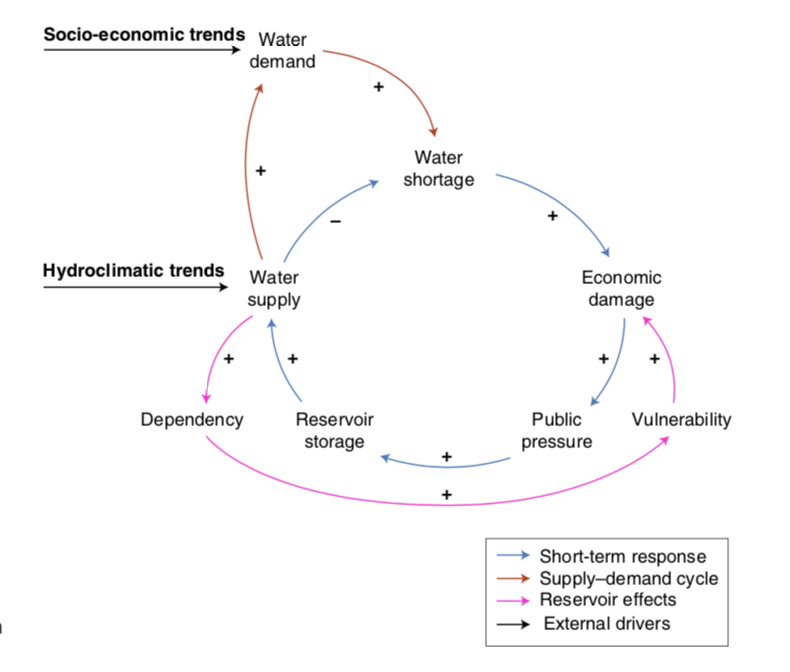
By adopting a holistic perspective, we can anticipate unintended consequences and design more effective, lasting solutions. We move from simply reacting to problems as they appear to understanding and influencing the underlying structures that cause them.
Ready to check your understanding of these core concepts?
What is the primary focus of systems thinking?
A traffic jam is used as an example of an emergent property. Why?
Systems thinking is a powerful mental model. It encourages us to see connections, look for the big picture, and appreciate that simple actions can have complex results.