Shipping Production-Ready Software
Software Development Lifecycle
The Software Roadmap
Building software without a plan is like constructing a house without blueprints. You might end up with something, but it probably won't be stable, secure, or what you actually wanted. The Software Development Lifecycle, or SDLC, provides the necessary framework. It’s a structured process that guides a project from an initial idea to a finished, working product and beyond.
At the core of software engineering is the SDLC—a structured process that guides projects from conception to deployment and beyond.
Think of it as a roadmap. It breaks down the enormous task of creating software into manageable, sequential phases. Following this lifecycle helps ensure the final product is high-quality, meets user needs, and is delivered on time and within budget. It brings order to the potential chaos of a complex project.
The Six Phases
The SDLC is typically broken down into six distinct phases. While some development models might blend or rename them, the core functions remain the same. Each phase has a specific purpose and builds upon the work of the previous one.
1. Planning and Requirement Analysis This is the foundation. Before writing a single line of code, the team defines the project's goals. They ask critical questions: What problem are we solving? Who is this for? What features does it need? The output is a requirements document that acts as a guide for the entire project.
2. Design With clear requirements, the team creates the project's blueprint. This phase determines the system architecture, user interface (UI), user experience (UX), and technical specifications. The design phase answers the how: how will the software be built to meet the requirements?
3. Implementation (Coding) This is where the design is translated into actual code. Developers write the software, breaking down the design into smaller units or modules and building them out. It's often the longest phase of the lifecycle.
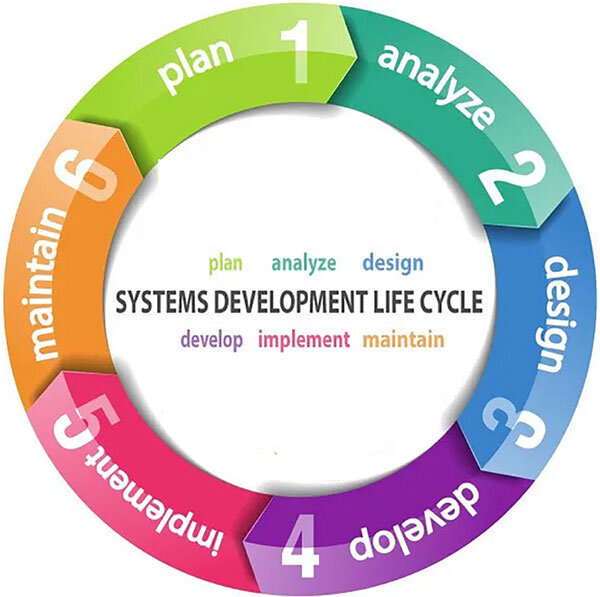
4. Testing The newly written code is thoroughly tested to find and fix defects. The Quality Assurance (QA) team checks if the software meets the requirements from the planning phase and works as expected. Testing is crucial for delivering a reliable and stable product.
5. Deployment Once the software is tested and approved, it's released to users. This might involve deploying it to a server, listing it in an app store, or installing it on customers' computers. The goal is to make the software available and operational for the end-user.
6. Maintenance The work isn't over after launch. The maintenance phase involves monitoring the software, fixing bugs that appear in the live environment, and making updates or enhancements based on user feedback. This phase ensures the software remains functional and relevant over time.
Putting It Into Practice
Simply knowing the phases isn't enough. How a team moves through them defines their methodology. Two popular approaches that enhance the traditional SDLC are Agile and DevOps.
Agile is an iterative approach. Instead of a single, long pass through the SDLC, Agile teams work in short cycles called "sprints." They plan, design, build, and test small pieces of the software, delivering value incrementally. This allows for flexibility and quick adaptation to changing requirements.
DevOps is a culture and set of practices that combines software development (Dev) and IT operations (Ops). The goal is to shorten the development lifecycle by automating and integrating the different phases, especially testing and deployment. It focuses on collaboration and communication to build, test, and release software faster and more reliably.
Understanding a software agency's approach to the SDLC is key to evaluating its workflow. Do they follow a structured process? Are they adaptable? Their methodology reveals a lot about their ability to deliver high-quality software efficiently.
By following a defined lifecycle and choosing an appropriate methodology, development teams can navigate the complexities of building software, turning a great idea into a tangible, valuable product.