Ship Sailing and the Flat Earth Myth
Introduction to Sailing Physics
The Unseen Engine
A sail is much more than a big piece of cloth that catches the wind. It's actually an airfoil, working on the same principles as an airplane wing. When wind flows across its curved surface, it creates two critical forces: lift and drag. Many people think a sailboat is simply pushed by the wind from behind. While that's true when sailing directly downwind, most of the time the boat is being pulled forward by the power of lift.
Lift is the force generated perpendicular to the wind flow. As wind travels over the curved outer side (the leeward side) of the sail, it speeds up, creating a low-pressure zone. The wind on the inner side (the windward side) slows down, creating a high-pressure zone. This pressure difference creates a net force that pulls the sail, and therefore the boat, forward and sideways.
Drag is the force that acts parallel to the wind flow, resisting the boat's forward motion. It's a form of aerodynamic friction. While some drag is unavoidable, a well-trimmed sail maximizes lift while minimizing drag. The combination of lift and drag creates a total aerodynamic force on the sail. This force can be broken down into two components: one that drives the boat forward and another that pushes it sideways.
The boat's keel or centerboard, a large fin under the hull, prevents the sideways force from pushing the boat sideways through the water. By resisting this lateral motion, it ensures the forward driving force is what primarily moves the boat.
Wind Isn't What It Seems
When you're sailing, the wind you feel isn't the true wind. It's a combination of the true wind (the one a weather station would measure) and the wind created by the boat's own forward motion. This combination is called the apparent wind, and it's the only wind the sails care about.
Think about riding a bike on a perfectly calm day. You still feel a breeze on your face. That's the wind created by your own speed. If there's also a crosswind, the breeze you feel will be a mix of your speed-wind and the crosswind. That's apparent wind.
The faster a sailboat goes, the more its own motion influences the apparent wind, pulling the wind's direction further toward the front of the boat and increasing its speed. This is why sailors trim their sails based on the apparent wind, not the true wind.
Controlling the Power
A sailor's job is to constantly adjust the sails to get the best angle to the apparent wind. This is called trimming. By pulling ropes (called sheets) to change the sail's angle and shape, a sailor can control the amount of lift and drag being generated.
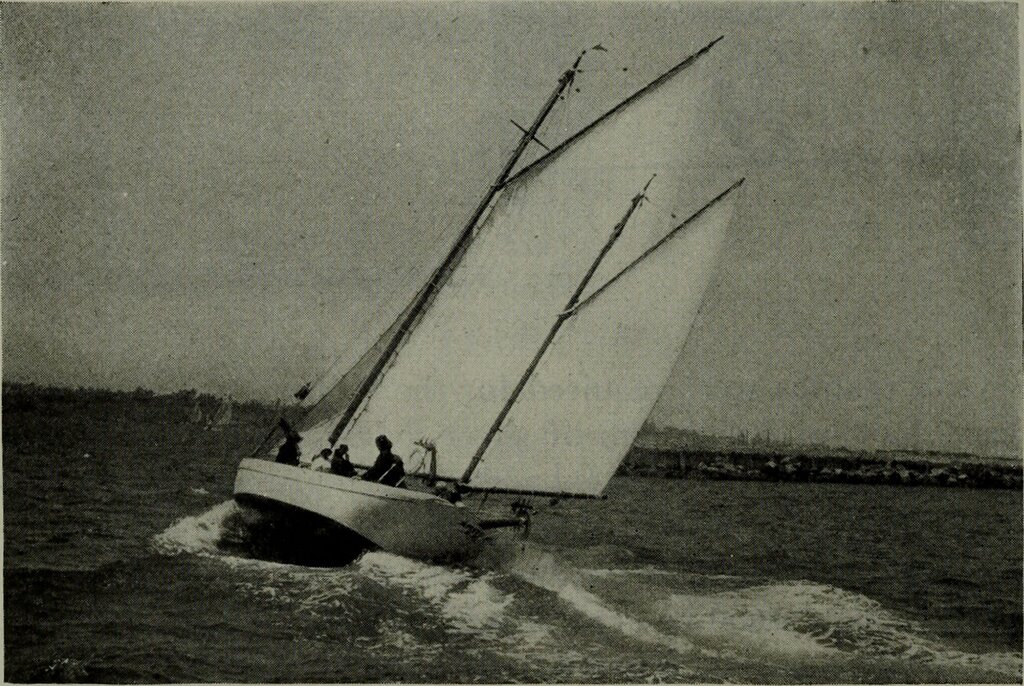
When sailing toward the wind (upwind), the sail is pulled in tight and flat to create an efficient, wing-like shape that maximizes lift. When sailing away from the wind (downwind), the sail is let out wide to act more like a parachute, catching the wind and using drag for propulsion.
The boat's direction is controlled by the rudder, but its engine is the wind. Understanding how to harness the forces of lift and drag by trimming sails to the apparent wind is the fundamental skill of sailing.