Shia Islam An Introduction
Introduction to Islam
Submission to One God
At its heart, Islam is a simple and profound concept: submission to the will of God. The very word “Islam” means submission in Arabic. The central belief, known as Tawhid, is the absolute oneness of God, or Allah in Arabic. This isn't just a belief in one God over many, but a belief in a single, indivisible creator who is unique, merciful, and all-powerful. Everything in the universe is seen as a sign of Allah's creation and power.
God
This faith asserts that God has sent messengers throughout history to guide humanity, including figures like Abraham, Moses, and Jesus. Muslims believe that these prophets all brought the same fundamental message of monotheism and righteous living.
Islam is viewed not as a new religion, but as the final and complete version of a faith that has existed since the beginning of humanity.
The final messenger in this line of prophets is Muhammad, who lived in the 7th century in Arabia. Muslims believe that God revealed His final word to Muhammad through the angel Gabriel. This revelation is the holy book of Islam, the Quran.
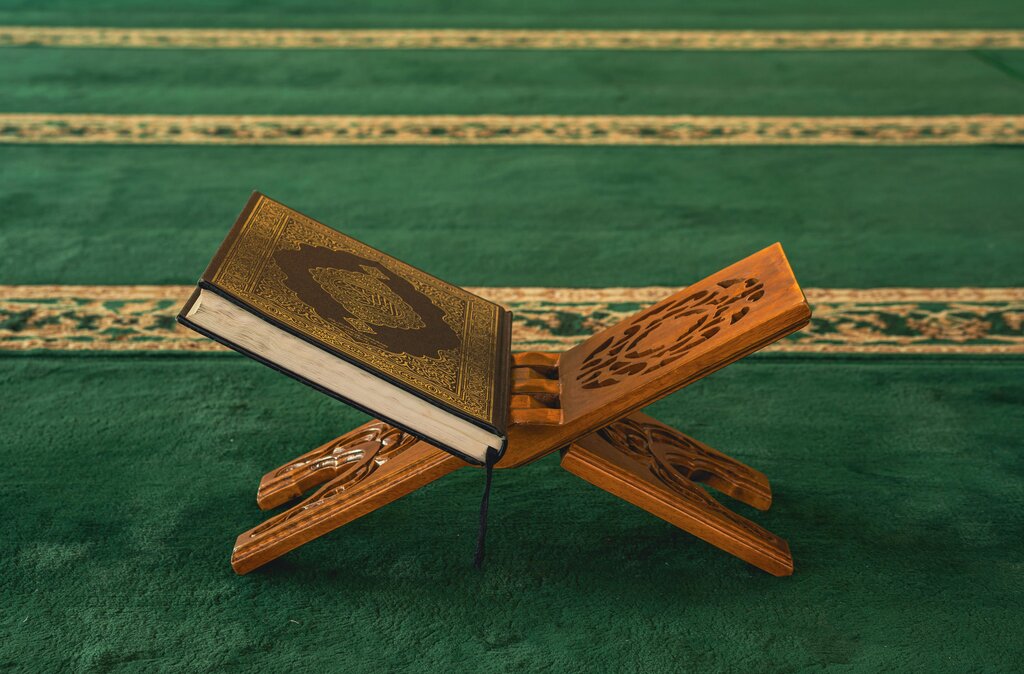
The Quran is the primary source of Islamic law, ethics, and guidance. It covers everything from broad principles of justice and kindness to specific rules for daily life. Alongside the Quran, Muslims look to the Sunnah, the example of Prophet Muhammad's life, as a model for how to live out their faith. His actions and sayings, recorded in collections called Hadith, provide practical guidance on applying the Quran's teachings.
The Five Pillars
Islamic practice is structured around five core duties known as the Five Pillars. These acts of worship provide a framework for a Muslim's life, strengthening their relationship with God and the community. They are obligatory for all able-bodied Muslims.
| Pillar | Arabic Name | Meaning |
|---|---|---|
| Faith | Shahada | The declaration that there is no god but Allah, and Muhammad is His messenger. |
| Prayer | Salat | The ritual prayer performed five times a day, facing the Kaaba in Mecca. |
| Charity | Zakat | The obligatory giving of a portion of one's wealth to the poor and needy. |
| Fasting | Sawm | Abstaining from food and drink from dawn until dusk during the month of Ramadan. |
| Pilgrimage | Hajj | The journey to Mecca that every Muslim must make once in their lifetime if they are able. |
The Shahada is the foundation. Uttering this simple phrase with conviction is the entry point into the faith. It affirms the core belief in one God and the role of Muhammad as His final prophet.
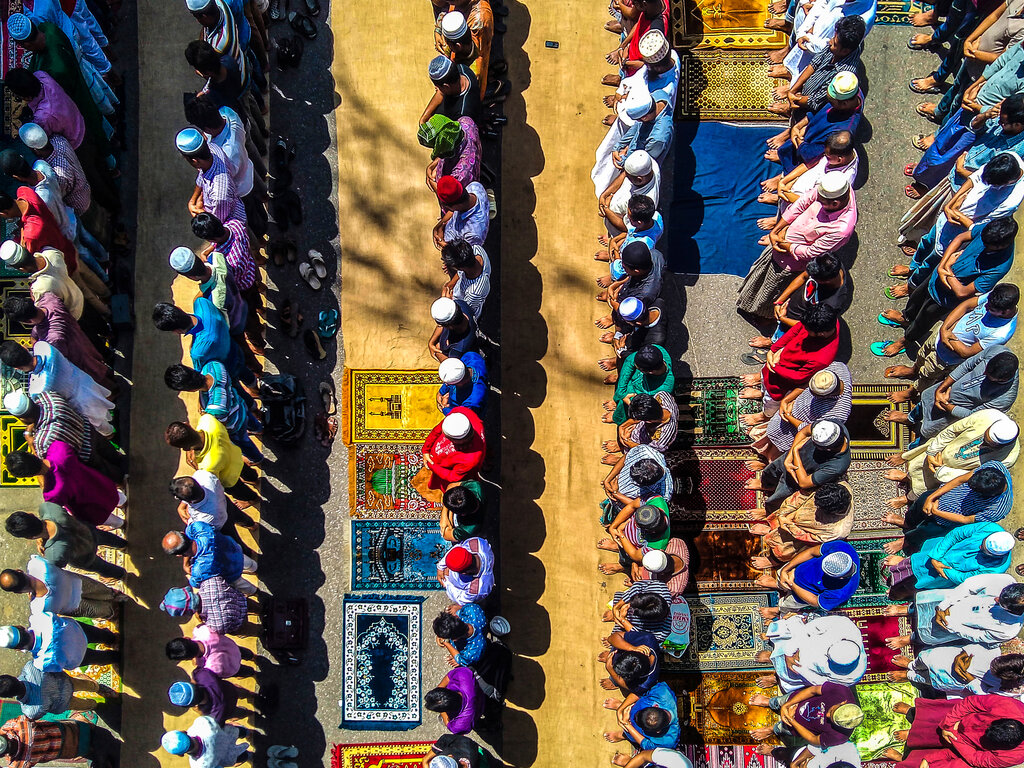
Salat is a direct connection with God, performed at dawn, noon, mid-afternoon, sunset, and night. It involves a series of recitations and physical postures, including bowing and prostration, creating a rhythm of mindfulness and devotion throughout the day.
Zakat goes beyond simple charity. It is a form of social justice, meant to purify a person's remaining wealth and ensure that the needs of the less fortunate are met. It fosters a sense of community responsibility.
Fasting during the month of Ramadan is a time for spiritual reflection, self-discipline, and empathy for those who are hungry. It is a period of intense devotion, community gathering, and increased prayer.
Finally, the Hajj is a powerful spiritual journey. It brings together Muslims from all over the world, stripping away markers of wealth and status as pilgrims dress in simple white garments. It commemorates the actions of the prophet Abraham and his family, reinforcing a shared history and global unity.
Central to Islam are the Five Pillars, foundational acts of worship and faith: Shahada (declaring faith), Salat (ritual prayers five times daily), Zakat (charitable giving), Sawm (fasting during Ramadan), and Hajj (pilgrimage to Mecca).
These pillars are not just rituals; they are a complete framework for life, guiding a Muslim's beliefs and actions. They provide the essential structure upon which the diverse global community of Islam is built.
Ready to check your understanding of these foundational concepts?
What is the central theological concept in Islam, known as Tawhid?
Besides the Quran, what is the other primary source of guidance for Muslims, detailing the life and example of Prophet Muhammad?
Understanding these core tenets provides the essential context for exploring the rich history and diversity within Islam.