Sharpen Your Sense of Smell
Olfactory System Basics
The Scent Pathway
Every smell, from baking bread to fresh-cut grass, begins as a journey of tiny molecules floating in the air. When you breathe in, these odor molecules travel up your nasal passage to a small patch of tissue called the olfactory epithelium. This specialized tissue, about the size of a postage stamp, is located high up in the nasal cavity, far from the main path of airflow.
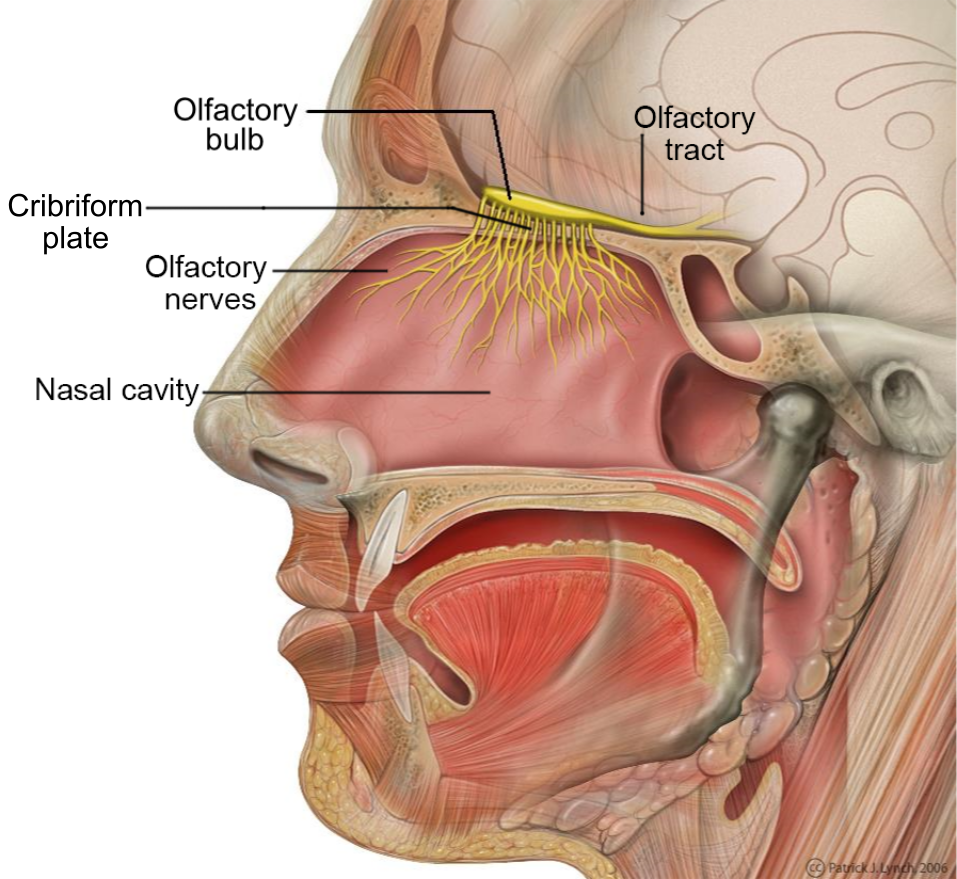
The olfactory epithelium is home to millions of specialized nerve cells known as olfactory receptor neurons. These are the actual cells that detect smells. Each neuron has tiny, hair-like projections called cilia that extend into a layer of mucus. Odor molecules must first dissolve in this mucus before they can be detected by the receptors on the cilia.
Receptors and Recognition
Think of the olfactory receptors like locks, and the odor molecules like keys. Each receptor neuron is equipped with one specific type of receptor that is shaped to bind with a particular type of odor molecule. Humans have about 400 different types of these receptors. When an odor molecule locks onto its matching receptor, it triggers an electrical signal in the neuron.
A single scent is often a complex mixture of many different types of molecules. The brain identifies a specific smell, like coffee, by recognizing the unique combination of receptors that are activated at the same time.
These olfactory receptor neurons are unique because they are one of the few types of neurons in the body that can regenerate. They are constantly being replaced every 30 to 60 days. The axons, or nerve fibers, from these neurons pass through tiny holes in the cribriform plate, a bone at the base of the skull, to reach the brain.
The Olfactory Bulb
The first stop for these signals is the olfactory bulb, a structure located at the very front of the brain. You have two of them, one above each nostril. The olfactory bulb acts like a sorting station. Axons from all the receptor neurons that have the same type of receptor converge on a specific spot in the bulb called a glomerulus.
This organization creates a neat
From Bulb to Brain
From the olfactory bulb, the information travels along the olfactory tract to higher-level regions of the brain. What's remarkable about the sense of smell is its direct route to the parts of the brain that handle emotion and memory.
Direct Path to the Brain: Olfactory receptors are directly connected to the limbic system, which is responsible for emotion and memory [2].
Unlike our other senses like sight, hearing, and touch, olfactory signals do not first pass through the thalamus, which acts as the brain's main relay station. Instead, they go straight to the primary olfactory cortex and key parts of the limbic system, including the amygdala (involved in emotion) and the hippocampus (involved in memory). This direct wiring explains why a particular smell can instantly trigger a strong emotional response or a vivid memory from the past.
Let's check your understanding of this scent journey.
What is the name of the specialized tissue located high up in the nasal cavity where smell detection begins?
True or False: Olfactory signals are routed through the thalamus before reaching the parts of the brain responsible for emotion and memory.
This journey—from molecule to mucus, neuron to bulb, and finally to the deepest parts of our brain—is how we transform the chemical world around us into rich sensory experiences.