Sharks: Ocean Predators
Introduction to Marine Biology
The Ocean's Neighborhoods
The ocean isn't one big, uniform body of water. It's a collection of distinct environments, each with its own set of rules and residents. Think of them as different neighborhoods, from the sunlit, bustling city of a coral reef to the dark, quiet suburbs of the deep sea.
These neighborhoods, or ecosystems, are defined by factors like depth, sunlight, and proximity to land. The area near the coast, called the neritic zone, is shallow and full of life. Farther out is the oceanic zone, which is the vast open ocean. Vertically, the ocean is also layered.
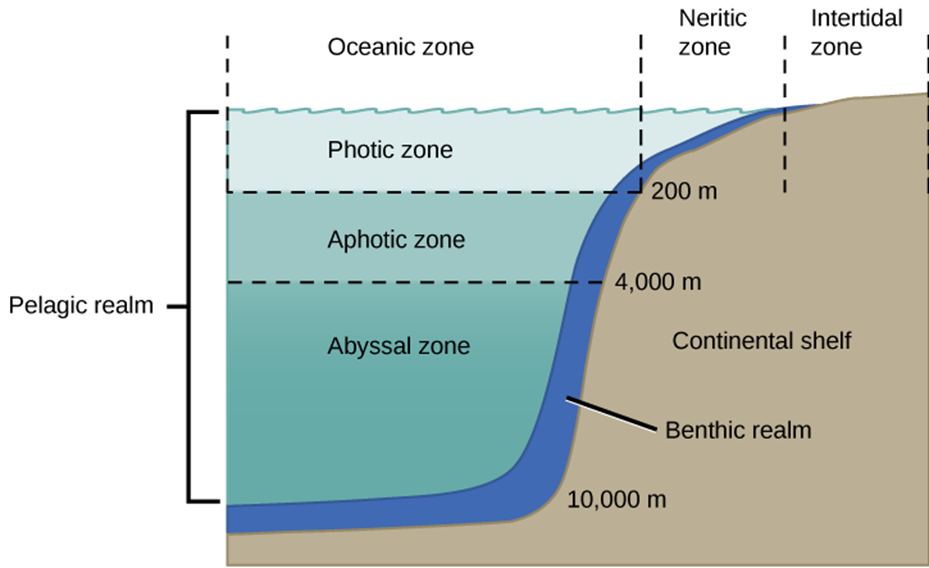
The top layer, where sunlight can penetrate, is the photic zone. This is where photosynthesis happens, forming the base of the marine food web. Below this is the aphotic zone, a world of perpetual darkness where organisms have adapted to life without light. The very bottom of the ocean, the seafloor, is known as the benthic realm.
Different ecosystems thrive in these zones. Kelp forests rise from the seafloor in cool, coastal waters, providing shelter for countless species. Coral reefs, built by tiny animals, create complex structures in warm, clear waters. In the open ocean, life is more spread out, while the deep sea hosts bizarre creatures adapted to crushing pressure and cold.
A World of Life
Marine life is incredibly diverse, ranging from microscopic organisms to the largest animal on Earth, the blue whale. We can group these organisms by their role in the ecosystem.
Producers, like phytoplankton, are the foundation. These are tiny, plant-like organisms that use sunlight to create food through photosynthesis. They are the 'plants' of the sea.
Consumers eat other organisms. Zooplankton are tiny animals that drift and feed on phytoplankton. They, in turn, are eaten by small fish, which are eaten by larger fish, seals, and so on, up the food chain. This complex network of who eats whom is called a food web.
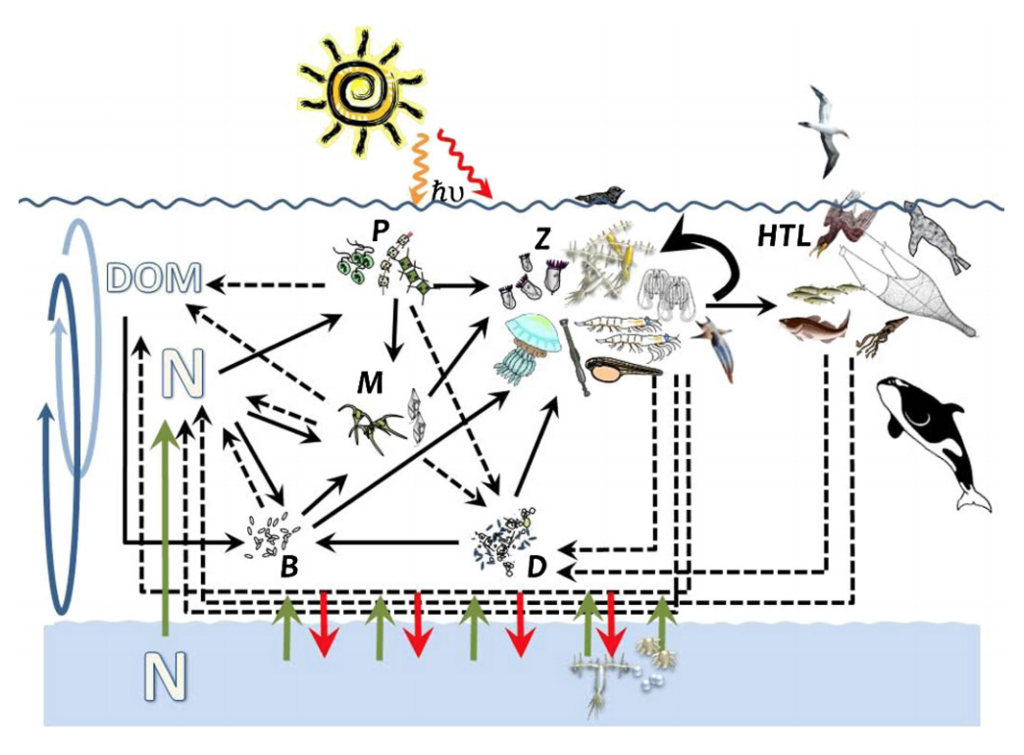
Then there are the decomposers, mostly bacteria. They break down dead organisms and waste products, returning essential nutrients to the water. This recycling is vital for keeping the entire ecosystem running. Without decomposers, the nutrients needed by the producers would remain locked away.
The Ocean in Motion
The physical properties of the ocean shape all life within it. Temperature, pressure, and light are three of the most important factors.
Temperature varies greatly, from freezing at the poles to tropical warmth at the equator. It also changes with depth. The sun warms the surface, but deeper water remains cold. This sharp change in temperature is called the thermocline. Many animals are adapted to a specific temperature range and rarely cross this boundary.
Pressure is another major challenge. As you go deeper, the weight of the water above increases dramatically. At the bottom of the Mariana Trench, the pressure is over 1,000 times what we experience at sea level. Organisms living in the deep sea have evolved unique bodies that can withstand this immense force.
Sunlight can only penetrate the upper layer of the ocean. This photic zone is where all photosynthesis occurs. Below about 200 meters, it's too dark for photosynthesis, marking the start of the aphotic zone. Life in the dark relies on food drifting down from above or on unique strategies like chemosynthesis.
Water Chemistry
The ocean is a complex chemical soup. Its chemistry dictates what can live where.
Salinity, the amount of dissolved salts in the water, is a key property. While it varies slightly from place to place, most of the ocean has a salinity of about 3.5%. Marine organisms are specially adapted to handle this salty environment.
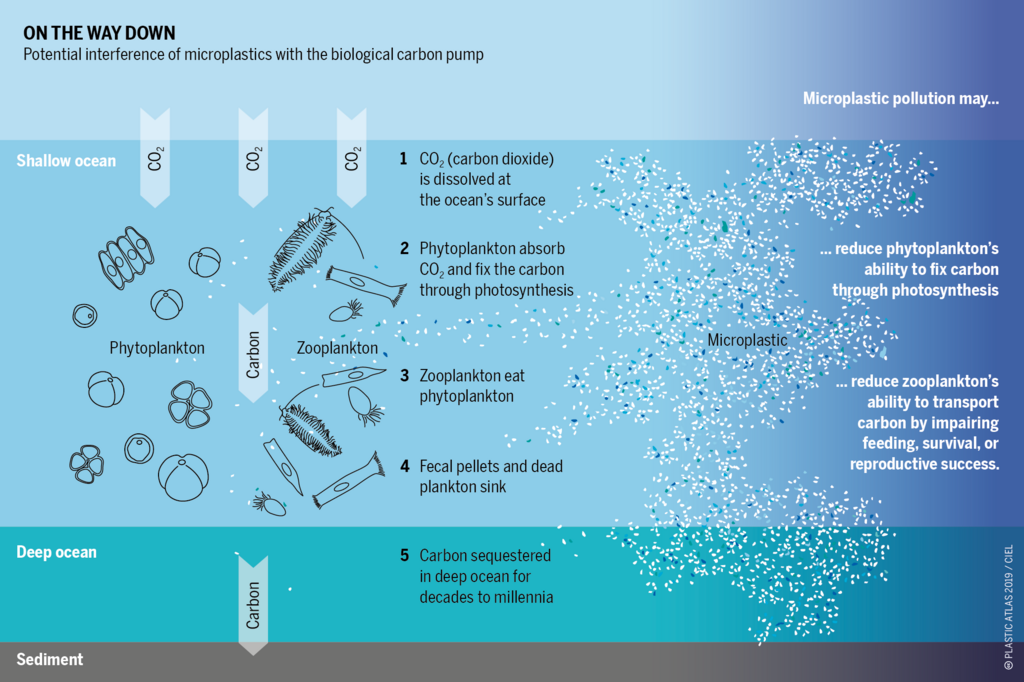
Dissolved gases are also crucial. Oxygen, produced by phytoplankton and mixed in from the atmosphere, is needed for respiration by most marine animals. Carbon dioxide is used by phytoplankton for photosynthesis. The ocean is a massive reservoir for CO2, absorbing a large portion of what's in the atmosphere. This process, known as the biological carbon pump, plays a huge role in regulating Earth's climate.
Finally, nutrients like nitrates and phosphates act as fertilizers for phytoplankton. The availability of these nutrients often determines how productive an area of the ocean can be. Areas where currents bring these nutrients up from the deep, a process called upwelling, are often teeming with life.
Now let's review what we've learned about the basics of the marine world.
What is the name for the ocean zone where sunlight can penetrate, allowing photosynthesis to occur?
In the marine food web, what is the primary role of phytoplankton?