Sharks Marine Marvels
Introduction to Marine Biology
The World Underwater
The ocean covers more than 70% of our planet, but we've explored less of it than we have the surface of the moon. It’s a massive, three-dimensional world teeming with life, from the smallest microbes to the largest animal that has ever lived, the blue whale. Marine biology is the science of understanding this world.
Marine biology
noun
The scientific study of organisms in the ocean or other marine or brackish bodies of water. It's a field that combines aspects of oceanography, biology, and ecology to understand marine life and its environment.
It’s not just about fish and whales. Marine biologists study everything from the microscopic plankton that produce much of the oxygen we breathe to the strange creatures that thrive in the crushing pressure and complete darkness of the deep sea. It’s a field that asks big questions: How do animals survive in such extreme environments? How are marine ecosystems connected? And how are human activities changing life in the ocean?
Ocean Neighborhoods
The ocean isn't one uniform habitat. It's a complex collection of different environments, or zones, each with unique conditions and inhabitants. Scientists divide the ocean both horizontally (from the shore outwards) and vertically (from the surface to the seafloor) to better understand it.
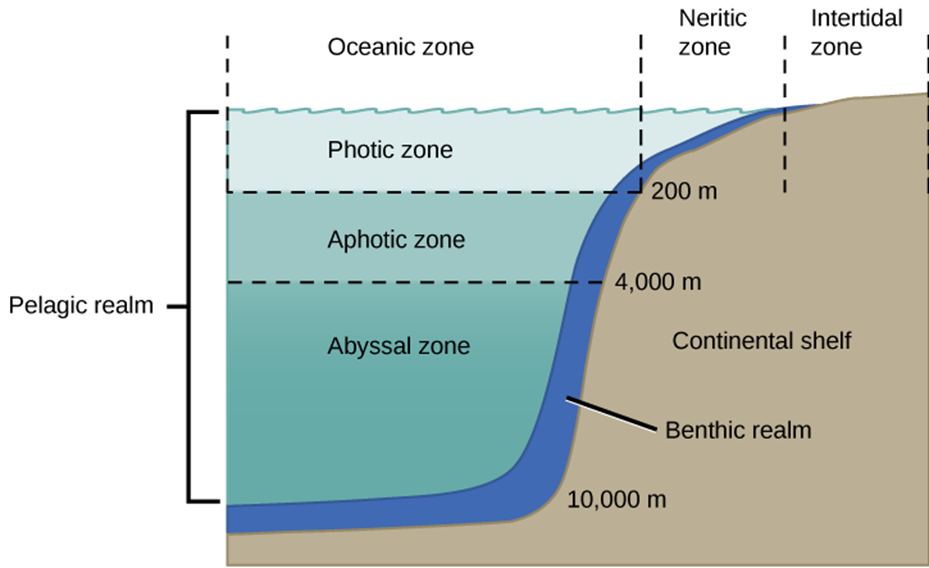
The area closest to land is the coastal zone. This includes the intertidal zone, which is exposed during low tide and submerged during high tide, and the neritic zone, which extends over the continental shelf. Life here is abundant thanks to plentiful sunlight and nutrients from land runoff.
The vast open ocean is known as the pelagic realm. This is the water column itself, far from the coast. It's split into layers by depth. The top layer, the photic zone, gets enough sunlight for photosynthesis. Below it lies the vast, dark aphotic zone, where sunlight never reaches.
Finally, the entire seafloor, from the shallow coast to the deepest trenches, is called the benthic realm. This isn't just a flat, muddy bottom. It includes rocky reefs, sandy plains, and hydrothermal vents, each creating a unique neighborhood for creatures adapted to live on or in the seabed.
Different habitats create different challenges and opportunities, leading to the incredible diversity of life we see in the sea.
Why the Ocean Matters
Studying marine life is more than just a fascinating scientific pursuit. The health of the ocean is directly tied to the health of the entire planet. Marine ecosystems play a vital role in global ecology.
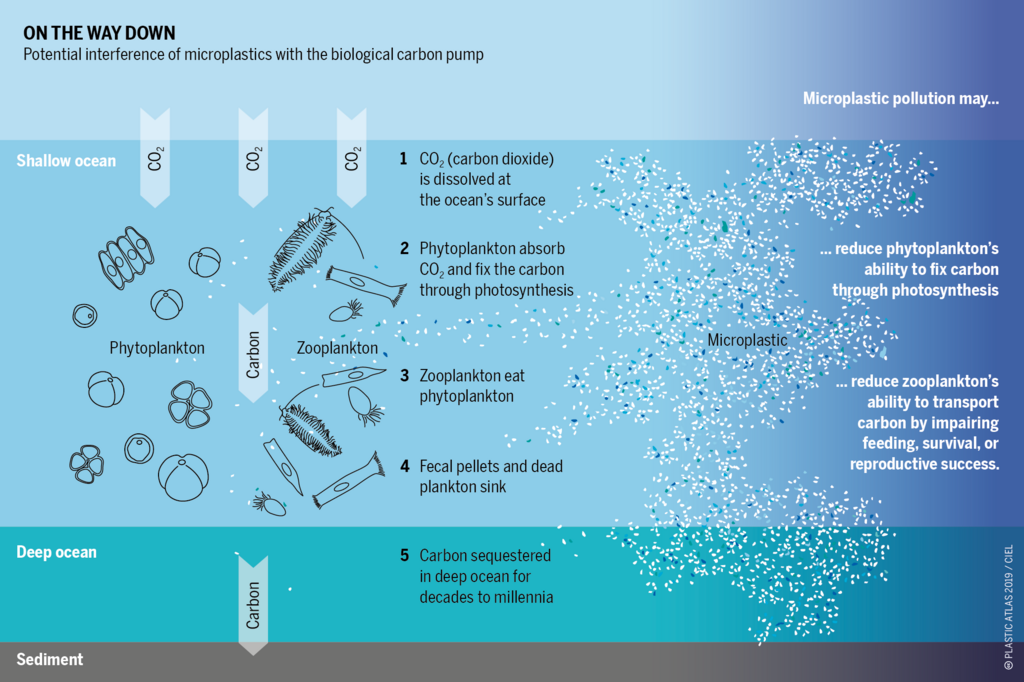
One of the most critical functions of marine ecosystems is oxygen production. Tiny plant-like organisms called phytoplankton, floating in the sunlit zone, perform photosynthesis. It's estimated they produce up to 50% of the oxygen in our atmosphere.
The ocean is also a key player in regulating Earth's climate. It acts as a giant heat and carbon sink, absorbing huge amounts of heat and carbon dioxide () from the atmosphere. Marine life is central to this process. When marine organisms die, the carbon in their bodies can sink to the deep ocean, where it's stored for centuries.
From providing food for billions of people to driving global climate patterns, the processes that happen in the ocean affect everyone, no matter how far they live from the coast.