Service Business Vibe Coding Mastery
Introduction to Vibe Coding
What is Vibe Coding?
Instead of writing every line of code by hand, you describe what you want to build in plain English. You give an AI assistant, usually a large language model (LLM), a prompt outlining your goal. The AI then generates the necessary code to make it happen.
Think of it as being a film director instead of a camera operator. The director describes the scene, the mood, and the action they want. The crew then sets up the lights, angles, and cameras to capture it. In vibe coding, you are the director, and the AI is your technical crew.
Vibe coding is the practice of creating software by describing what you want in natural language, letting artificial intelligence generate the code, and then refining it through conversation.
This approach shifts the focus from writing perfect syntax to clearly expressing your intention. It’s a conversational and iterative process. You don't need to be a programming expert to get started. The main skill is guiding the AI toward the desired outcome.
The Basic Workflow
The core of vibe coding is a simple loop: prompt, generate, test, and refine. You start with an idea, the AI provides a first draft, and you steer it from there. The key is that you evaluate the result, not the code itself. Does the program do what you asked? If not, you adjust your prompt and try again.
This cycle of experimentation allows for rapid prototyping. Instead of spending hours debugging a small error, you can simply clarify your instructions to the AI and generate a new version. It prioritizes momentum and creativity over technical perfection in the code itself.
Vibe vs. Traditional Coding
Traditional coding requires you to learn a specific programming language, understand its syntax, and structure your logic perfectly. Vibe coding abstracts much of that away. You focus on the "what," and the AI handles the "how."
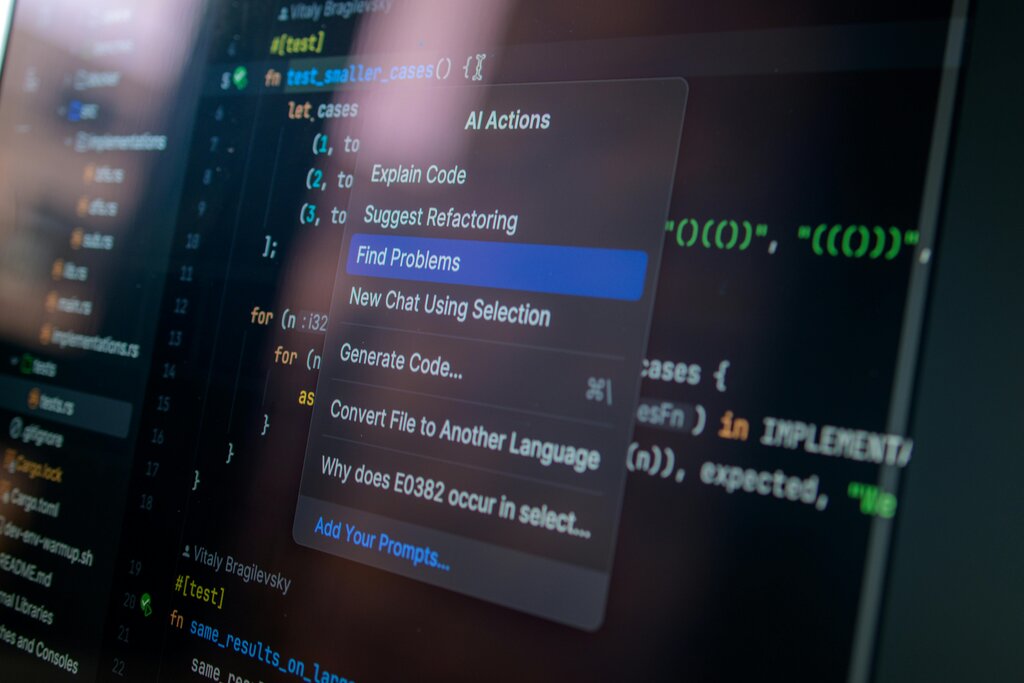
This doesn't mean traditional coding is obsolete. Far from it. Building complex, optimized, and secure systems still requires deep technical expertise. However, vibe coding opens the door for more people to build software and for experienced developers to work more quickly. Here's a simple comparison:
| Feature | Traditional Coding | Vibe Coding |
|---|---|---|
| Primary Skill | Language syntax & logic | Prompting & communication |
| Focus | Code correctness & structure | Final result & functionality |
| Process | Manual & structured | Conversational & iterative |
| Developer's Role | Author & builder | Director & evaluator |
| Barrier to Entry | High (requires training) | Low (relies on natural language) |
Ultimately, vibe coding is about collaboration. It treats AI as a partner in the creative process, allowing developers to translate ideas into functional software faster than ever before.
In the 'vibe coding' paradigm, what is the primary role of the developer?
What is the core iterative loop in the vibe coding process?