Series A Venture Capital Explained
Introduction to Venture Capital
What Is Venture Capital?
Venture capital, or VC, is a type of private equity financing that investors provide to startups and small businesses that are believed to have long-term growth potential. Think of it as high-octane fuel for a company that's just starting out but has ambitions to become a rocket ship.
Venture capital refers to financing given by well-off investors or investment banks to startups and small businesses that the investors believe have big growth potential.
VC firms raise money from large investors (called Limited Partners or LPs) and then invest that money in a portfolio of promising young companies. In exchange for this funding, the venture capitalists receive an ownership stake, or equity, in the company. Their goal isn't just to get their money back; they're looking for massive returns on their investment, which usually happens if the startup gets acquired by a larger company or goes public through an Initial Public Offering (IPO).

The Funding Ladder
Startups don't receive all their funding at once. Instead, they raise money in rounds, or stages, as they hit key milestones. This allows investors to manage their risk and gives the company clear goals to work toward. Each round provides the capital needed to get to the next level.
Here's a breakdown of the typical stages:
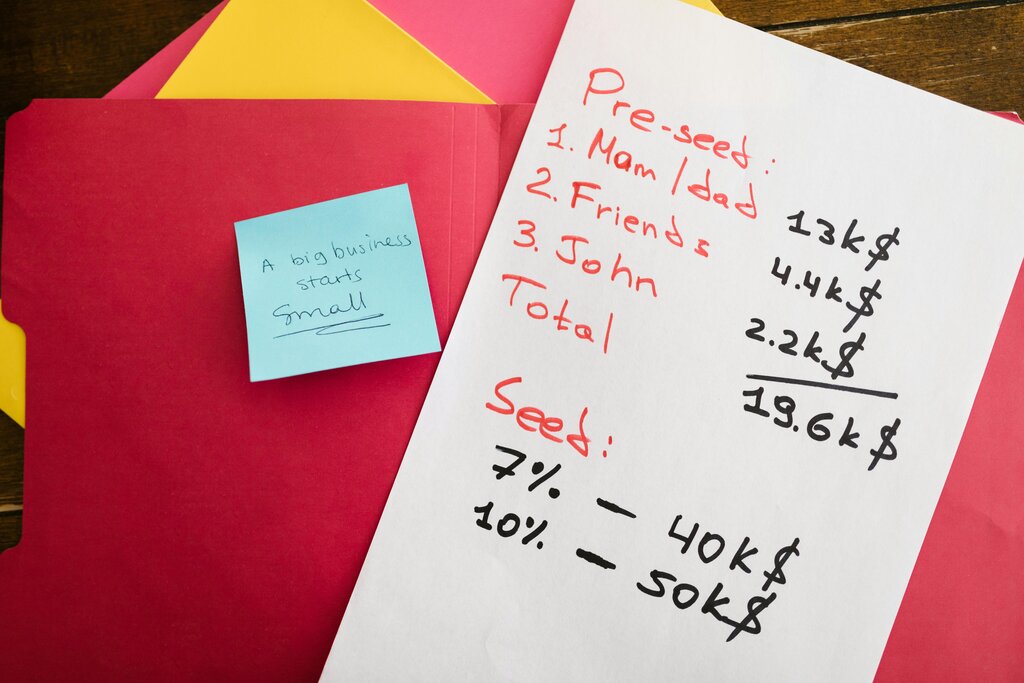
- Pre-seed and Seed: This is the earliest stage. The company might just be an idea on a napkin. Funding often comes from the founders' own pockets, friends and family, or individual "angel investors." The goal is to develop a minimum viable product (MVP) and validate the basic business concept.
- Series A: After a startup has proven its concept and started to gain some traction (like early customers or revenue), it seeks its first significant round of VC funding. This is the Series A round. The capital is used to build out the team, scale marketing efforts, and solidify product-market fit.
- Series B: At this stage, the company has a solid user base and is generating consistent revenue. Series B funding is about scaling. The company is no longer just experimenting; it's focused on expanding its market reach and growing the business.
- Series C and Beyond: These are late-stage funding rounds for companies that are already quite successful. The money might be used for acquiring other companies, expanding into new countries, or as a final push before going public.
The VC Mindset
Venture capitalists do more than just write checks. When they invest, they often take a seat on the company's board of directors. This gives them a say in major business decisions.
VCs often take an active role in mentoring founders, offering strategic guidance, and leveraging their networks to facilitate partnerships and market entry strategies.
Their primary expectation is a massive return on their investment. VCs operate on a high-risk, high-reward model. They know that most of the startups in their portfolio will likely fail. However, they're counting on one or two big winners—often called "unicorns" if they reach a $1 billion valuation—to generate enough profit to cover all the losses and still produce a huge return for the fund.
Because of this, VCs aren't looking for slow, steady growth. They are searching for businesses that can scale rapidly and dominate a large market. They're swinging for grand slams, not just base hits.
This leads them to focus on a clear "exit strategy." From the moment they invest, a VC is thinking about how they will eventually get their money back, plus a significant profit. The two most common exits are an acquisition (where a larger company buys the startup) or an Initial Public Offering (IPO), where the startup sells shares to the public on the stock market.
Now that you understand the basics of the venture capital world, let's test your knowledge.
What is the primary goal of a venture capital firm when it invests in a startup?
A startup has developed a minimum viable product (MVP), validated its core business idea, and is now ready to build out its team and scale marketing efforts. Which funding round is it most likely seeking?
Understanding these core concepts is the first step in navigating the world of startup fundraising.