Series 65 Exam Prep
Economic Factors
The Economic Rollercoaster
Economies don't grow in a straight line. They move in waves, expanding for a while and then contracting. This up-and-down movement is called the business cycle. Understanding this rhythm is key to understanding the broader financial world.
The cycle has four distinct phases:
- Expansion: The economy is growing. Businesses are hiring, consumers are spending, and Gross Domestic Product (GDP) is on the rise.
- Peak: This is the high point. The economy is running at full steam, but growth starts to slow down.
- Contraction (or Recession): The economy shrinks. Businesses may lay off workers, and people spend less. A prolonged and severe contraction is called a depression.
- Trough: This is the bottom of the cycle. The economy hits its lowest point before the cycle begins to recover and start a new expansion phase.
Steering the Ship
While business cycles are natural, governments and central banks don't just sit back and watch. They use two main toolkits to try to smooth out the bumps: monetary policy and fiscal policy.
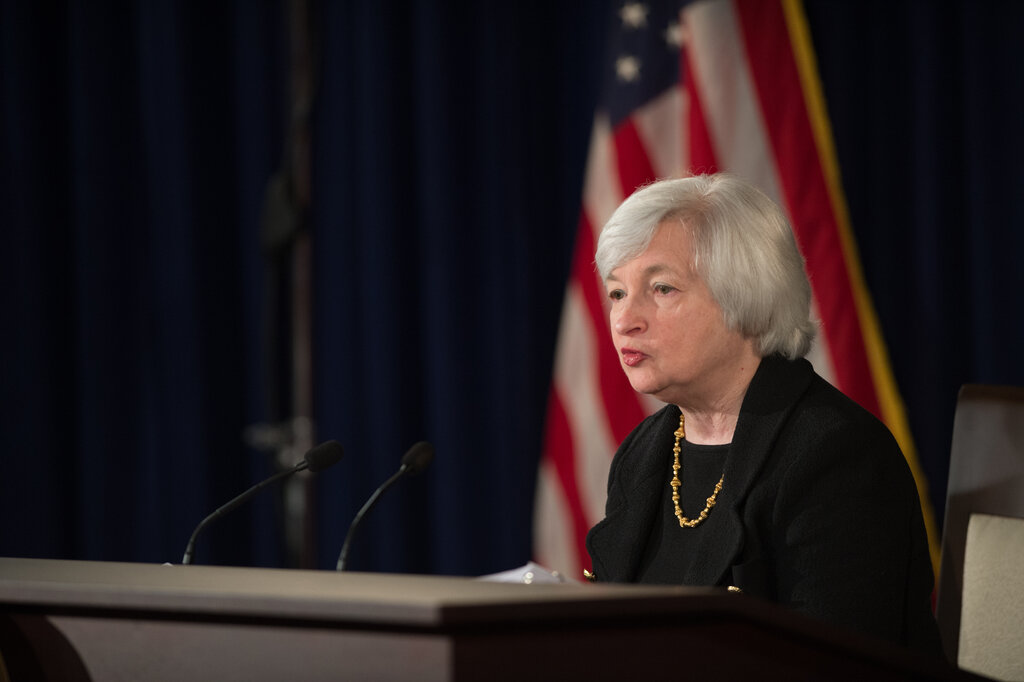
Monetary policy is managed by a country's central bank. In the United States, this is the Federal Reserve (often called "the Fed"). The Fed's main tools involve controlling the money supply and influencing interest rates. When the economy is sluggish, the Fed might lower interest rates to encourage borrowing and spending. If the economy is overheating and prices are rising too fast, it might raise rates to cool things down.
Fiscal policy, on the other hand, is in the hands of the government—Congress and the President. It involves two levers: government spending and taxation. To boost a weak economy, the government can increase spending (on things like infrastructure projects) or cut taxes, leaving more money in people's pockets. To slow an overheating economy, it can do the opposite: cut spending or raise taxes.
The Price of Everything
The actions of the Fed and the government have a direct impact on the value of money and the cost of borrowing. This brings us to a few key concepts.
inflation
noun
The rate at which the general level of prices for goods and services is rising, and subsequently, purchasing power is falling.
Inflation is why a candy bar that cost a quarter when your parents were young costs over a dollar today. A little bit of inflation is generally considered healthy for an economy. The opposite, deflation, is a decrease in the general price level. While falling prices might sound great, deflation can be very dangerous. It encourages people to delay purchases (why buy today when it will be cheaper tomorrow?), which can cause economic activity to grind to a halt.
Interest rates are, simply, the cost of borrowing money. They are a primary tool of monetary policy. When you hear that the Fed "raised rates," it means it has increased the target for a key interest rate, which then ripples through the entire economy, affecting everything from mortgage rates to credit card interest.
The relationship between interest rates for bonds of different maturities is shown on a yield curve. Typically, long-term bonds have higher interest rates (yields) than short-term ones. This creates an upward-sloping curve. A flat or inverted yield curve, where short-term rates are higher than long-term rates, can sometimes signal an upcoming recession.
Reading the Gauges
How do we know if the economy is expanding or contracting? Economists and investors watch a dashboard of key economic indicators.
Here are some of the most important ones:
- Gross Domestic Product (GDP): The big one. GDP is the total value of all goods and services produced in a country over a specific time period. It's the primary measure of a country's economic output.
- Employment Statistics: The unemployment rate (the percentage of the labor force that is jobless and looking for work) is a critical indicator of economic health. Low unemployment is a sign of a strong economy.
- Consumer Price Index (CPI): This is the most widely used measure of inflation. It tracks the average change over time in the prices paid by urban consumers for a market basket of consumer goods and services.
- Trade Deficit & Balance of Payments: A trade deficit occurs when a country imports more than it exports. This is part of the larger balance of payments, which is a record of all economic transactions between a country and the rest of the world.
The value of the U.S. dollar itself is another key factor. A "strong" dollar means it can buy more of a foreign currency. This makes imports cheaper for Americans but makes U.S. exports more expensive for foreigners. A "weak" dollar does the opposite.
| Indicator | What It Measures | What a Positive Sign Looks Like |
|---|---|---|
| GDP | Total economic output | Increasing |
| Unemployment Rate | Share of jobless workers | Decreasing |
| CPI | Inflation / Cost of living | Stable and low (e.g., ~2%) |
| U.S. Dollar | Purchasing power abroad | Depends on the goal (strong or weak) |
Let's check your understanding of these core concepts.
If an economy is experiencing rising GDP and falling unemployment, which phase of the business cycle is it in?
Which of the following actions is a primary tool of fiscal policy used by a government to combat a recession?
These factors all weave together to create the complex economic environment we live in. Understanding them provides the context for making smarter financial decisions.