Sequential Motor Imagery for BCIs
Introduction to Brain-Computer Interfaces
Thinking into Action
A Brain-Computer Interface, or BCI, is a direct communication link between the brain and an external device. It reads the brain's electrical activity and translates it into commands. The goal is to allow a person to control a computer, a prosthetic limb, or other technology using only their thoughts.
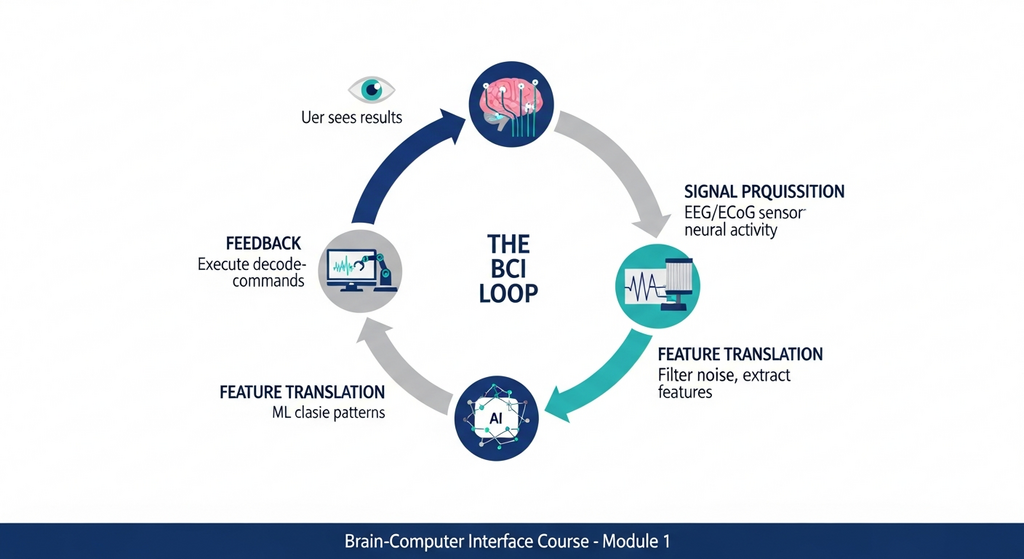
The idea isn't brand new. Scientists began exploring the concept in the 1970s, but early technology was limited. With advances in neuroscience and computing power, BCIs have moved from science fiction toward practical reality. The core process involves a sensor to detect brain signals, a processing unit to interpret them, and an output device that performs the desired action.
Inside or Out
BCIs come in two main flavors: invasive and non-invasive. The key difference is whether they require surgery.
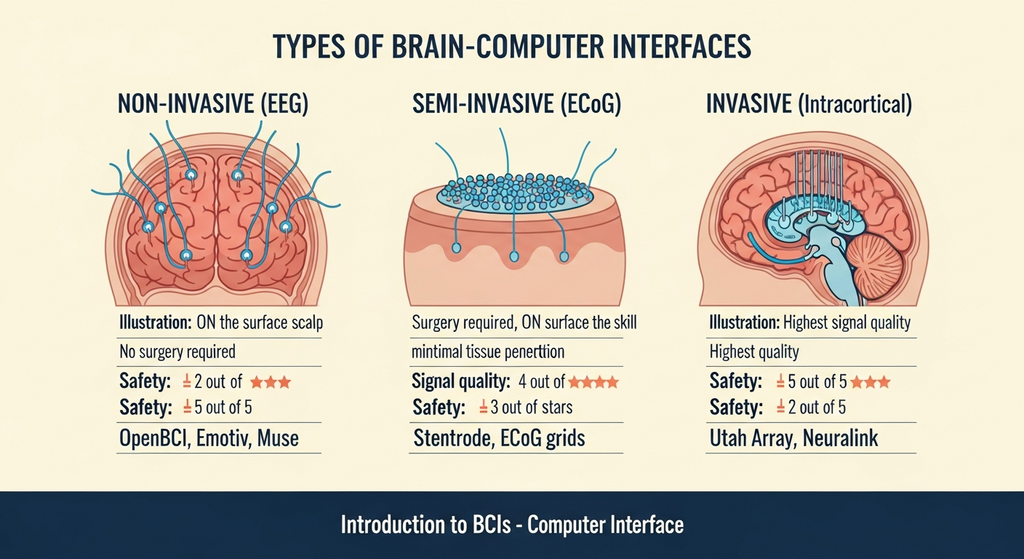
Non-invasive BCIs are placed on the scalp to measure brainwaves. The most common type is the electroencephalogram (EEG), which uses a cap fitted with electrodes. These are safe and relatively easy to use, but the signals can be noisy because they have to travel through the skull. It's like trying to listen to a conversation through a thick wall.
Invasive BCIs are implanted directly into the brain. This requires surgery, which carries risks, but the reward is a much clearer, stronger signal. Because the sensors are right next to the neurons, they can pick up activity with high precision. This allows for more complex and nuanced control of external devices.
| Feature | Invasive BCI | Non-Invasive BCI |
|---|---|---|
| Placement | Directly inside the skull | On the scalp |
| Signal Quality | High | Lower, less precise |
| Risk Level | High (requires surgery) | Very Low |
| Example | Microelectrode Array | EEG Headset |
Real-World Applications
So, what can we actually do with BCIs? Their impact is most profound in medicine. For individuals with paralysis from spinal cord injuries or conditions like ALS, BCIs offer a way to regain a degree of independence. They can learn to control robotic arms to perform daily tasks, like picking up a drink.
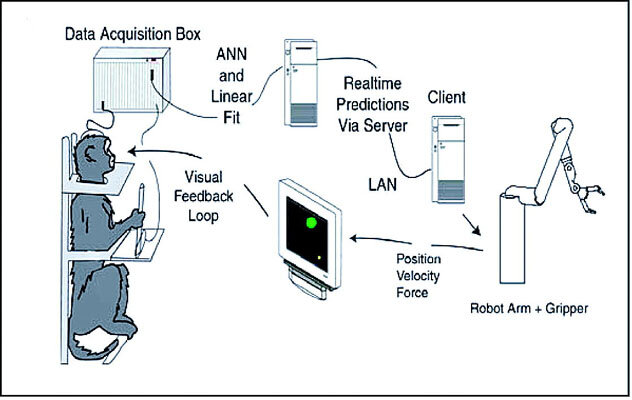
Communication is another major area. People with "locked-in syndrome," who are fully conscious but unable to move or speak, can use BCIs to control a cursor or select letters on a screen. This restores their ability to communicate with loved ones and the world.
Beyond medicine, BCIs are being explored for controlling wheelchairs, gaming, and even for neurofeedback to help people improve focus or manage anxiety. The technology creates a new channel for human intention to interact with the digital world.
BCIs translate the brain's electrical language into commands a computer can understand, opening up new possibilities for interaction and restoration.
Let's check your understanding of these core concepts.
What is the primary function of a Brain-Computer Interface (BCI)?
The main advantage of an invasive BCI over a non-invasive BCI is the ability to get a clearer, stronger signal.
This technology bridges the gap between mind and machine, offering powerful new tools for medicine and human interaction.