SEPA and TARGET2 Payment Systems Explained
Introduction to European Payment Systems
The European Financial Landscape
Imagine you live in France and want to send money to a friend in Germany. In the past, this was an international transfer, often involving extra fees, delays, and complicated bank details. The dream of a truly unified European market required a unified way to move money. The goal was simple but ambitious: make sending euros across borders as easy and cheap as sending them across town.
This required building a new financial infrastructure from the ground up. Instead of dozens of separate national payment systems, Europe needed a set of common rails that every bank could connect to. This would create a seamless flow of money, supporting everything from a student buying a book from another country to massive banks settling trades with each other.
SEPA The Single Euro Payments Area
The most visible part of this new landscape is SEPA, which stands for the Single Euro Payments Area. Its primary objective is to harmonize electronic euro payments across Europe. Under SEPA, all cross-border electronic payments in euros are treated the same as domestic ones. No special forms, no extra charges, no delays.
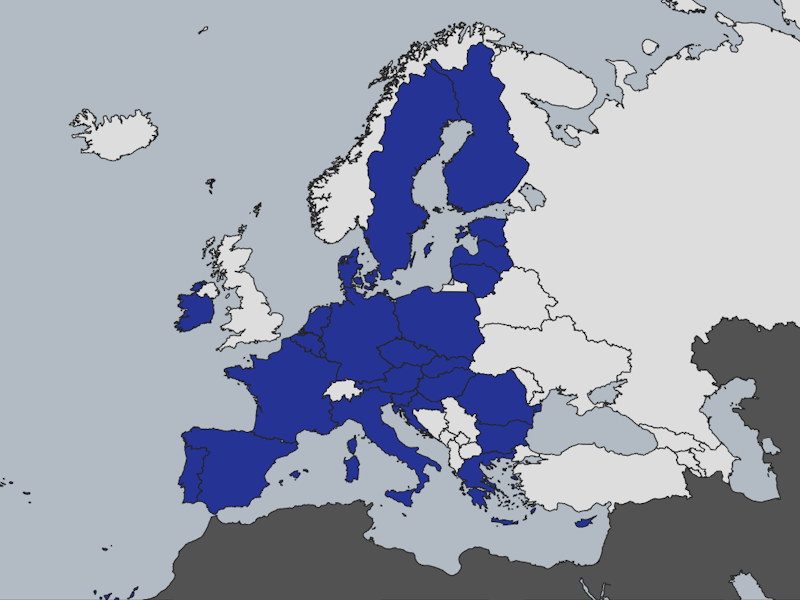
Think of it like a universal adapter for payments. Before SEPA, each country had its own unique plug (payment system). SEPA provides a single standard that works everywhere within the zone, making transactions smooth and predictable.
This initiative covers everyday transactions that people and businesses make, such as:
- Credit Transfers: Sending a one-time payment to someone else's account.
- Direct Debits: Authorizing a company to pull recurring payments from your account, like for a subscription service.
For millions of people, SEPA removed the financial borders within Europe. It means a business in Spain can easily pay a supplier in Ireland, and a tourist in Italy can use their home bank account to pay a bill without thinking twice.
TARGET2 The Backbone of Large Payments
While SEPA handles the massive volume of daily retail payments, another system works in the background to manage the really big money. This is TARGET2, the Trans-European Automated Real-time Gross Settlement Express Transfer System.
If SEPA is the network of local roads for cars and delivery trucks, TARGET2 is the high-speed freight railway. It's built for large-value, time-sensitive payments between banks. This system is the backbone of Europe’s financial stability.
TARGET2 settles payments individually (gross settlement) as soon as they are sent (real-time). This eliminates the risk that one bank's failure could cause a chain reaction, protecting the entire financial system.
The main users of TARGET2 are central banks and commercial banks. They use it to settle monetary policy operations, interbank transfers, and other wholesale financial transactions that underpin the European economy. The amounts handled are enormous, often totaling trillions of euros in a single day. Its efficiency and security are crucial for the health of the euro and the financial markets.
Why These Systems Matter
Together, SEPA and TARGET2 create a comprehensive, two-tiered payment infrastructure for Europe. SEPA fosters a competitive and integrated market for retail payments, which directly benefits consumers and small businesses by lowering costs and simplifying transactions. It's a key ingredient for a functioning single market.
TARGET2 provides the secure and stable foundation for the entire financial system. By ensuring that large sums of money can move between banks instantly and without risk, it maintains confidence and liquidity in the markets.
These systems are not just technical plumbing; they are essential tools for economic integration, making the euro a more effective single currency and bringing European economies closer together.
Now, let's review what you've learned.
What was the primary goal behind the creation of the Single Euro Payments Area (SEPA)?
A French company needs to pay a large, time-sensitive invoice worth several million euros to a German bank. Which payment system would be used for this transaction?
Understanding these systems is the first step to seeing how money moves seamlessly across one of the world's largest economic areas.