SEPA and TARGET2 Payment Systems Explained
Introduction to Eurozone Payment Systems
Moving Money in Europe
The Eurozone isn't just a collection of countries using the same currency. It's also a deeply interconnected financial area where money needs to flow smoothly across borders. For this to work, you need a solid infrastructure—a set of rules and systems that act like the plumbing for the entire economy. This financial plumbing ensures that when you send euros from a bank in Spain to a business in Germany, it happens quickly, safely, and cheaply. Two core systems make this possible: SEPA and TARGET2.
SEPA The Everyday Standard
Think about making a payment to someone in your own city. It's simple, right? You just send the money. That's the goal of the Single Euro Payments Area, or SEPA. It was created to make all electronic euro payments across Europe just as easy as domestic ones. Before SEPA, sending money to another European country was often slow and expensive, filled with extra fees and complicated bank codes. SEPA changed that.
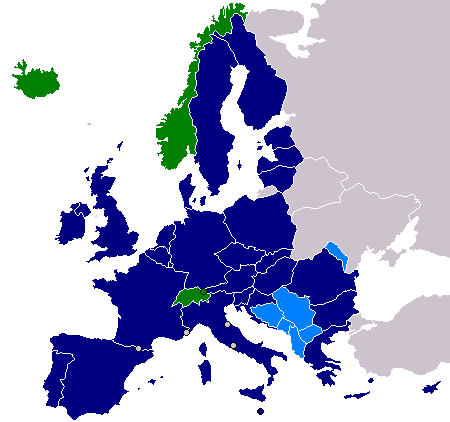
SEPA harmonizes three main types of cashless payments:
- Credit Transfers: A one-time payment from one bank account to another.
- Direct Debits: Recurring payments, like a monthly utility bill, pulled directly from an account.
- Card Payments: Using your debit or credit card anywhere in the SEPA zone.
The system makes life easier for everyone. A French company can pay its German supplier just as easily as a local one. A tourist from Ireland can use their bank card in Italy without a second thought. SEPA is the invisible framework that handles the vast majority of daily transactions for citizens and businesses.
Essentially, SEPA makes borders disappear for everyday euro payments.
TARGET2 The High-Value Highway
While SEPA handles millions of smaller, everyday transactions, a different system is needed for the big stuff. That system is TARGET2, which stands for Trans-European Automated Real-time Gross Settlement Express Transfer System.
It’s a long name, but the key terms tell you exactly what it does:
- Real-time: Payments are processed one by one, instantly. There's no waiting for a batch of transactions to be cleared at the end of the day.
- Gross Settlement: Each transaction is settled individually. Payments aren't bundled or netted against each other. This is crucial because it eliminates the risk that one bank's failure to pay could cause a chain reaction and affect other banks.
If SEPA is the network of city streets for cars and vans, TARGET2 is the secure superhighway for armored trucks. It's used by central banks and large commercial banks to move huge sums of money for critical operations, like settling financial market transactions or implementing monetary policy.
TARGET2 is the backbone of the Eurozone's financial stability, processing payments that are large, urgent, and systemically important.
So how do these two systems work together? Imagine thousands of customers at Bank A make SEPA payments to customers at Bank B throughout the day. Instead of Bank A sending thousands of individual payments to Bank B, the banks track the total amount owed. At the end of the day, Bank A can make one large, single payment to Bank B using TARGET2 to settle the final balance. This makes the entire process incredibly efficient.
Together, SEPA and TARGET2 create a comprehensive and secure payment ecosystem. They ensure that from the smallest coffee purchase to the largest interbank transfer, euros can move seamlessly across the continent.
What is the primary purpose of the Single Euro Payments Area (SEPA)?
A multinational corporation needs to settle a multi-billion euro bond purchase with another financial institution immediately. Which system is designed for this type of transaction?