Sensation and Perception Explained
Introduction to Sensation and Perception
Sensing the World
Your experience of the world begins with your senses. Light enters your eyes, sound waves vibrate in your ears, and chemicals land on your tongue. This initial process of detecting physical energy from the environment is called sensation. It’s the raw, unfiltered data stream that your body collects every moment you are awake.
Think of your sensory organs—eyes, ears, nose, tongue, and skin—as data collectors. They don't understand what they're collecting; they just gather the information. Sensation is the biological process of absorbing that raw information through specialized cells called sensory receptors.
Sensation is about detection. Your eyes detect light, your ears detect sound waves, and your skin detects pressure. It's the first point of contact with the outside world.
Making Sense of It All
Once your sensory organs collect the data, your brain gets to work. It takes the raw signals and organizes, identifies, and interprets them to create meaning. This complex process of making sense of sensory information is called perception.
Perception is where the magic happens. It's how you recognize a specific combination of light waves as your best friend's face, or a pattern of sound vibrations as your favorite song. Sensation provides the raw data, but perception gives it meaning. You don't just sense a sweet, cold, creamy substance on your tongue; you perceive it as chocolate ice cream.
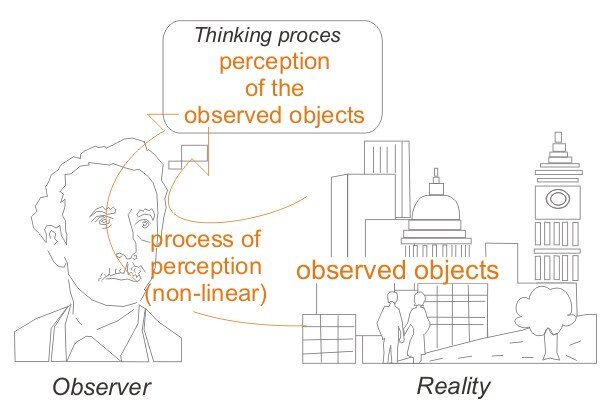
So, what's the difference? Sensation is the physical process of receiving stimuli. Perception is the psychological process of interpreting those stimuli. You can't have one without the other to experience the world as you do. Sensation is the foundation, and perception is the construction built upon it.
From Stimulus to Brain Signal
How does a physical stimulus like a ray of light become something the brain can understand? The key lies with sensory receptors. These are specialized neurons that respond to specific types of stimuli. For example, photoreceptors in your eyes are triggered by light, while mechanoreceptors in your skin respond to pressure and vibration.
When a sensory receptor detects a stimulus, it performs a crucial task called transduction. This is the conversion of one form of energy into another. The receptor converts the physical energy of the stimulus (like light or sound) into an electrical signal, also known as a neural impulse. This is the only language the brain speaks.
After transduction, this electrical signal travels along nerve pathways to the brain. Different parts of the brain are specialized to handle signals from different senses. For instance, signals from the eyes go to the visual cortex at the back of the brain, while signals from the ears go to the auditory cortex on the sides.
The brain then takes these individual signals and begins to organize them. It pieces together information about color, shape, motion, and depth to form the perception of a moving car. It combines signals about pitch, volume, and rhythm to create the experience of music. This organization is not random; the brain follows specific principles to build a coherent, stable perception of the world from a constant stream of sensory data.
Which of the following best describes the difference between sensation and perception?
The process of converting physical energy from the environment, such as light or sound waves, into an electrical signal that the brain can understand is called:
Understanding the distinction between sensation and perception is the first step in exploring how we construct our reality.