Senior Manufacturing Engineer Interview Mastery
Manufacturing Processes
Core Manufacturing Processes
At the heart of production are three fundamental activities: shaping raw materials, putting finished parts together, and checking the quality of the work. These are machining, assembly, and inspection. Each is a world of its own, but they work together to turn concepts into physical products. Mastering these processes is about knowing which tool to use for which job and understanding how they influence one another.
Machining is a subtractive process. You start with a block of material and cut away what you don't need to reveal the final shape. This is done with a wide variety of techniques, each suited for creating different kinds of features.
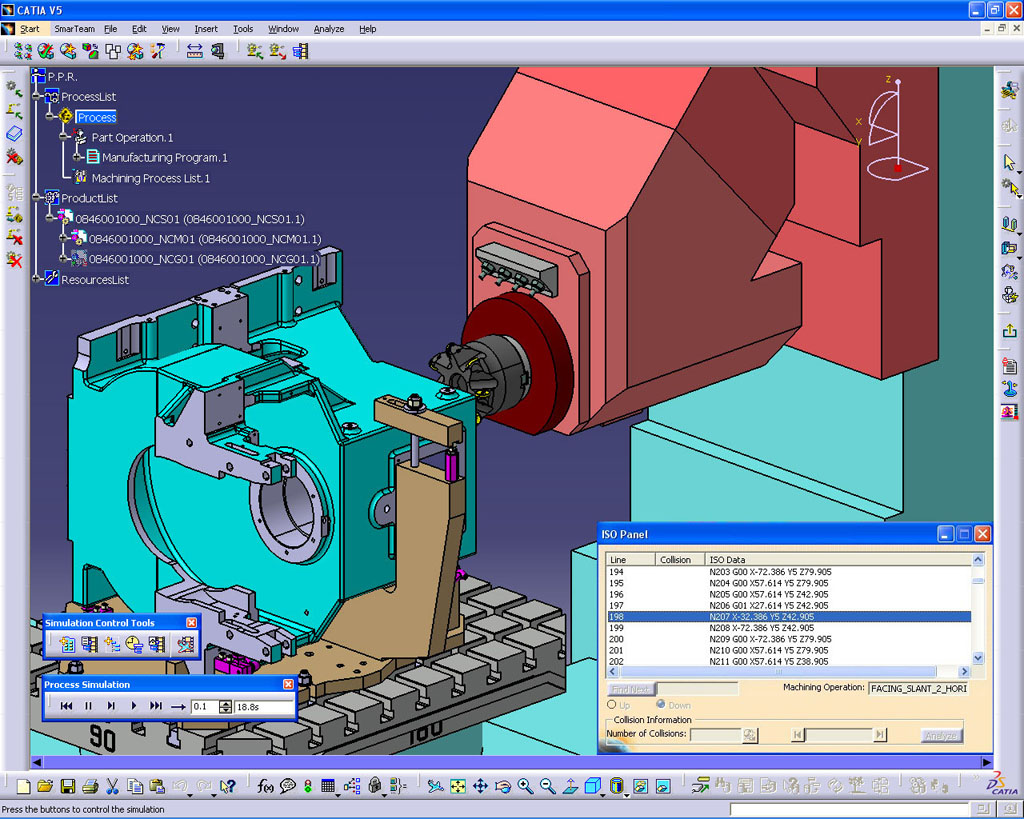
The most common techniques involve cutting tools that are harder than the workpiece. The choice of technique depends on the part's geometry, the material, and the required production volume.
| Technique | Description | Common Use |
|---|---|---|
| Milling | A rotating tool with multiple cutting edges removes material from a stationary workpiece. | Creating flat surfaces, slots, pockets, and complex 3D contours. |
| Turning | A stationary cutting tool removes material from a rotating workpiece. | Creating cylindrical parts like shafts, pins, and rings. |
| Drilling | A rotating cutting tool creates or enlarges a round hole in the workpiece. | Making holes for fasteners, wires, or fluid passages. |
| Grinding | An abrasive wheel acts as the cutting tool to remove very small amounts of material. | Achieving very high surface finish and tight tolerances. |
Once individual components are machined, they need to be joined together. Assembly methods range from simple mechanical fasteners to complex chemical bonds. A permanent process like welding creates a strong, inseparable joint, ideal for structural frames. In contrast, using nuts and bolts allows for disassembly, which is crucial for products that require maintenance or repair.
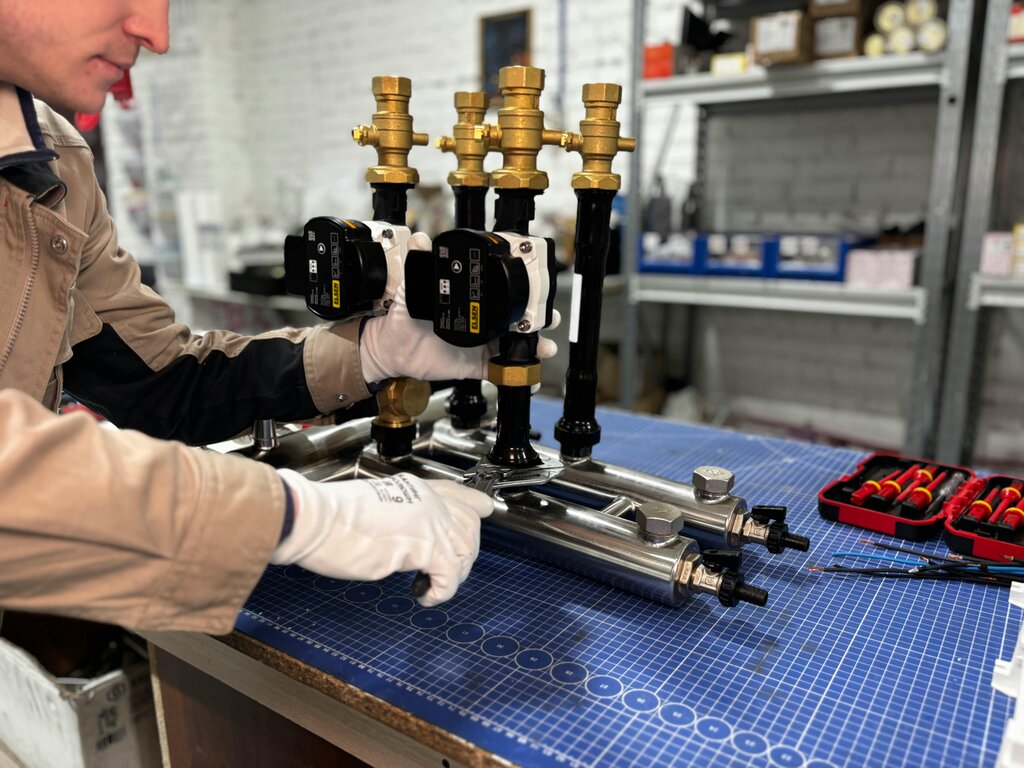
Adhesive bonding, another common method, uses chemical adhesives to join parts. It's great for distributing stress evenly over a large surface area and for joining dissimilar materials that can't be welded. The right choice depends on the strength requirements, the operating environment, and cost considerations.
Finally, inspection ensures that the final product meets the design specifications. This can happen at multiple stages: inspecting raw materials, checking parts after machining, and verifying the final assembly. Inspection methods vary from simple visual checks and measurements with calipers to sophisticated tests using coordinate measuring machines (CMMs) or non-destructive testing like X-rays.
Optimizing the System
Knowing how to make a part is one thing; knowing how to make it efficiently is another. This is where manufacturing philosophies come in. Two of the most influential are Lean Manufacturing and Six Sigma. They provide frameworks for improving the entire production system, not just individual processes.
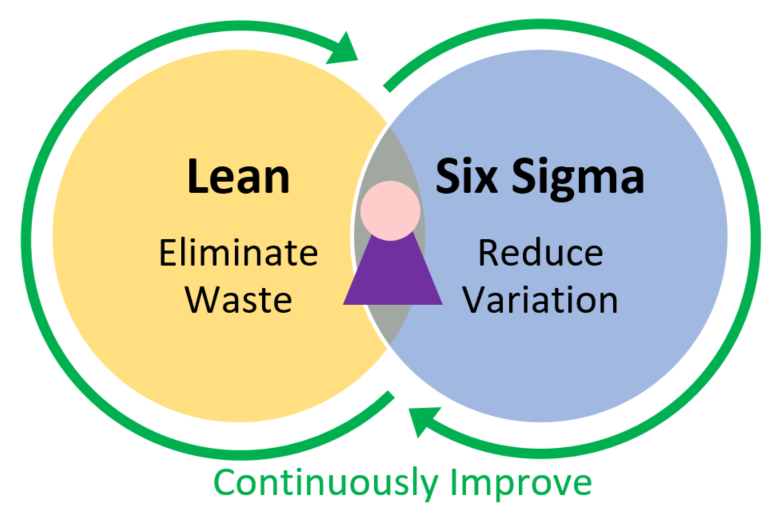
Lean manufacturing is centered on a simple idea: relentlessly eliminate waste. Anything that doesn't add value from the customer's perspective is considered waste. The Japanese term for waste is muda, and it comes in several forms.
The seven wastes (muda) are often remembered by the acronym TIMWOOD: Transportation, Inventory, Motion, Waiting, Overproduction, Over-processing, and Defects.
For example, producing more than is immediately needed (Overproduction) leads to excess inventory, which costs money to store and manage. Unnecessary movement of parts between workstations (Transportation) or people walking around to find tools (Motion) adds time without adding value.
By identifying and removing these wastes, lean principles help create a smoother, faster, and more cost-effective production flow.
The Six Sigma Approach
While Lean focuses on flow and waste, Six Sigma is all about quality and consistency. It's a data-driven methodology for eliminating defects. The name "Six Sigma" refers to a statistical goal: ensuring that a process produces no more than 3.4 defects per million opportunities. In practical terms, it means the process is extremely consistent and predictable.
Sigma
noun
In statistics, a symbol (σ) representing the standard deviation, a measure of the amount of variation or dispersion of a set of values.
Achieving this level of quality requires a structured problem-solving approach. The most common framework used in Six Sigma is DMAIC.
DMAIC stands for: Define, Measure, Analyze, Improve, and Control. It's a systematic, five-phase loop for process improvement.
In the Define phase, you define the problem and the project goals. In Measure, you collect data to quantify the current process performance. In Analyze, you dig into the data to find the root cause of the problem. In Improve, you develop and implement solutions to fix it. Finally, in Control, you put measures in place to ensure the improvements stick.
Together, Lean and Six Sigma provide a powerful toolkit. Lean principles speed up the process by eliminating waste, while Six Sigma makes the process more reliable by reducing defects. Integrating both leads to a manufacturing system that is fast, efficient, and produces high-quality products consistently.
Which of the following best describes the primary principle of machining?
A product requires regular maintenance that involves taking it apart and putting it back together. Which assembly method would be most appropriate?
Understanding these core processes and improvement philosophies is foundational for optimizing any manufacturing operation.