Semiconductor Supply Chain Risks
Semiconductor Supply Chain Overview
From Sand to Smartphone
The device you're using right now runs on semiconductors, or chips. These tiny electronic brains are the heart of modern technology, but they begin their life as one of the most common materials on Earth: sand.
Transforming sand into a complex chip involves a massive, globe-spanning effort called a supply chain. It’s a series of specialized steps, each handled by different companies in different countries, all working together to create the finished product. Think of it less like a single factory assembly line and more like a worldwide relay race.
This chain is incredibly specialized. One company might design the chip's blueprint in California, while another builds the ultra-precise machines needed for manufacturing in the Netherlands. A factory in Taiwan might then use those machines to print the circuits onto silicon, and finally, a facility in Malaysia could cut, package, and test the final chips.
Because each link in the chain is so specialized and expensive to create, the entire system is both incredibly efficient and remarkably fragile. A disruption in one part of the world can create a ripple effect that delays products everywhere.
The Manufacturing Journey
Making a semiconductor is one of the most complex manufacturing processes ever developed. It can be broken down into a few major stages, each a massive industry in its own right.
- Design: This is the architectural phase. Engineers design the intricate layout of transistors and circuits that will perform a specific task, like running a smartphone's operating system or processing graphics for a video game. Companies that only design chips are called fabless companies.
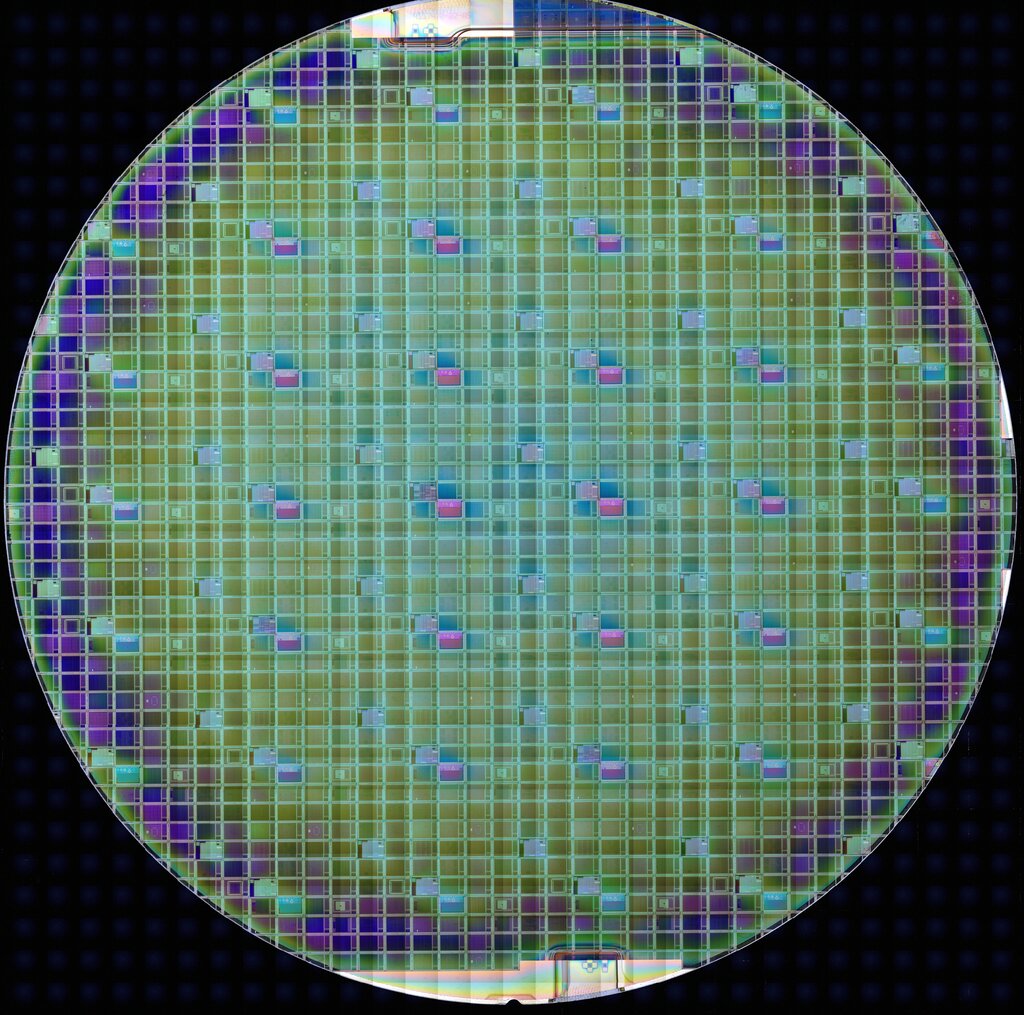
- Fabrication: Here, the design blueprint is physically created. This happens in a highly controlled, dust-free factory called a fabrication plant, or fab. Using a process called photolithography, the design is etched onto thin discs of pure silicon, called wafers. Hundreds or thousands of chips are built up in microscopic layers on a single wafer.
- Assembly, Test, and Packaging (ATP): Once the wafer is complete, it's sliced into individual chips, or dies. Each die is tested for defects. The ones that work are then enclosed in a protective casing (packaging) with metal pins that allow it to connect to a larger circuit board. This is the final form you’d recognize as a chip.
A Global Team of Specialists
No single company or country controls the entire semiconductor supply chain. Instead, it’s a network of highly specialized players who are the best in the world at their specific job.
-
Fabless Design Companies: These are the architects. They focus exclusively on designing chips and outsource the manufacturing. Examples include NVIDIA, known for its graphics processing units (GPUs), Qualcomm, a leader in smartphone chips, and AMD.
-
Foundries: These are the builders. They operate the multi-billion dollar fabs that fabricate chips for fabless companies. The most dominant player is TSMC (Taiwan Semiconductor Manufacturing Company), followed by Samsung (South Korea) and GlobalFoundries (USA).
-
Integrated Device Manufacturers (IDMs): These companies do it all: they design, fabricate, and sell their own chips. Intel is the most famous example.
-
Equipment Manufacturers: A critical, often overlooked part of the chain. These companies build the incredibly complex machinery used inside fabs. For example, the Dutch company ASML is the only company in the world that makes the extreme ultraviolet (EUV) lithography machines needed to produce the most advanced chips.
This sophisticated global semiconductor chain has been made possible by decades of collaboration between companies in different countries.
Powering Every Industry
It's hard to overstate the importance of semiconductors. They aren't just in computers and phones; they're essential components in nearly every modern industry.
| Sector | Role of Semiconductors |
|---|---|
| Consumer Electronics | Powers smartphones, laptops, TVs, gaming consoles, and smart home devices. |
| Automotive | Controls everything from engine management and safety systems (airbags, ABS) to in-car infotainment and autonomous driving features. |
| Telecommunications | Enables network infrastructure like cell towers, routers, and servers that form the backbone of the internet and mobile communication. |
| Healthcare | Used in critical medical devices such as pacemakers, MRI machines, and advanced diagnostic equipment. |
| Industrial | Drives factory automation, robotics, and power grid management. |
A modern car can contain thousands of individual chips. The global push toward electric vehicles and AI is only increasing the world's reliance on these tiny powerhouses. This deep integration into the global economy is why a chip shortage can halt car production lines and delay the release of new electronics.
Now, let's test your understanding of how this critical global industry works.
Which of the following best describes the modern semiconductor supply chain?
A company like NVIDIA, which focuses exclusively on designing chips and outsources the physical manufacturing, is known as a...
Understanding this supply chain is key to understanding the geopolitics, economics, and technological advancements of the 21st century.