Semiconductor Supply Chain Risks
Semiconductor Supply Chain Overview
The Journey of a Chip
Semiconductors are the brains behind virtually every piece of modern technology. From your smartphone and car to the vast data centers that power the internet, these tiny electronic components are essential. They're often called microchips or integrated circuits (ICs), and they're made from materials like silicon that can act as both a conductor and an insulator of electricity, giving them precise control over electrical current.
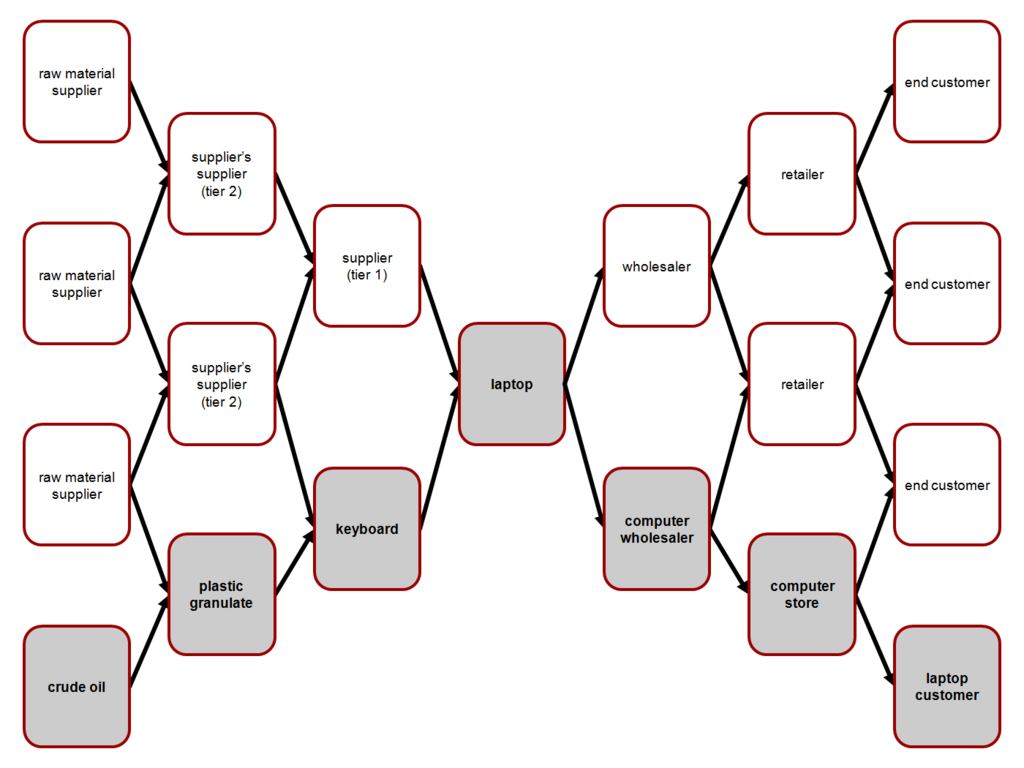
Creating a single chip is not a simple task. It's one of the most complex and globalized manufacturing processes in the world. A chip might be designed in one country, fabricated in another, and assembled and tested in a third, with raw materials and specialized equipment coming from even more places. This intricate network of companies and countries forms the semiconductor supply chain.
From Sand to Smartphone
The process of making a semiconductor is a marvel of engineering that happens on a microscopic scale. It begins with one of the most abundant materials on Earth: sand.
The primary raw material for semiconductors is silicon, which is purified from quartz, a mineral found in common sand.
This raw silicon is purified to an incredible degree, often reaching 99.9999999% purity. It's then melted and grown into large, cylindrical single-crystal ingots. These ingots are sliced into very thin, perfectly polished discs called wafers, which serve as the foundation for the chips.
The next stage is wafer fabrication, which takes place in highly specialized factories called fabs. Inside these ultra-clean environments, hundreds or even thousands of identical chips are built up layer by layer on a single wafer. This involves a sequence of complex steps repeated many times:
In deposition, thin films of various materials are applied to the wafer. Photolithography then uses light to project a microscopic circuit pattern onto the wafer. Etching selectively removes material to create the desired features, and doping introduces impurities to alter the silicon's electrical properties. This entire cycle can be repeated hundreds of times to build the intricate, three-dimensional structures of modern chips.
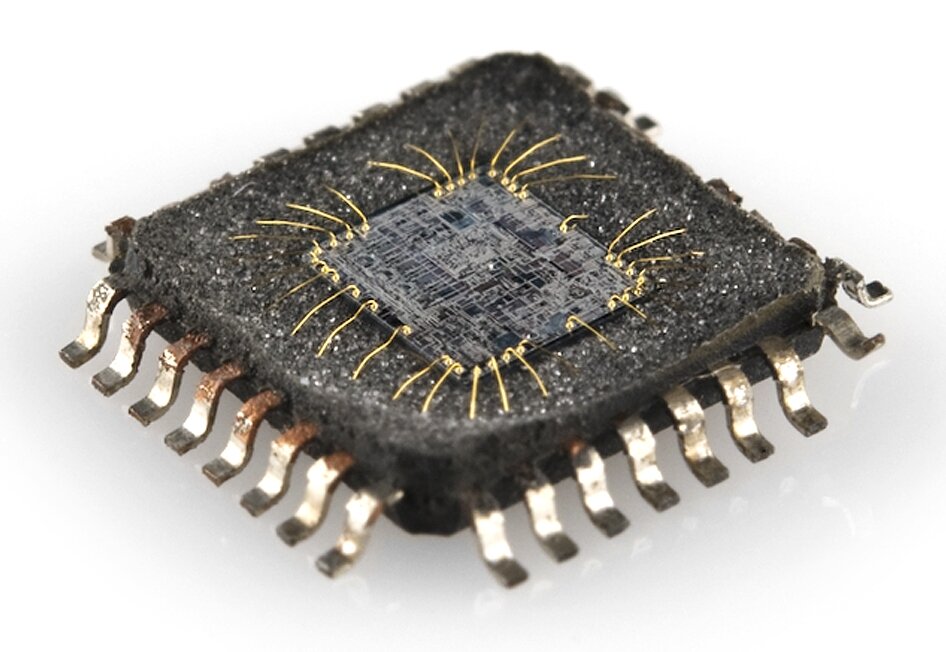
Once fabrication is complete, the wafer moves to the final stage: Assembly, Testing, and Packaging (ATP). The wafer is cut into individual chips, known as dies. Each die is tested, and the functional ones are then enclosed in a protective plastic or ceramic package with metal connectors. This is the familiar black chip you might see on a circuit board.
A Global Effort
No single company or country controls the entire semiconductor supply chain. Instead, it's a highly specialized and interdependent global ecosystem. Different regions excel at different stages of the process.
| Region/Country | Primary Role in Supply Chain |
|---|---|
| United States | Chip Design, Manufacturing Equipment |
| Taiwan | Advanced Wafer Fabrication |
| South Korea | Memory Chip Fabrication |
| Europe | Manufacturing Equipment, Automotive Chips |
| Japan | Raw Materials (e.g., Silicon Wafers, Chemicals) |
| China & SE Asia | Assembly, Testing, and Packaging |
This specialization has driven incredible innovation and efficiency. Companies like NVIDIA and AMD in the U.S. design powerful chips but outsource the manufacturing to foundries like TSMC in Taiwan. Similarly, ASML in the Netherlands has a near-monopoly on the advanced lithography machines needed to make the most powerful chips.
This sophisticated global semiconductor chain has been made possible by decades of collaboration between companies in different countries.
The result is a market worth over half a trillion dollars annually, underpinning trillions more in global economic activity. The health of this supply chain is critical not just for the tech industry, but for the entire modern economy. Understanding its structure is the first step in appreciating its power and its fragility.