Semiconductor Supply Chain Risks
Semiconductor Supply Chain Overview
The Brains of Modern Life
Nearly every piece of modern technology, from your phone to your car, relies on tiny electronic components called semiconductors. Think of them as the microscopic brains that power our world. They process information, store memory, and control the functions of countless devices.
Semiconductor
noun
A material, typically silicon, that can conduct electricity under some conditions but not others, making it an ideal medium for controlling electrical current.
Without these chips, the digital age wouldn't exist. They are fundamental to computing, communication, healthcare, transportation, and even national security. This immense importance makes their supply chain one of the most critical and complex in the world.
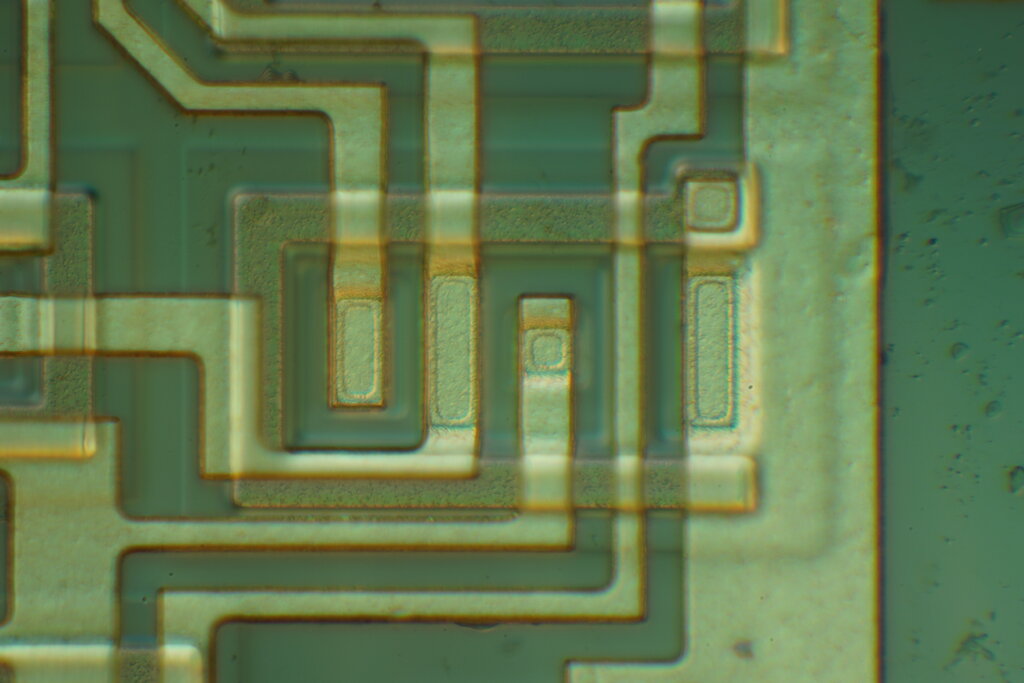
From Sand to Smartphone
Creating a semiconductor is a long and incredibly precise journey that spans the globe. It begins with a raw material, usually highly purified silicon derived from sand, and ends with a finished chip ready to be installed in a device. The process can be broken down into a few main stages.
First is Design. Specialized companies, known as "fabless" firms, create the intricate blueprints for the chips. They don't manufacture the chips themselves; they focus solely on the research and development to create powerful and efficient designs.
Next comes Fabrication. This is where the designs are brought to life. In massive, ultra-clean factories called foundries or "fabs," the chip designs are etched onto thin discs of pure silicon called wafers. This process, known as lithography, is one of the most technologically advanced and expensive manufacturing processes on Earth. A single wafer can hold hundreds or even thousands of individual chips.
Once the wafers are complete, they move to Assembly, Test, and Packaging (ATP). Here, the wafer is sliced into individual chips. Each chip is tested to ensure it works correctly, and then it's encased in a protective package that connects it to the circuit board of a larger device. This stage is less capital-intensive but requires a significant amount of labor.
Finally, the packaged chips are Distributed to electronics companies around the world, who integrate them into their final products, like laptops, servers, and cars.
A Global Jigsaw Puzzle
No single country controls the entire semiconductor supply chain. Instead, it's a highly specialized and geographically distributed system where different regions excel at different stages. This global collaboration has allowed for incredible innovation and efficiency.
The United States is a leader in chip design. Many of the top fabless companies and the firms that make the essential design software (EDA) are based there.
When it comes to fabrication, East Asia is dominant. Taiwan's TSMC and South Korea's Samsung are the world's leading foundries, especially for the most advanced chips. They have invested billions of dollars to build and maintain their cutting-edge fabs.
Europe, particularly the Netherlands, plays a critical role in supplying the manufacturing equipment. The Dutch company ASML, for example, has a monopoly on the extreme ultraviolet (EUV) lithography machines necessary to produce the most advanced semiconductors.
Assembly, testing, and packaging are largely concentrated in Southeast Asian countries like Malaysia, Vietnam, and the Philippines, where labor costs are lower.
This intricate web of dependencies means that a chip might be designed in California, manufactured in Taiwan using Dutch machines, assembled in Malaysia, and finally installed into a German car. It's a marvel of global logistics and cooperation.
This sophisticated global semiconductor chain has been made possible by decades of collaboration between companies in different countries.
The industry didn't start this way. In the mid-20th century, companies like Intel and Texas Instruments were vertically integrated, meaning they designed and manufactured their chips in-house, mostly in the United States. Over time, the staggering cost of building new fabs led to the rise of the foundry model and the globalized supply chain we see today.
A technology company based in California develops a groundbreaking new processor design but outsources the manufacturing to a factory in Taiwan. What is the most accurate term for this type of company?
Arrange the following stages of the semiconductor supply chain in the correct chronological order.