Semiconductor Supply Chain Risks
Semiconductor Supply Chain Overview
The Journey of a Chip
Semiconductors, or chips, are the brains behind nearly every modern device. They power our phones, cars, computers, and even kitchen appliances. But creating these tiny, powerful components is a massive global undertaking. No single company or country controls the entire process. Instead, it's a complex, interconnected supply chain that stretches across continents, involving highly specialized companies at each step.
This journey from raw material to finished product is a perfect example of a global value chain. Each stage adds value, and each stage requires immense expertise and investment. Let's break down what happens at each step.
From Sand to Silicon Wafers
Everything starts with raw materials. The most common material for chips is silicon, which is refined from quartz sand. This isn't just any silicon; it needs to be purified to an incredible degree, reaching 99.9999999% purity. This is known as electronic-grade silicon (EGS).
This ultra-pure silicon is melted down and grown into large, single-crystal cylinders called ingots. These ingots are then sliced into thin, perfectly polished discs known as wafers. A single wafer, typically 300mm (about 12 inches) in diameter, will eventually hold hundreds or even thousands of individual chips.
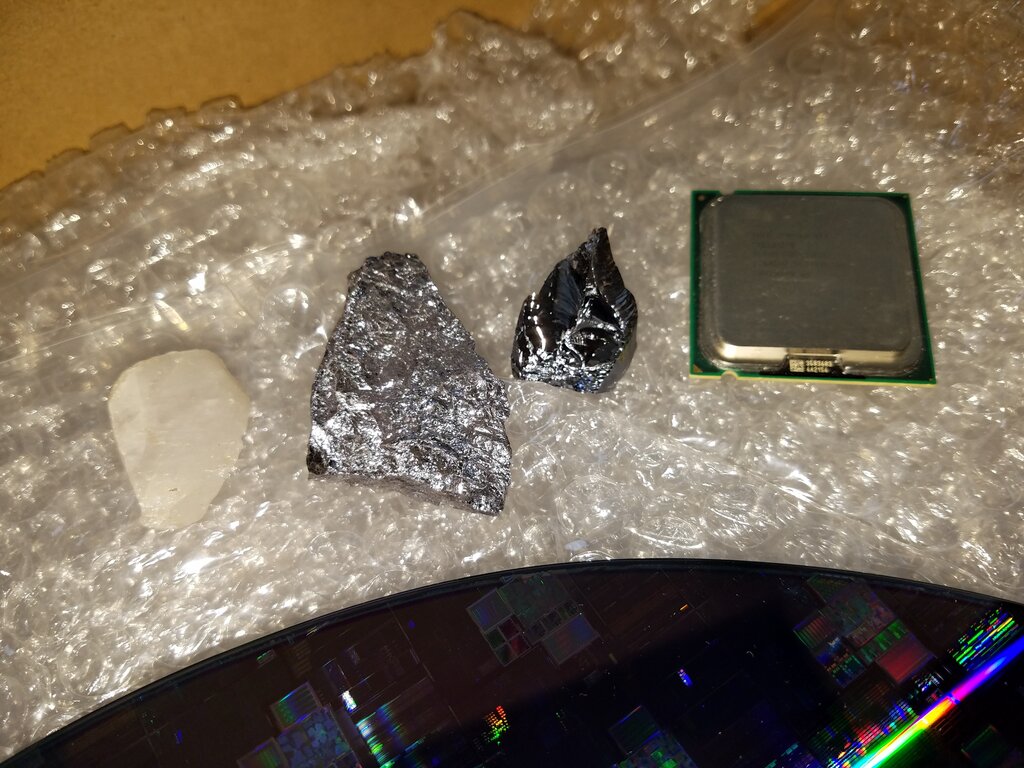
While silicon is the workhorse, other specialized materials like gallium arsenide are used for specific applications, such as high-frequency radio components in your smartphone.
Designing the Blueprint
Before a chip can be made, it must be designed. This is an incredibly complex process, akin to designing a city with billions of buildings (transistors) and roads (interconnects). This stage is dominated by specialized software and a few key business models.
Chip design relies on Electronic Design Automation (EDA) software. Companies like Synopsys and Cadence provide the sophisticated tools that engineers use to create and verify their chip layouts. Without EDA, modern chip design would be impossible.
Different companies play distinct roles in the design and manufacturing process. Understanding these roles is key to understanding the supply chain.
- Fabless Companies: These firms, like NVIDIA, Qualcomm, and Apple, focus exclusively on designing chips. They are the architects, creating the blueprints for cutting-edge processors. They don't own any manufacturing plants (fabs), so they outsource production.
- Foundries: These are the manufacturing specialists. Companies like TSMC and GlobalFoundries take the designs from fabless companies and turn them into physical chips. They are masters of the complex fabrication process.
- Integrated Device Manufacturers (IDMs): These companies, such as Intel and Samsung, do it all. They design, manufacture, and sell their own chips under one roof.
Manufacturing and Assembly
Once the design is complete and the wafers are ready, the most capital-intensive stage begins: fabrication. This happens inside massive, ultra-clean factories called fabs. Inside a fab, wafers go through hundreds of steps, where layers of materials are deposited and then etched away using a process called photolithography. This process uses light to transfer the chip design from a template, or mask, onto the silicon wafer, gradually building up the billions of transistors.
The fabrication process is so precise that a single speck of dust can ruin a chip. This is why fabs are thousands of times cleaner than a hospital operating room.
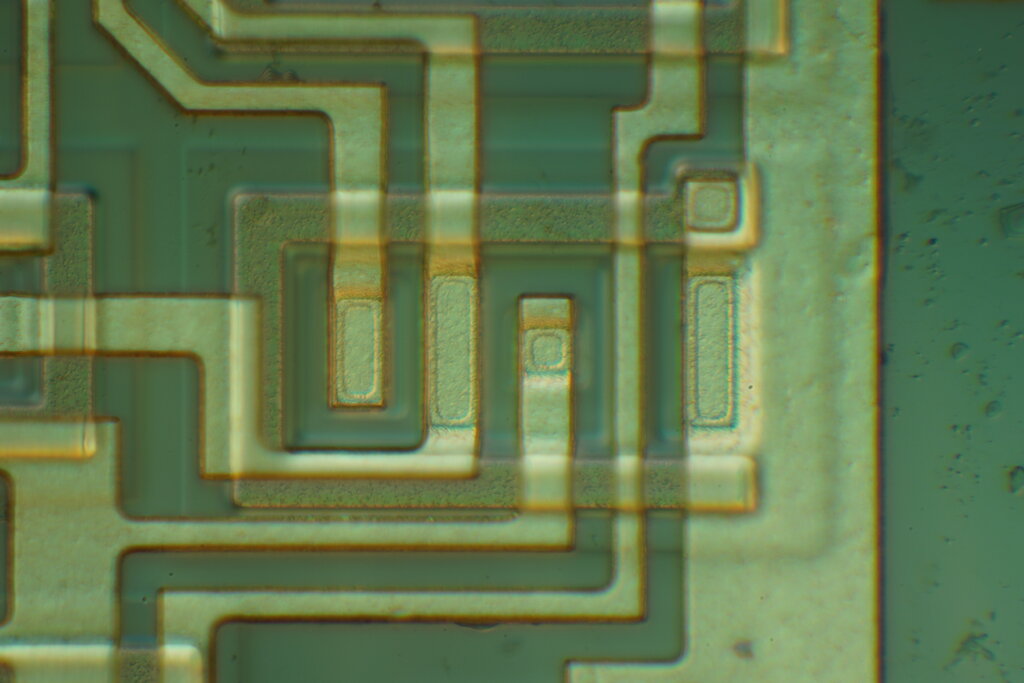
After fabrication, the wafer is still just a single disc with hundreds of identical chips on it. The final manufacturing stage is Assembly, Test, and Packaging (ATP).
The wafer is sliced to separate the individual chips (called dies). Each functional die is then tested, placed into a protective plastic or ceramic package, and connected to the metal pins that allow it to be mounted onto a circuit board. This packaging protects the delicate silicon and allows it to connect to the outside world.
This ATP stage is often handled by yet another set of specialized companies, known as Outsourced Semiconductor Assembly and Test (OSAT) providers. Finally, the finished, packaged chips are shipped to electronics manufacturers like Dell or Toyota, who integrate them into the devices we use every day.
Now that you understand the journey of a chip, let's review the key players and concepts.
What is the most common raw material refined to create the silicon wafers used in chip manufacturing?
A company like NVIDIA or Qualcomm, which focuses exclusively on designing chips and outsources manufacturing, is known as a(n)...
Each link in this chain is a marvel of engineering and logistics. The deep specialization and global interdependence are what make the semiconductor industry both incredibly efficient and uniquely complex.