Semiconductor Supply Chain Risks
Semiconductor Supply Chain Overview
The Global Chip Journey
At the heart of nearly every electronic device you own is a tiny marvel of engineering: the semiconductor chip. Often called the “brains” of modern electronics, these components are what allow your phone, computer, car, and even your coffee maker to process information and function. They're built from materials that can act as both a conductor, like copper, and an insulator, like rubber, giving them the unique ability to control electrical current precisely.
This control is the foundation of all modern computing, turning simple electrical signals into the complex operations that power our digital world.
Making a single semiconductor chip isn't just a complicated technical process; it's a massive global collaboration. No single company or country handles the entire process from start to finish. Instead, it relies on a highly specialized, interconnected network of players from all over the world. This network is known as the semiconductor supply chain.
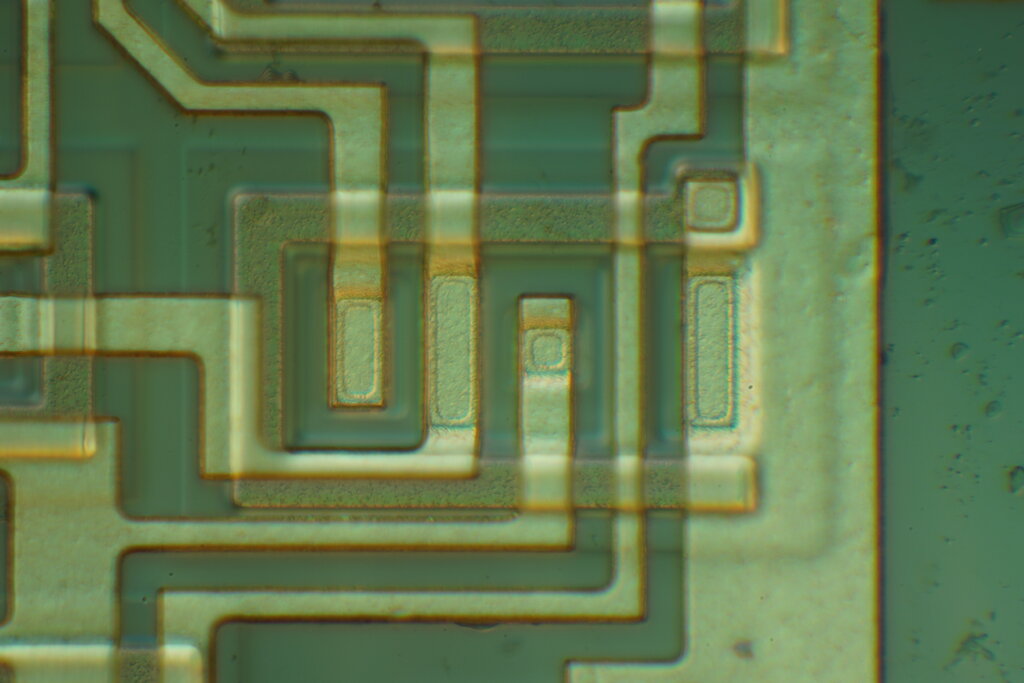
From Sand to Smartphone
The journey of a semiconductor is a long and complex one, spanning multiple continents and involving a series of highly specialized steps. It's a perfect example of a globalized production process.
1. Raw Materials: It all begins with a surprisingly common material: sand. High-purity quartz sand is refined to produce nearly pure silicon, which is then grown into large, cylindrical crystals called ingots. These ingots are sliced into ultra-thin discs known as wafers. This stage also requires a host of other materials, including specialized chemicals and gases, sourced from various global suppliers.
2. Chip Design: Before anything is built, the chip must be designed. This is a purely intellectual process, creating a complex blueprint for the chip's circuitry. Companies known as "fabless" firms specialize in this. They use sophisticated Electronic Design Automation (EDA) software to lay out billions of transistors. Key players in design and EDA are heavily concentrated in the United States.
3. Fabrication: This is where the design becomes a physical reality. Wafers are sent to fabrication plants, or "fabs," which are among the cleanest and most technologically advanced factories on Earth. In a multi-billion dollar cleanroom, hundreds of steps involving light, chemicals, and gases are used to etch the chip designs onto the silicon wafers. This step is dominated by a few companies in Taiwan and South Korea, which possess the unique and costly equipment required for cutting-edge manufacturing.
4. Assembly, Test, and Packaging (ATP): Once fabrication is complete, the wafer, now containing hundreds of individual chips, is sent to another facility. Here, the wafer is sliced to separate the chips. Each chip is then tested, and the functional ones are enclosed in a protective casing (the familiar black rectangle you see on a circuit board) with metal pins for connecting to other components. This part of the supply chain is largely based in Southeast Asia, including Malaysia, Vietnam, and the Philippines.
5. Integration: Finally, the finished, packaged chips are shipped to electronics manufacturers around the world. These companies, like Apple or Dell, integrate the chips into their final products, such as smartphones, laptops, and servers. This final assembly often takes place in China and other parts of Asia.
A Web of Dependencies
The semiconductor supply chain is a web of deep interdependencies. A design firm in California relies on manufacturing equipment from the Netherlands to be used in a fab in Taiwan, which in turn ships wafers to a packaging plant in Malaysia, whose final products are sent to an assembly line in China.
This sophisticated global semiconductor chain has been made possible by decades of collaboration between companies in different countries.
This high degree of specialization has made the industry incredibly efficient, allowing for the rapid technological advancement we've seen over the last several decades. However, it also means that a disruption in one part of the world can have ripple effects across the entire globe.
Each region and company plays a critical, often irreplaceable, role. The United States leads in chip design and software, Europe produces key manufacturing equipment and chemicals, and Asia dominates manufacturing, packaging, and assembly. This intricate dance of global cooperation is what puts powerful technology in the palm of your hand.
Let's test your understanding of how the global semiconductor supply chain functions.
What common material is the primary building block for semiconductor wafers?
The “fabrication” stage, where chip designs are physically etched onto silicon wafers, is geographically concentrated in which two regions?
Understanding this complex, global journey is the first step to appreciating both the triumphs and the challenges of the modern technology industry.