Semiconductor Supply Chain Risks
Semiconductor Supply Chain Overview
From Sand to Smartphone
Nearly every piece of modern technology, from your car to your coffee maker, runs on semiconductors. These tiny electronic brains, also known as chips or integrated circuits, are the foundation of the digital world. But how does a grain of sand become the powerful processor in your phone? It's a journey that spans the globe, involving specialized companies and incredibly precise manufacturing.
The semiconductor supply chain isn't a straight line from one factory to the next. It’s a complex, interconnected network of designers, material suppliers, manufacturers, and distributors. Each stage often happens in a different part of the world, making it a masterpiece of global logistics.
The Blueprint Phase
Every chip starts as an idea. The first major stage is design, a highly specialized field focused on creating the chip's intricate blueprint. Companies in this space, known as "fabless" companies, don't actually make the physical chips. Instead, they focus entirely on research and development, designing the complex circuitry that will perform a specific task.
They use sophisticated software called Electronic Design Automation (EDA) tools to lay out billions of transistors and their connections. This design is then saved as a file, which serves as the master plan for the manufacturer. This part of the process is knowledge-intensive, relying on brilliant engineers and intellectual property (IP).
Building the Chip
Once the design is complete, it's time for fabrication. This is where the digital blueprint becomes a physical reality. The process begins with a raw material, most commonly silicon, which is purified from sand and grown into large, cylindrical crystals. These crystals are then sliced into thin, perfectly polished discs called wafers.
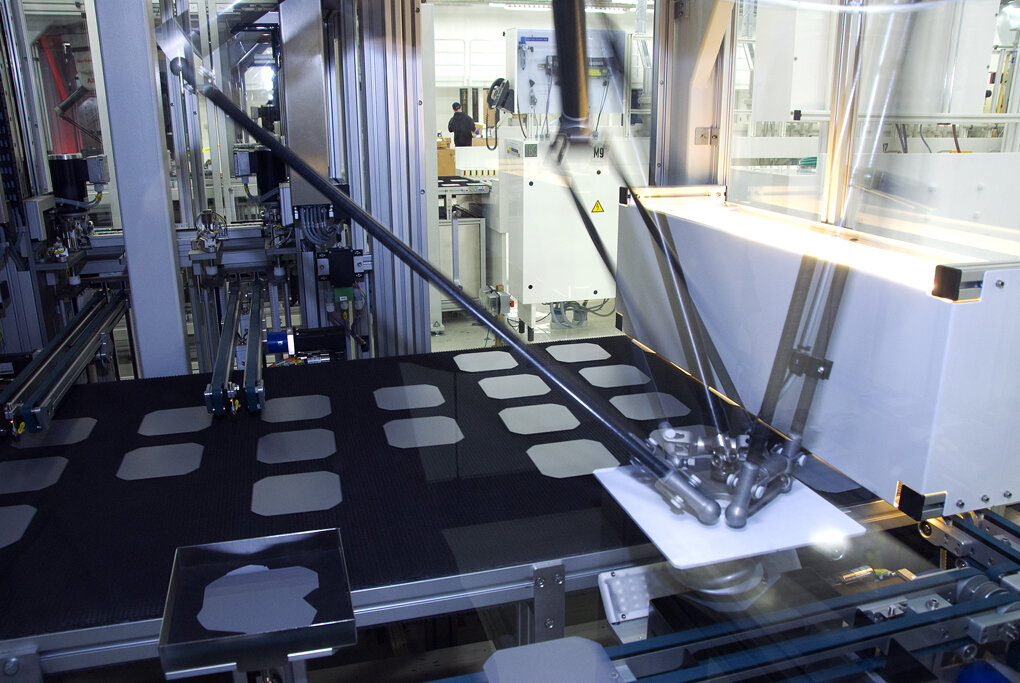
The manufacturing facilities, known as fabrication plants or "fabs," are some of the cleanest places on Earth. A single speck of dust can ruin a chip, so the air is filtered to a purity thousands of times greater than an operating room.
Inside the fab, the wafers undergo hundreds of steps. The most critical is photolithography, a process that works like photography. Light is projected through a mask (a template of the chip's design) onto the wafer, which is coated with a light-sensitive material. Chemicals then etch away the exposed material, creating the microscopic patterns of the chip's circuitry. This process is repeated layer by layer to build up the complex, three-dimensional structure of the integrated circuit.
The companies that perform this manufacturing service are called foundries. They are masters of precision manufacturing, turning designs from fabless companies into functional silicon.
Assembly and Distribution
After fabrication, the wafer contains hundreds or even thousands of identical chips, known as dies. The next stage is Assembly, Test, and Packaging (ATP). The wafer is sliced to separate the individual dies. Each functional die is then placed into a protective casing, or package. This is the black rectangle with metal pins that you see on a circuit board. The package protects the delicate silicon and provides the connections to the outside world.
During this stage, every single chip is tested rigorously to ensure it works perfectly. Chips that fail are discarded. This work is often done by specialized companies called Outsourced Semiconductor Assembly and Test (OSAT) providers. They are experts in the final steps of preparing chips for use.
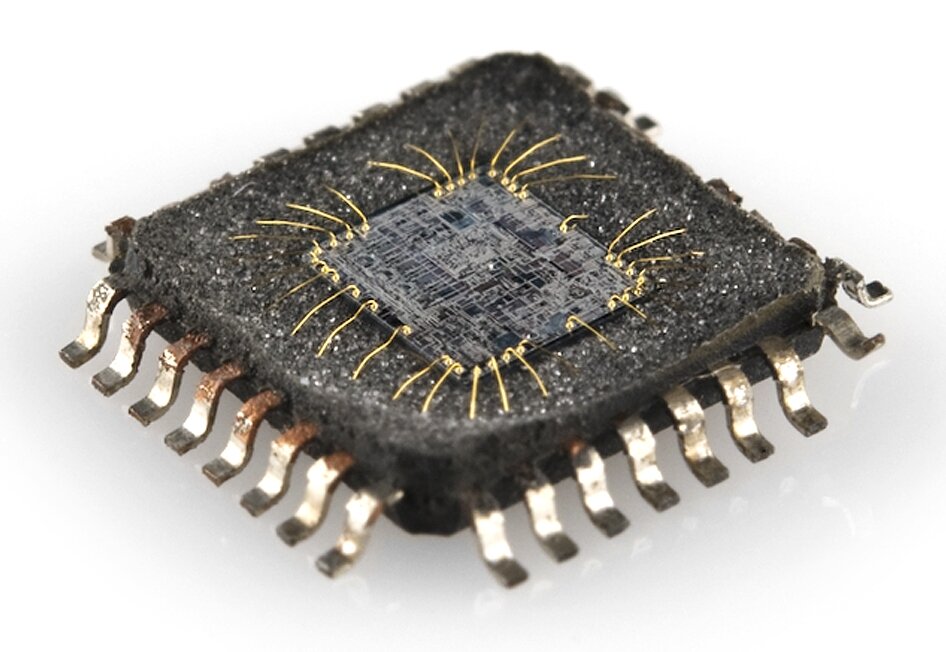
Finally, the finished, tested, and packaged chips are ready for distribution. They are shipped to electronics companies around the world, who solder them onto circuit boards and integrate them into final products like laptops, servers, and cars. The supply chain concludes when a consumer buys a device powered by these incredible pieces of technology.
Now, let's test your understanding of the semiconductor supply chain.
What is the primary raw material used to create the wafers for semiconductors?
A company that focuses solely on designing chips but does not manufacture them is known as a...
This global collaboration of designers, material suppliers, foundries, and testers is what makes our modern digital life possible.