Semiconductor Supply Chain Risk Analysis
Semiconductor Industry Overview
The Birth of the Digital Age
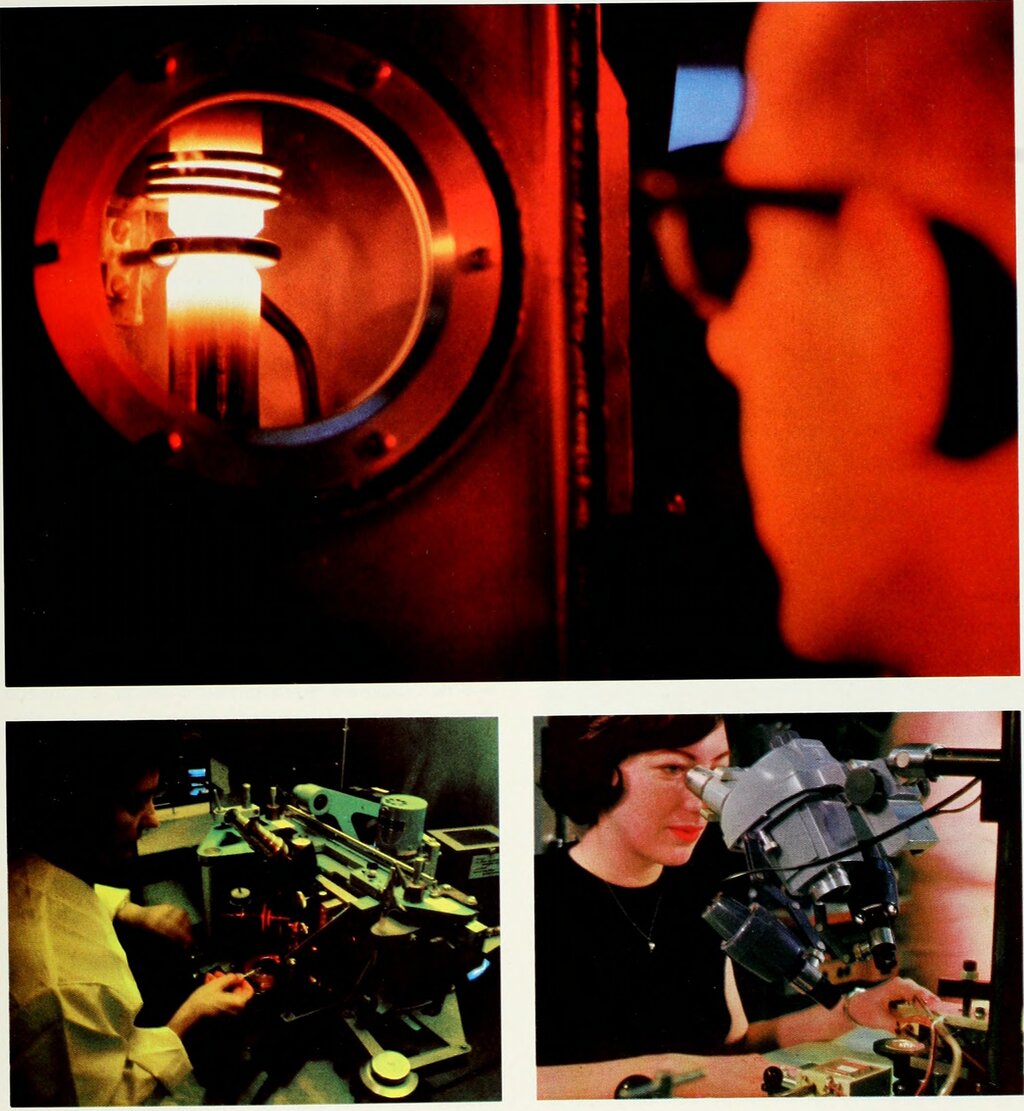
Before the 1950s, electronics were big, bulky, and unreliable. The powerful computers of the era were room-sized machines that relied on thousands of fragile glass vacuum tubes. They generated immense heat and burned out constantly. A revolution was needed.
The breakthrough came in 1947 at Bell Labs with the invention of the transistor. This tiny device could do the same job as a vacuum tube—amplifying electrical signals and switching them on or off—but it was made from a solid material, required far less power, and was much more reliable.
Semiconductor
noun
A material, typically silicon, that can be controlled to act as either a conductor or an insulator of electricity.
This was just the beginning. A decade later, engineers Jack Kilby and Robert Noyce independently developed the integrated circuit, or microchip. They figured out how to place multiple transistors and other components onto a single, tiny piece of semiconductor material. Instead of wiring individual parts together, they could manufacture them as a single unit. This innovation paved the way for mass production and miniaturization on a scale never seen before.
The Brains of Modern Electronics
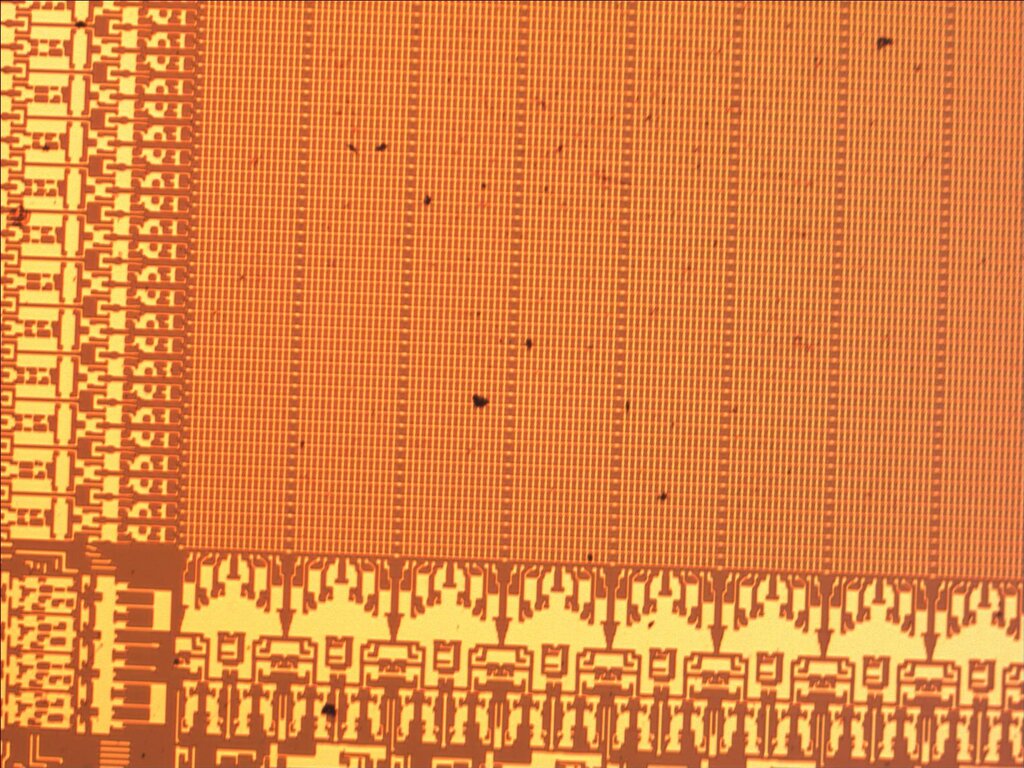
So what makes a semiconductor so special? Its power lies in control. Unlike a copper wire, which always conducts electricity, or rubber, which never does, a semiconductor can be made to switch between conducting and insulating states. By applying small electrical voltages, we can turn the flow of current on and off.
This simple on-off switching ability is the foundation of all digital computing. It allows us to represent the binary language of ones (on) and zeros (off) that computers use to process information. Billions of these tiny switches, working together on a single chip, perform the complex calculations that power our devices.
Every microchip is a city of billions of microscopic switches, all flipping on and off to run programs, process data, and connect us to the world.
The industry's progress has been guided by an observation known as Moore's Law. Co-founder of Intel Gordon Moore predicted in 1965 that the number of transistors on a chip would roughly double every two years. This relentless pace of innovation has made electronics exponentially more powerful, smaller, and more affordable over the last half-century.
Powering Our World
It's difficult to find a piece of modern technology that doesn't rely on semiconductors. They are the unseen engines driving the global economy and our daily lives. Their applications are vast and continue to grow.
Semiconductors are the lifeblood of modern technology — from AI to cloud computing to self-driving cars.
Consider the device you're using right now. It is powered by numerous chips, including a central processor that acts as its brain, memory chips that store information, and specialized chips for managing the screen, battery, and wireless communication.
Beyond personal electronics, semiconductors are critical in almost every industry:
- Automotive: Modern cars contain over a thousand chips that manage everything from the engine and safety systems to the infotainment console.
- Healthcare: Medical devices like pacemakers, MRI machines, and glucose monitors depend on specialized semiconductors to function.
- Communications: The entire global network, from massive data centers to the cell towers that connect our phones, is built on semiconductor technology.
- Energy: Smart grids and renewable energy systems use chips to optimize power distribution and efficiency.
From the rise of artificial intelligence to the exploration of space, the continued advancement of semiconductor technology is what makes the future possible.
Let's check your understanding of these fundamental concepts.
What was the primary technology used for switching and amplifying electrical signals in large, room-sized computers before the 1950s?
The fundamental ability of a semiconductor to represent the binary language of ones and zeros stems from its capacity to do what?
The semiconductor industry is the critical foundation upon which our digital world is built, a story of relentless innovation that has transformed society in just a few decades.