Semiconductor Physics Fundamentals
Atomic Structure
The Atom's Architecture
At the heart of every atom is a nucleus, with electrons moving around it. But these electrons don't just circle the nucleus like planets around the sun. Instead, they exist in specific regions of space, almost like clouds of probability. These regions are called orbitals, and each one has a distinct shape and energy level.
Atomic Orbital
noun
A region in the space around an atom's nucleus where there is a high probability of finding an electron.
Think of orbitals as different floors and rooms in a hotel. Electrons, like guests, prefer to occupy the lowest-energy rooms first. The simplest orbital is the 's' orbital, which is spherical. As we move to higher energy levels, we find 'p' orbitals, which look like two lobes, and then more complex 'd' and 'f' orbitals.
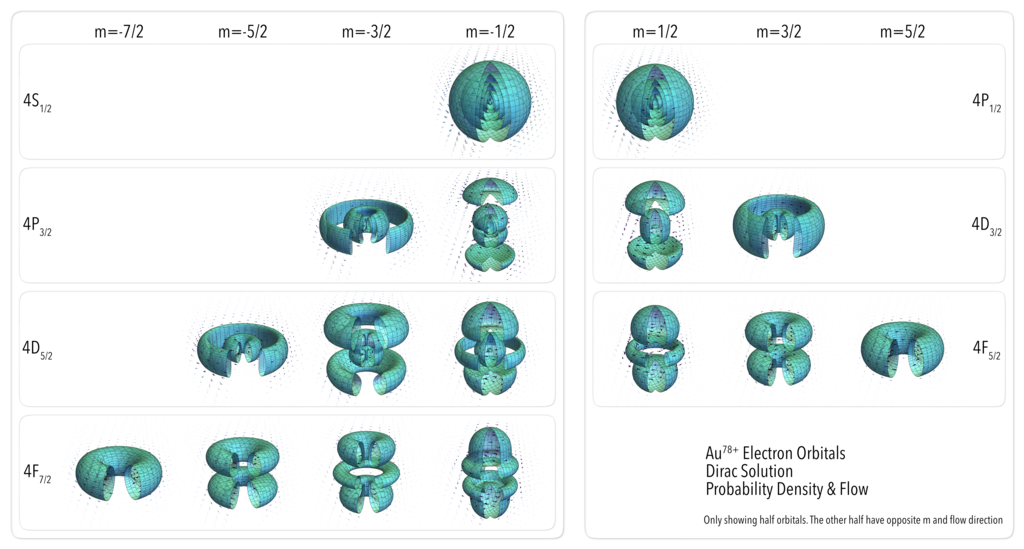
The specific arrangement of electrons in these orbitals is called the electron configuration. It's a precise address for every electron in an atom. For example, a sodium atom has 11 electrons. Two fill the first energy level (the 1s orbital), eight fill the second level (the 2s and 2p orbitals), and the last one sits by itself in the third level (the 3s orbital). This single, outermost electron is what makes sodium so reactive.
| Element | Symbol | Atomic Number | Electron Configuration |
|---|---|---|---|
| Hydrogen | H | 1 | 1s¹ |
| Helium | He | 2 | 1s² |
| Carbon | C | 6 | 1s²2s²2p² |
| Sodium | Na | 11 | 1s²2s²2p⁶3s¹ |
The electrons in the outermost shell are called valence electrons. They are the most important players in chemistry because they are the ones that interact with other atoms.
How Atoms Connect
Atoms form chemical bonds to achieve a more stable state. The goal is usually to have a full outer shell of valence electrons, which is the most stable arrangement. Atoms can achieve this by giving away, accepting, or sharing electrons with other atoms. This interaction creates a force that holds the atoms together, known as a chemical bond.
The number of valence electrons an atom has is the primary factor determining its chemical properties and how it will bond.
The first type of bond is the ionic bond. This happens when one atom completely transfers one or more of its valence electrons to another. A classic example is the formation of table salt, sodium chloride (NaCl). Sodium has one valence electron it would like to give away, and chlorine has seven and would eagerly accept one to complete its outer shell.
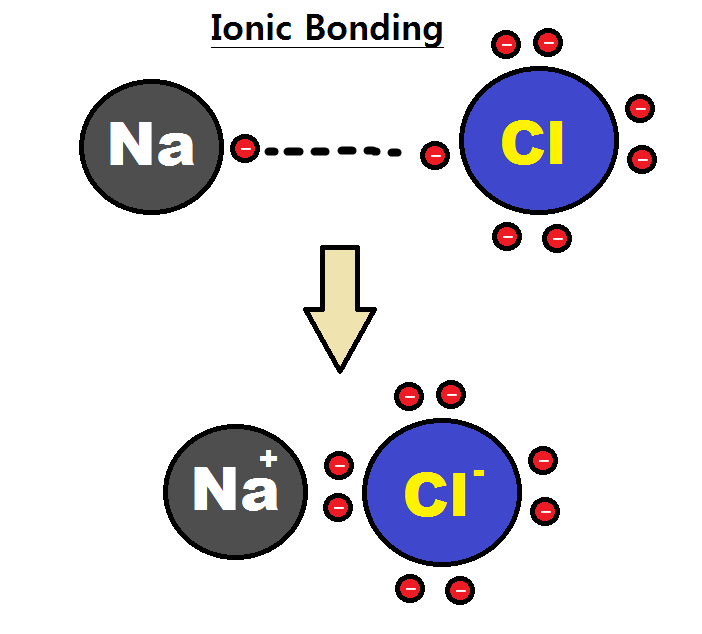
After the transfer, sodium becomes a positively charged ion (a cation) because it has one more proton than electrons. Chlorine becomes a negatively charged ion (an anion). The strong electrostatic attraction between these opposite charges is what forms the ionic bond.
Next is the covalent bond. Instead of a transfer, electrons are shared between atoms. This typically happens between non-metal atoms that have similar tendencies to attract electrons. By sharing, both atoms can count the shared electrons towards their own valence shells, achieving stability.
A simple example is a hydrogen molecule (H₂). Each hydrogen atom has one electron. By sharing their electrons, they both effectively have two electrons in their outer shell, which makes them stable.
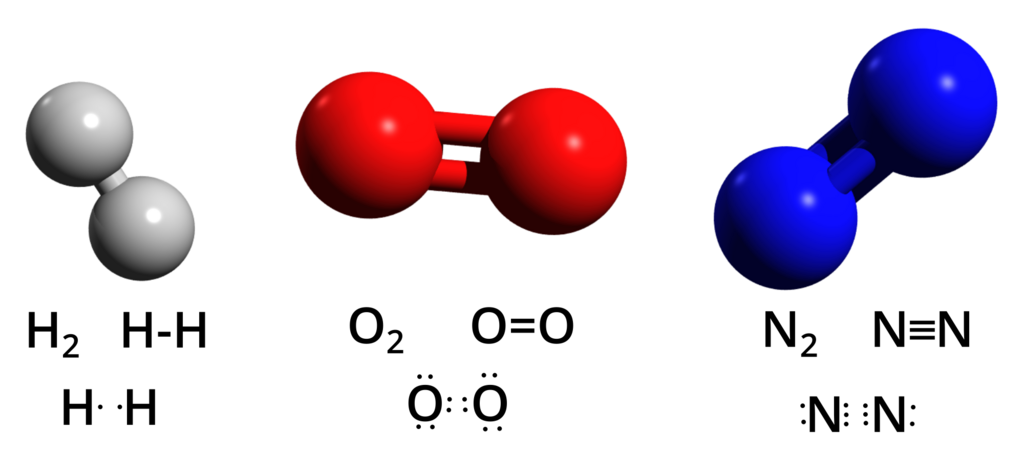
Atoms can share one pair of electrons (a single bond), two pairs (a double bond), or even three pairs (a triple bond). Covalent bonds are the glue that holds together the vast majority of molecules essential for life, including water and all organic compounds.
From Bonds to Solids
The third major type of bond is the metallic bond, which is found, as the name suggests, in metals. In a metallic substance, the valence electrons aren't tied to any single atom. Instead, they are delocalised, forming a 'sea' of electrons that flows freely among a fixed lattice of positive metal ions.
This electron sea is what gives metals their characteristic properties. The free movement of electrons allows metals to conduct electricity and heat very well. It also explains why they are malleable and ductile; the layers of ions can slide past each other without breaking the bonds, as the electron sea adjusts to the new shape.
Ionic, covalent, and metallic bonds are the fundamental forces that assemble individual atoms into the molecules and solid materials that make up our world.
When atoms come together, they form molecules, like H₂O (water), or extensive crystal lattices, like diamond (covalent) or salt (ionic). The type of bonding dictates the final structure and properties of the material. A solid held together by strong covalent bonds, like diamond, will be extremely hard. A material held by ionic bonds will often be brittle, and a metal will be strong yet flexible. Understanding these basic connections between atoms is the first step to understanding the properties of all materials.