Semiconductor Industry Analyst Masterclass
Semiconductor Industry Overview
From Silicon Valley to the World
The semiconductor industry didn't start with a bang, but with a quiet discovery. The invention of the transistor at Bell Labs in 1947 laid the groundwork, replacing bulky vacuum tubes with something small, efficient, and solid. This innovation sparked a migration of talent to a stretch of land in Northern California that would soon be known as Silicon Valley. Companies like Fairchild Semiconductor and Intel pioneered the integrated circuit, cramming more and more transistors onto a single piece of silicon.
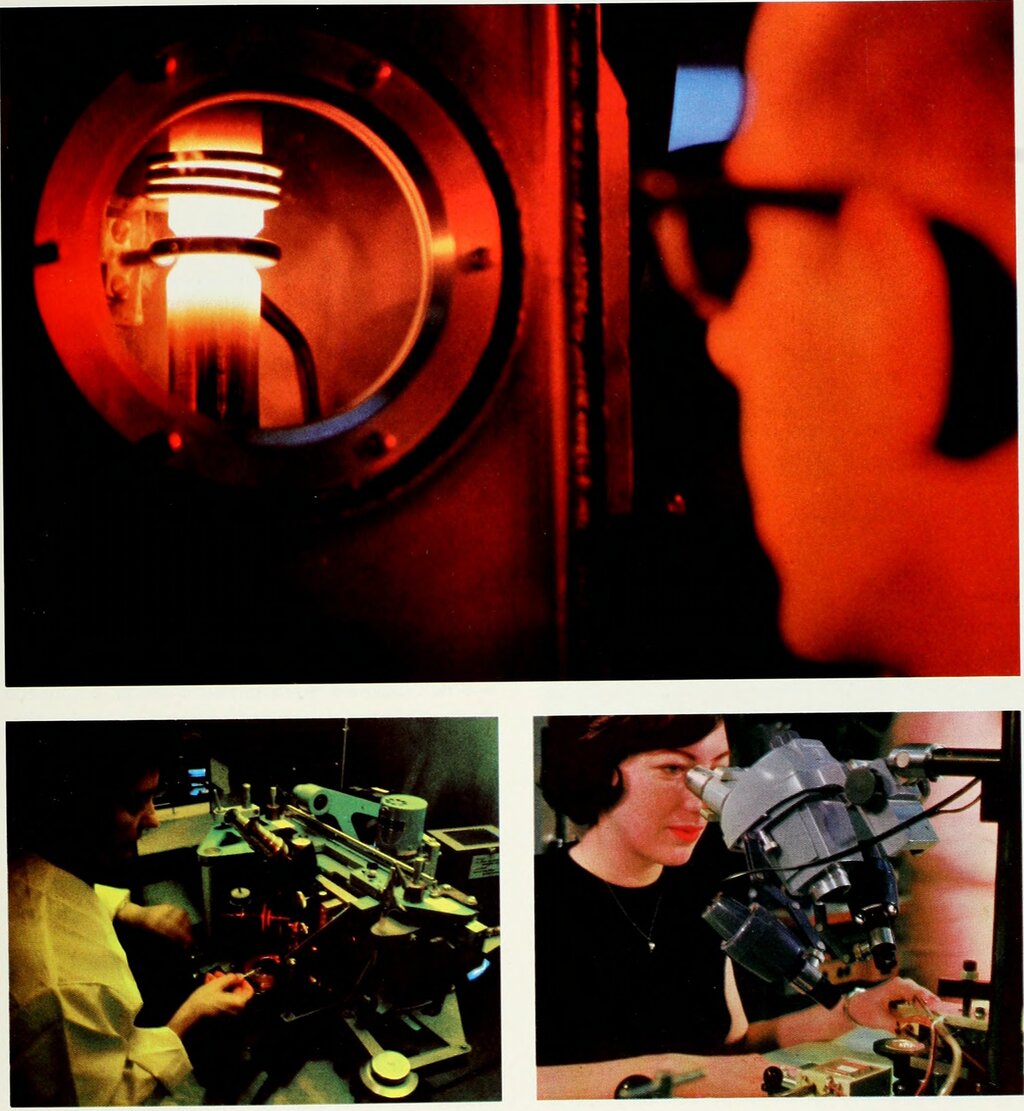
Early on, the industry was vertically integrated. A company like Intel would design its chips, develop the complex manufacturing process, and fabricate them in its own factories, known as "fabs." This was the IDM, or Integrated Device Manufacturer, model. It required immense capital and deep expertise in every step of the process, from theoretical design to chemical engineering.
The IDM model meant one company controlled the entire process: design, manufacturing, and packaging. This was the standard for decades.
This model worked for a long time. It drove Moore's Law, the famous observation by Intel co-founder Gordon Moore that the number of transistors on a chip would double roughly every two years. But the cost of building cutting-edge fabs began to skyrocket, rising from millions to billions of dollars. This created an opening for a new way of doing business.
The Great Unbundling
The industry's big shift came with the rise of the "fabless" model. A Taiwanese company, Taiwan Semiconductor Manufacturing Company (TSMC), had a radical idea in the 1980s: what if they just manufactured chips for other companies? They wouldn't design any of their own. They would be a pure-play foundry.
This unbundling separated design from manufacturing. It allowed a new wave of innovative companies like NVIDIA and Qualcomm to focus exclusively on designing powerful chips without needing to spend billions on building their own fabs. They became the fabless companies, while TSMC and others became the foundries. This specialization supercharged innovation across the industry.
Today, the industry is dominated by a few key players, each with a distinct role.
- Intel: The classic IDM, still designing and manufacturing many of its own chips, though it has started to use foundries for some products.
- Samsung: A powerhouse that is also an IDM, manufacturing its own chips for its huge electronics empire while also operating a foundry business that competes with TSMC.
- TSMC: The world's largest pure-play foundry. It doesn't design chips, but it manufactures them for the world's biggest tech companies, including Apple, AMD, and NVIDIA. Their manufacturing prowess is unmatched at the cutting edge.
This specialization has led to a highly globalized and interconnected supply chain. A chip might be designed in California, manufactured in Taiwan, and then sent to Malaysia for assembly and testing before being installed in a device assembled in China.
The semiconductor industry is dominated by a handful of players, and that number dwindles further when it comes to the cutting edge of microprocessor design and manufacture.
The Modern Landscape
The demand for semiconductors has never been higher. They are the brains behind everything from smartphones and cars to data centers and artificial intelligence. This insatiable demand drives a relentless cycle of innovation and investment. The market is cyclical, with periods of high demand and shortage followed by periods of oversupply, but the long-term growth trend is undeniably upward.
However, the globalization that made the industry so efficient has also created vulnerabilities. The heavy concentration of advanced manufacturing in Taiwan has raised geopolitical concerns. A disruption there, whether from natural disaster or political conflict, could bring the global tech industry to a standstill. In response, countries like the United States, Japan, and Germany are now investing tens of billions of dollars to build more fabs on their own soil, hoping to make their supply chains more resilient.
This push for regionalization is reshaping the industry map once again. While the fabless-foundry model will likely remain dominant, the geography of where those foundries are located is set to become much more diverse.
Time to check what you've learned about the semiconductor industry.
What key invention at Bell Labs in 1947 is considered the foundational technology for the modern semiconductor industry?
A company that exclusively designs chips but outsources the manufacturing process to a third party is known as a:
Understanding this history and structure is the first step to analyzing the companies that power our digital world.