Semiconductor Fundamentals Explained
Semiconductor Basics
The In-Between Material
At the heart of every smartphone, computer, and modern electronic device is a special class of material: the semiconductor. So, what is it?
Think of electrical conductivity as a spectrum. On one end, you have conductors, like copper, which let electricity flow easily. On the other end are insulators, like rubber or glass, which block the flow of electricity almost completely. Semiconductors, as their name suggests, sit right in the middle. They aren't great conductors, but they aren't perfect insulators either. Their unique ability is that we can precisely control their conductivity, turning them from near-insulators to decent conductors on command. This control is the foundation of all modern electronics. The most common semiconductor material is silicon, the main component of sand.
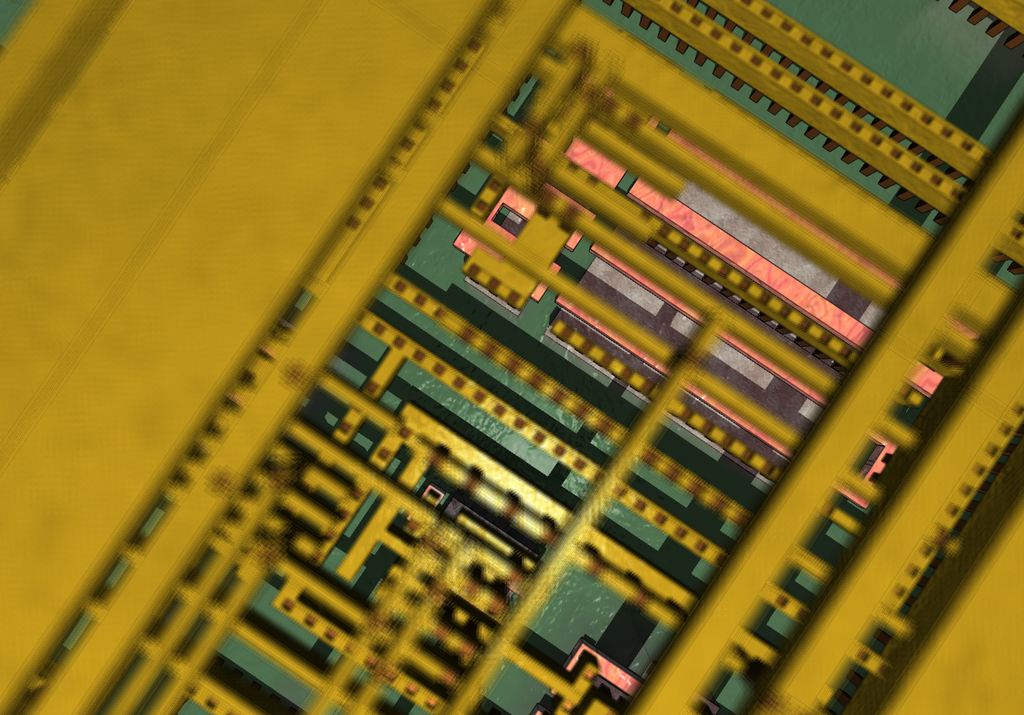
To understand how semiconductors work their magic, we need to look at their atomic structure.
An Atomic Perspective
Everything comes down to electrons. In an atom, electrons orbit the nucleus in specific shells. The electrons in the outermost shell are called valence electrons. These are the key players in chemical bonding and electrical conductivity. How tightly an atom holds onto its valence electrons determines whether a material is a conductor, insulator, or semiconductor.
Silicon atoms have four valence electrons. In a pure silicon crystal, each atom forms a stable, orderly structure by sharing these four electrons with four neighboring atoms. This sharing creates strong connections called covalent bonds. In this arrangement, all the valence electrons are locked in place, busy holding the crystal together. They aren't free to roam around and carry an electrical current.
Because all the electrons are tied up in these bonds, a perfect silicon crystal at very low temperatures behaves like an insulator. No free electrons means no current. But what happens when we add some energy, like heat?
Jumping the Energy Gap
In physics, we can think of the electrons in a solid as living in specific energy levels, grouped together into ranges called energy bands. The two most important bands for conductivity are the valence band and the conduction band.
- Valence Band: This is the energy range where the valence electrons reside when they are locked into their covalent bonds. Electrons here are not free to move and don't contribute to electrical current.
- Conduction Band: This is a higher energy range. If an electron can gain enough energy to jump into the conduction band, it breaks free from its bond and can move through the crystal, carrying an electrical current.
The space between these two bands is called the band gap. It's a forbidden zone where no electron energy states can exist. The size of this band gap is what defines a material's electrical properties.
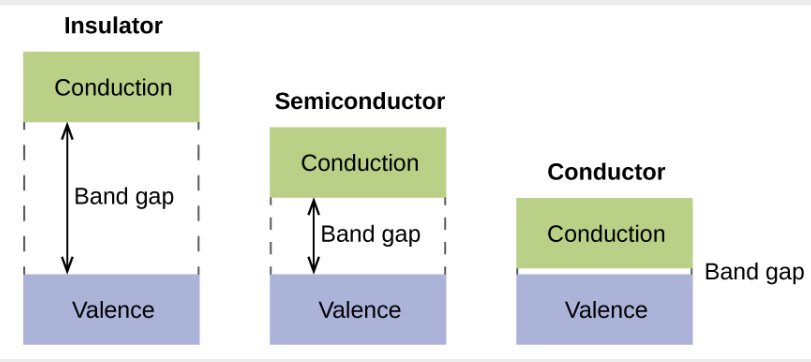
For an electron to conduct electricity, it must leap across the band gap from the valence band to the conduction band. In an insulator, the band gap is so wide that it's nearly impossible for an electron to make the jump. In a conductor, the bands overlap, so electrons are always free to move. A semiconductor has a small, surmountable band gap. It takes just a little bit of energy, from heat or light, to kick an electron into the conduction band.
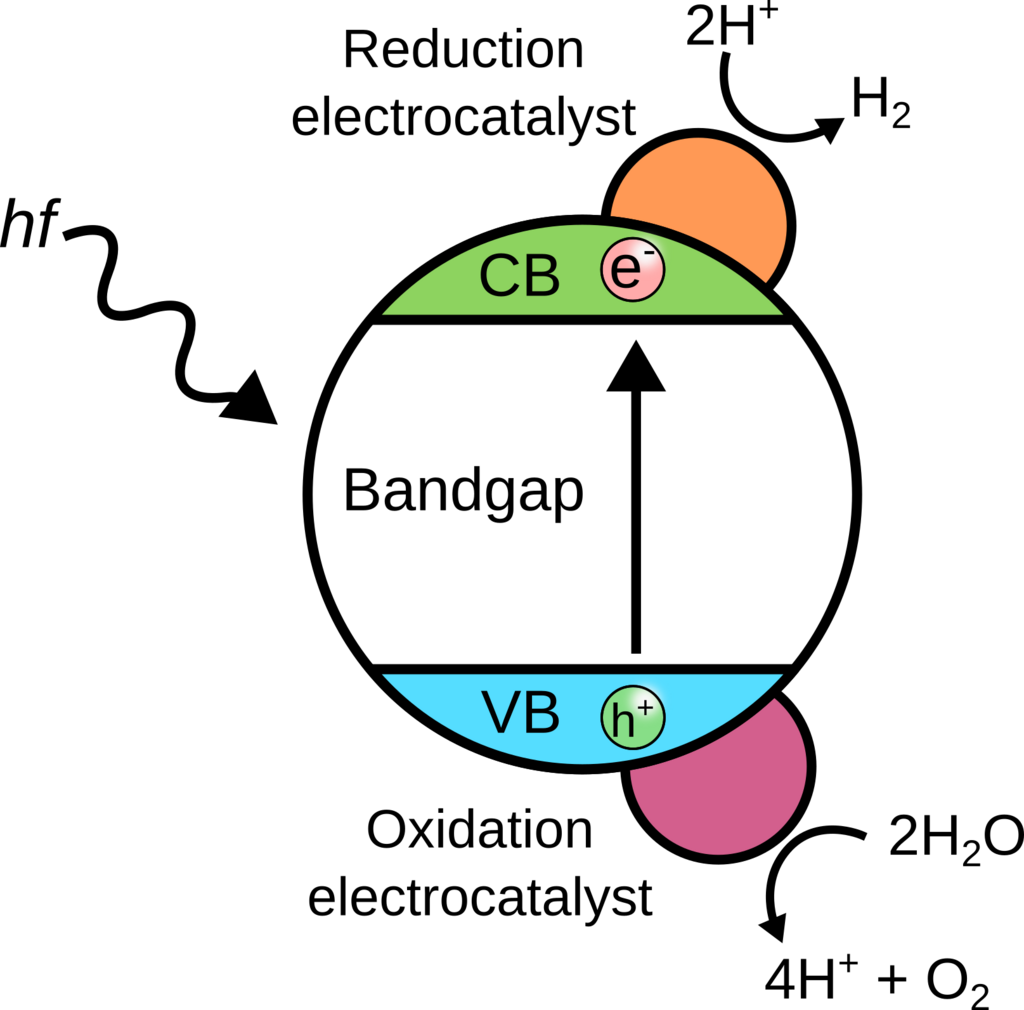
When an electron jumps to the conduction band, it leaves behind an empty spot in the valence band. This empty spot is called a hole, and it plays a crucial role in conductivity.
Pure and Simple
A semiconductor in its purest form, like a crystal of 100% silicon, is called an intrinsic semiconductor. At absolute zero temperature (°C), with no thermal energy, an intrinsic semiconductor is a perfect insulator. All electrons are in the valence band, and the conduction band is empty.
However, at room temperature, there's enough thermal energy to cause a few valence electrons to randomly jump into the conduction band. This creates a small number of free electrons and an equal number of holes.
Here's the interesting part: the hole also acts as a mobile charge carrier. A nearby valence electron can easily move into the empty spot, which effectively moves the hole to a new location. Since an electron is negatively charged, the hole it leaves behind behaves like a positive charge. So, in an intrinsic semiconductor, current can be carried by both the movement of negative electrons in the conduction band and the movement of positive holes in the valence band.
Despite this, the number of charge carriers in an intrinsic semiconductor is very small, so its conductivity is still quite low. While not very useful on its own, this pure state is the starting point for creating the powerful semiconductor devices we rely on every day.
Where do semiconductors fall on the spectrum of electrical conductivity?
What are the electrons in the outermost shell of an atom, which are key to electrical conductivity, called?
Understanding these core concepts—the atomic bonds, the energy bands, and the behavior of electrons and holes—is the first step toward seeing how we can manipulate these materials to build the modern world.