Semiconductor Fundamentals
Atomic Structure
The Building Blocks of Matter
Everything around you, from the air you breathe to the device you're reading this on, is made of tiny particles called atoms. Think of them as the fundamental LEGO bricks of the universe. At the center of each atom is a dense core called the nucleus.
The nucleus contains two types of particles: protons and neutrons. Protons have a positive (+) electrical charge, while neutrons have no charge at all—they're neutral. Swirling around the nucleus are even tinier particles called electrons, which have a negative (-) charge. The positive charge of the protons pulls on the negative electrons, keeping them in orbit around the nucleus, much like gravity keeps planets orbiting the sun.
proton
noun
A subatomic particle with a positive electric charge, found in the nucleus of an atom.
In a neutral atom, the number of electrons is equal to the number of protons. Their opposite charges cancel each other out, resulting in an atom with no overall charge.
What makes one atom different from another? It's the number of protons. This count is called the atomic number, and it's the unique identifier for each chemical element. An atom with one proton is always hydrogen. An atom with six protons is always carbon.
Atomic Number = Number of Protons
The total number of protons and neutrons in the nucleus gives the atom its atomic mass. Electrons are so incredibly light that they don't contribute much to the total mass.
Where Electrons Live
Electrons don't just fly around the nucleus randomly. They are organized into specific energy levels called electron shells. You can imagine these shells as concentric layers, like the layers of an onion or the orbits of planets in our solar system. Each shell is a certain distance from the nucleus and can only hold a limited number of electrons.
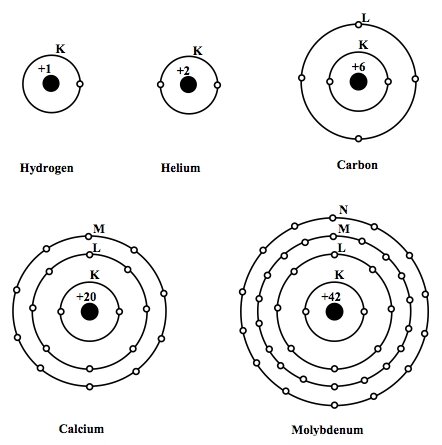
The shell closest to the nucleus has the lowest energy and can hold up to two electrons. The second shell can hold up to eight, the third can hold up to 18, and so on. Electrons will always fill the innermost shells first before moving to outer ones. Within these shells, electrons occupy specific regions called orbitals, which are like designated pathways or zones where an electron is most likely to be found.
Valence and Bonding
The electrons in the outermost shell are the most important for how an atom interacts with the world. This outermost, occupied shell is called the valence shell, and the electrons in it are called valence electrons.
valence
adjective
Relating to or denoting the electrons involved in or available for chemical bond formation.
Atoms are most stable when their valence shell is completely full. To achieve this stability, atoms will share, donate, or accept electrons from other atoms. This interaction is what creates a chemical bond, which is the force that holds atoms together to form molecules and compounds.
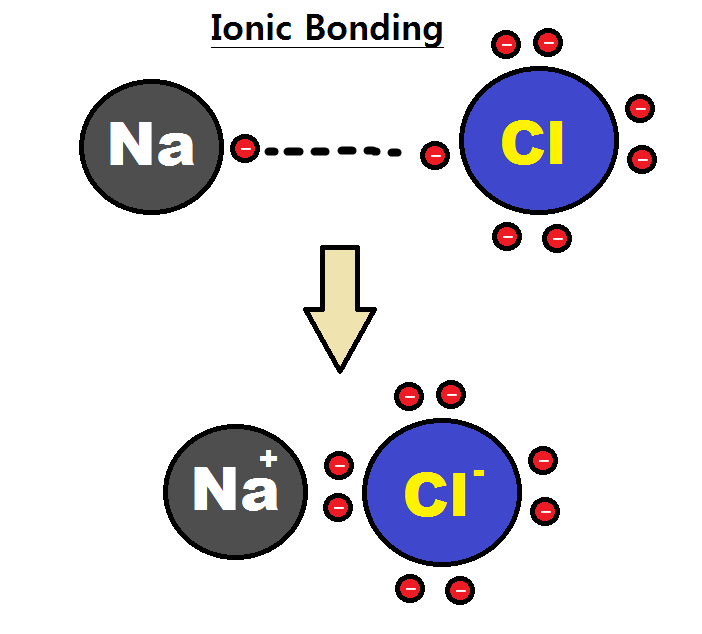
For example, a sodium atom has one valence electron, and a chlorine atom has seven. Sodium can easily donate its lone electron, and chlorine is eager to accept one to complete its shell of eight. When they interact, the electron transfer creates a strong attraction between them, forming sodium chloride—common table salt. These valence electrons are the key players in chemistry and electricity.
What are the three main particles that make up an atom?
The identity of a chemical element, its atomic number, is determined by the number of ________ it has.
Understanding these basic parts of an atom is the first step toward understanding how materials behave, from simple chemical reactions to the complex workings of electronic devices.