Semantic Data Modeling Explained
Introduction to Semantic Modeling
Beyond the Spreadsheet
Most data is stored in tables, like a spreadsheet. You have rows and columns. This is great for organizing information, but it has a major limitation: the computer doesn't understand what any of it means. It sees a column labeled "DOB," but it doesn't know this means "Date of Birth" or how it relates to a column called "Age."
This is where semantic modeling comes in. It's a way of organizing data that focuses on meaning and relationships. Instead of just storing data points, a semantic model describes the things in your world (like people, products, or events) and how they connect to each other. It builds a map of concepts, creating a shared understanding that both humans and computers can use.
Think of it as the difference between a dictionary and an encyclopedia. A dictionary gives you a list of words. An encyclopedia connects those words into a web of knowledge.
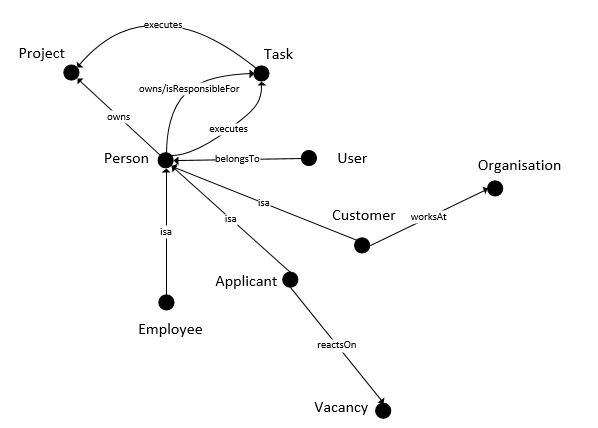
Old Way vs. New Way
Traditional data models, like the relational databases that power most applications, are rigid. They focus on the structure of the data storage—tables, columns, and keys. To get information out, you need to know exactly how the tables are set up and write specific queries to join them together.
Semantic models are different. They focus on the real-world concepts first. This flexible approach makes it much easier to ask complex questions and combine data from different places, because the model already understands the context.
| Feature | Traditional Data Model | Semantic Data Model |
|---|---|---|
| Focus | How to store the data | What the data means |
| Structure | Rigid tables and columns | Flexible web of concepts |
| Context | Implied or hidden in code | Explicit and part of the model |
| Querying | Requires knowing the structure | Based on real-world questions |
The Big Wins
Adopting this approach brings huge benefits. The first is interoperability. When different systems share a common semantic model, they can communicate seamlessly. Data from one department can be instantly understood and used by another, without complex translation projects.
This leads to consistency. Everyone agrees on what a "customer" or a "sale" is. There's no more confusion from different teams using slightly different definitions for the same concept. All data is described in the same language.
Finally, semantic models make data integration vastly simpler. Imagine trying to combine customer data from your sales system, marketing platform, and support desk. With traditional models, this is a painful, manual process. With a semantic model, you can map each source to the central concept of "Customer," and the system automatically understands how to link everything together.
Semantic Models in the Wild
This isn't just a theoretical idea. Semantic models power parts of our daily lives.
In e-commerce, when a website recommends products you might like, it's using a semantic model. The system doesn't just know you bought a tent. It knows a tent is a piece of "camping gear," which is related to "outdoors," and people who buy it often also buy "sleeping bags" and "camp stoves."
In healthcare, a hospital might use a semantic model to get a complete view of a patient. The model connects lab results, prescriptions, doctors' notes, and billing information. It understands that the drug "Metformin" is used to treat "Type 2 Diabetes," helping doctors make better decisions by revealing hidden connections in the data.
Even in finance, these models are used to detect fraud. By modeling the relationships between accounts, transactions, and locations, a bank can spot unusual patterns that a simple table-based system would miss. For example, it can see that a transaction originated from a device that has been linked to known fraud cases in the past.
What is the primary focus of a semantic model?
A traditional database understands that a column labeled 'DOB' refers to a person's date of birth and can automatically link it to an 'Age' column.