Seed Investing Essentials
Introduction to Seed Investing
What Is Seed Funding?
Think of a startup like a tiny seed. It has the potential to grow into a massive tree, but it needs some initial resources to get started—water, soil, and sunlight. Seed funding is the business equivalent of those resources. It's the first significant amount of money a new company raises to kickstart its operations.
Seed Funding
noun
The earliest stage of venture capital funding. It's the initial capital used to begin growing a new business or idea.
This early capital isn't for massive expansion or global marketing campaigns. Instead, it's used for foundational tasks. Founders might use seed money to build their first product, conduct crucial market research to see if people actually want what they're building, or hire their first key employees. The goal is simple: use this initial investment to prove the business idea is viable and can grow.
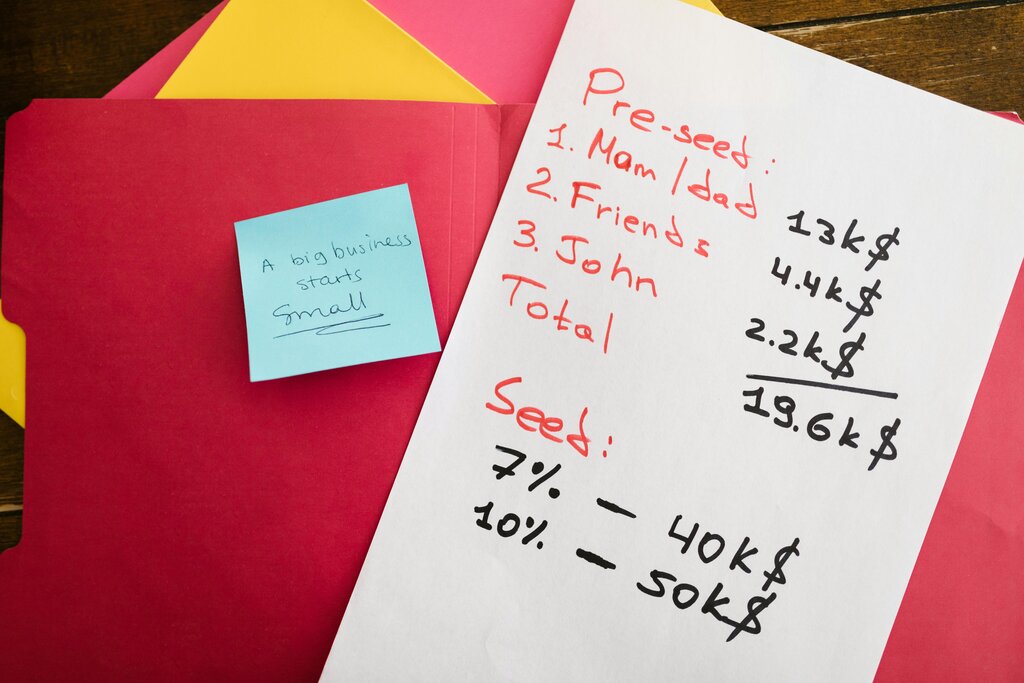
High Risk, High Reward
Seed investing is one of the riskiest forms of investment. At this stage, a startup is often just an idea, a small team, and a presentation. There's no long track record of sales or established customer base. Many seed-stage companies fail to get off the ground.
So why do investors take the risk? The potential for a massive reward. If a seed-stage company succeeds and becomes the next big thing, the initial investment can multiply in value many times over. An investor who put in $50,000 might see that stake become worth millions of dollars down the road. It's a high-stakes bet on a promising idea and a dedicated team.
All that’s required to justify a seed- or early-stage investment is to believe that the potential multiple on investment offsets the risk that capital may not be returned.
The startups that seek this funding are typically pre-revenue or have very early, minimal revenue. They operate in sectors with high growth potential, like technology, biotech, or clean energy. They have an innovative idea that could disrupt an existing market or create a new one entirely, but they lack the capital to turn that idea into a reality.
Who Are the Seed Investors?
The people and firms writing these early checks fall into a few main categories.
Angel Investors: These are often wealthy individuals, perhaps successful entrepreneurs themselves, who invest their own personal money into startups. Beyond cash, they frequently offer valuable mentorship and industry connections. Angels often invest in fields they know well and can get very involved with the companies they back.
Venture Capital (VC) Firms: While many VCs focus on later-stage companies, some specialize in seed-stage investing. These firms pool money from various sources (like pension funds or endowments) into a large fund, then invest that capital into a portfolio of startups.
Incubators and Accelerators: These programs support startups with mentorship, resources, and often a small amount of seed funding in exchange for equity. They help founders refine their business model and prepare for larger funding rounds.

Regardless of their background, all seed investors are looking for similar things. Since there are few financial metrics to analyze, they bet on other factors.
At the seed stage, investors focus on three core elements: the strength of the founding team, the size of the market opportunity, and the potential of the product or idea.
A strong, passionate team with relevant experience can convince an investor that they have what it takes to navigate the challenges ahead. A large, growing market suggests there's room for a new company to capture significant value. And a compelling product idea that solves a real problem is the foundation for it all.
What is the primary goal a startup aims to achieve with seed funding?
From an investor's perspective, seed-stage investing is characterized by high risk and potentially high reward.