Securing Software Delivery with Encryption
Introduction to Encryption
The Art of Secret Messages
Encryption is the process of converting information into a secret code to hide its true meaning. Think of it as writing a letter in a language only you and the recipient know. The goal is to keep sensitive data confidential, ensuring that even if someone intercepts it, they can't understand it.
Encryption protects information by making it unreadable to anyone without the right key.
The original, readable message is called plaintext. Once it's been scrambled using encryption, it becomes ciphertext.
Symmetric Encryption
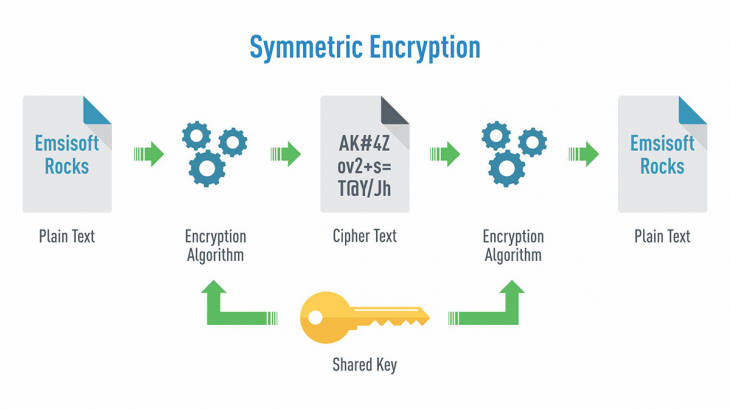
Symmetric encryption is the simpler of the two main types. It uses a single, shared secret key to both encrypt and decrypt information. If you want to send a secure message to a friend, you both need to have a copy of the same key.
Imagine a safe with a physical key. You use the key to lock the safe, and the recipient uses an identical copy of that key to unlock it. That's symmetric encryption.
This method is very fast and efficient, which makes it great for encrypting large amounts of data. One of the most common and secure symmetric algorithms used today is the Advanced Encryption Standard (AES). Your bank uses it to protect your financial information, and many messaging apps use it to secure your chats.
The main challenge with symmetric encryption is securely sharing the key. If you have to send the key over an insecure channel, an attacker could intercept it and read all your encrypted messages.
Asymmetric Encryption
Asymmetric encryption, also known as public-key cryptography, solves the key-sharing problem. It uses a pair of keys for each person: a public key and a private key.
As the names suggest, the public key can be shared with anyone. The private key, however, must be kept completely secret. They are mathematically linked, but you cannot figure out the private key just by looking at the public key.
Think of it like a mailbox. Your public key is the address and mail slot of your mailbox, which you can share with the world. Anyone can put a message in the slot (encrypt), but only you, with the private key (the mailbox key), can open it and read the messages (decrypt).
If someone wants to send you a secure message, they use your public key to encrypt it. The resulting ciphertext can only be decrypted with your corresponding private key. A widely used asymmetric algorithm is RSA, named after its inventors Rivest, Shamir, and Adleman. It's often used to securely transmit the shared key for symmetric encryption, combining the security of asymmetric with the speed of symmetric.
Asymmetric encryption is more secure for key exchange but is much slower than symmetric encryption. That's why they are often used together.

Protecting Data Everywhere
Encryption isn't just for sending secret messages. It's used to protect data in two main states: in transit and at rest.
Data in transit
other
Data that is actively moving from one location to another, such as across the internet or a private network.
Encrypting data in transit protects it from eavesdroppers who might try to intercept the traffic. This is what the lock icon in your web browser signifies.
Data at rest
other
Data that is not actively moving, such as data stored on a hard drive, in a database, or on a smartphone.
Both types of protection are crucial. Encrypting data in transit prevents snooping during communication, while encrypting data at rest safeguards it against theft or unauthorized access on the device where it is stored.
What is the term for the original, readable message before it is encrypted?
You need to send a secure message to a friend. You use their public key to encrypt the message. What must your friend use to decrypt it?