Secure Freelance Payments
Understanding Freelance Contracts
The Project Roadmap
A freelance contract isn’t just a legal safety net. Think of it as a detailed roadmap for your project. It’s a document that you and your client create together to make sure you’re both heading in the same direction. Its main purpose is to get everything out of your heads and onto paper, leaving no room for assumptions.
When everyone agrees on the what, when, and how from the start, the entire project runs more smoothly. It replaces guesswork with clarity, building a professional relationship based on mutual understanding rather than hope.
A freelance contract is the foundation of a successful client relationship.
This shared understanding prevents the most common freelance headaches, like endless revisions or delayed payments. It’s your first and best tool for managing expectations and ensuring a professional engagement from start to finish.
Key Components of a Contract
Every contract should be tailored to the specific project, but a strong agreement always includes a few core sections. These elements work together to create a complete picture of the job.
- Scope of Work: This section details exactly what you will and will not do. Be specific. Instead of “design a website,” write “design a five-page responsive website including a home page, about page, services page, portfolio, and contact page.”
- Deliverables: These are the tangible things you will provide. Examples include a high-resolution logo in PNG and SVG formats, a 1,000-word blog post in a Google Doc, or a completed tax return.
- Timeline and Deadlines: List the key dates, including project milestones, deadlines for client feedback, and the final delivery date. A clear timeline keeps both parties accountable.
- Payment Terms: This outlines how much you'll be paid, how you'll be paid, and when. It should specify the total project fee or hourly rate, the invoicing schedule (e.g., 50% upfront, 50% on completion), and accepted payment methods.
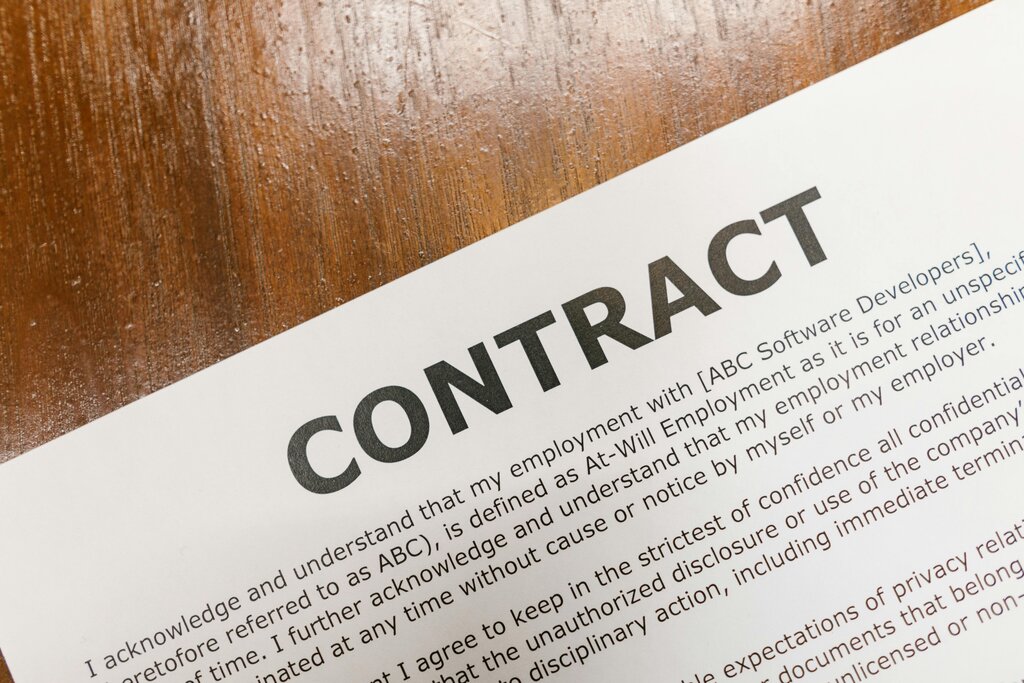
Scope creep is a project's silent killer. A clear 'Scope of Work' section is your best defense against it.
Written vs. Verbal Agreements
A client might say, “We trust you, let’s just get started.” While it sounds nice, a verbal agreement or a handshake deal is a huge risk for a freelancer. Human memory is faulty. Details get fuzzy, and friendly conversations can be easily misinterpreted. Without a written record, there is no single source of truth to refer back to when disagreements arise.
Imagine you verbally agree to design a logo with “a couple of revisions.” To you, that means two. To the client, it could mean twenty. A written contract stating “up to two rounds of revisions” eliminates this ambiguity entirely.
| Feature | Verbal Agreement | Written Contract |
|---|---|---|
| Clarity | Low (relies on memory) | High (documented) |
| Proof | None | Legal document |
| Misunderstanding | High risk | Low risk |
| Professionalism | Questionable | High |
Putting your agreement in writing isn't about distrust; it's about being a professional. It protects both you and the client by providing a clear, mutually agreed-upon reference point for the entire project.
Ready to check your understanding? This quiz will cover the core ideas we've just discussed.
What is the primary function of a freelance contract, beyond its role as a legal document?
A client says, "We trust you, let's just use a handshake deal to get started quickly." What is the most significant risk in this situation?
With a solid contract in place, you establish a professional framework that helps ensure your hard work gets rewarded fairly and on time.