Search Engine Architecture
Crawling and Discovery
The Unending Hunt for Information
Search engines like Google and Bing seem to possess an almost magical knowledge of the internet. But their power isn't magic, it's the result of a relentless, automated process that begins with discovery. This first step is called crawling, and it’s performed by fleets of programs known as crawlers, spiders, or bots. Think of them as tireless digital librarians, constantly scanning the web's shelves for new and updated books.
The process can't start from nothing. Crawlers begin with a list of known URLs, called seed URLs, which typically include major hubs and popular websites. From there, the crawler visits each page, downloads its content, and extracts all the links it contains. These newfound links are added to a massive to-do list called the crawl frontier.
The Web Crawling component is a foundational aspect of a search engine, responsible for systematically browsing the internet to discover and retrieve web pages.
The crawl frontier is more than just a simple queue. It's a sophisticated priority system. Search engines must decide which of the trillions of possible URLs to visit next. Should it revisit a major news site that updates every minute, or explore a newly discovered personal blog? This decision is guided by algorithms that weigh factors like a page's historical importance (its PageRank), how frequently it changes, and whether it's from a known, trusted domain. The goal is to use the engine's limited resources to find the most relevant and fresh information as efficiently as possible.
Rules of the Road
Crawling the entire web is an aggressive act. A poorly configured crawler could easily overwhelm a small website's server, effectively shutting it down with a flood of requests. To prevent this, a protocol for crawler etiquette was established, centered on a simple text file: robots.txt.
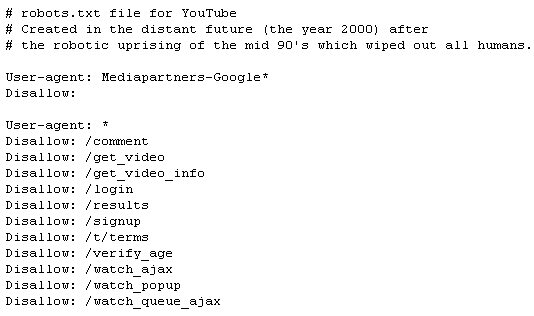
Almost every website has a robots.txt file located at the root of its domain (e.g., example.com/robots.txt). This file contains rules that tell crawlers which parts of the site they are allowed to visit and which they should ignore. While adhering to robots.txt is voluntary, all major search engines respect these directives. A site might disallow crawling of its login pages, internal search results, or admin areas to save crawl resources and keep private content out of public search results.
# A simple robots.txt file
# This tells all crawlers (*) they can't visit
# the /private/ and /temp/ directories.
User-agent: *
Disallow: /private/
Disallow: /temp/

# This gives a specific bot, Googlebot, full access.
User-agent: Googlebot
Disallow:

# A sitemap can also be listed to help crawlers find all pages.
Sitemap: https://www.example.com/sitemap.xml
In addition to robots.txt, webmasters can provide a sitemap. This is an XML file that explicitly lists all the URLs on a site that are available for crawling. It's like handing the digital librarian a complete catalog of the library's collection, making the discovery process much more efficient.
Cleaning Up the Web
The internet is messy. Pages that existed yesterday might be gone today, leading to link rot and 404 "Not Found" errors. More commonly, the same content exists at multiple URLs. A printer-friendly version of an article, a version with tracking parameters for marketing, and the clean original URL might all contain identical text. For a search engine, this duplicate content is a problem. Which version should it show in search results?
The solution is canonicalization. This is the process of selecting the single, authoritative URL for a piece of content. Web developers can signal their preferred version using a canonical link element in the page's HTML. If they don't, the search engine will choose one itself based on various signals, like which version seems to be the most linked-to or popular. All signals from the duplicate pages, like inbound links, are then consolidated to the canonical URL.
To detect this duplication at scale, crawlers use clever hashing algorithms. They don't need to compare every word of every document. Instead, they can use techniques like SimHash to create a compact digital fingerprint for each page. Pages with very similar fingerprints are flagged as likely duplicates. This allows the search engine to efficiently identify and consolidate duplicate content across billions of documents without storing and comparing the full text of every page it finds.
By crawling the web, respecting site rules, and cleaning up the messy data it finds, a search engine builds a local copy of the internet's content. This massive collection of information is the raw material for the next stage: indexing.
What is the primary purpose of a web crawler?
A crawler begins its journey with a list of known, important URLs. This starting list is called the __________.