SDR Fundamentals with HackRF
Introduction to SDR
Software, Not Circuits
Think about a classic FM radio. It's a box full of circuits, each designed for one job: tuning to FM stations. It can't listen to AM radio, track airplanes, or pick up weather satellite signals. Its hardware defines its function, and that function is fixed.
Now, imagine a radio where most of those specialized circuits are replaced by software. That's the core idea behind Software-Defined Radio (SDR). Instead of relying on physical hardware to process radio waves, an SDR uses a general-purpose processor—like the one in your computer—to do the heavy lifting.
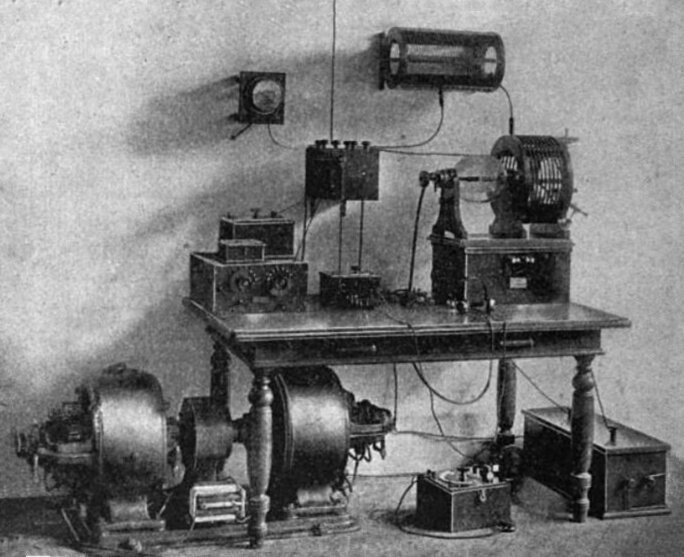
This shift from hardware to software is a game-changer. An SDR isn't just an FM radio; it's a chameleon. With the right software, it can become an FM radio, an aircraft tracker, a GPS receiver, or a tool for analyzing wireless signals. The hardware stays the same, but its capabilities can be completely redefined by code. This makes SDR an incredibly flexible and powerful tool for anyone interested in wireless communication.
How SDR Works
So how does a device turn radio waves from the air into digital data a computer can understand? The architecture is surprisingly simple and has a few key stages.
First, an antenna captures the radio waves. These are analog signals. The signal then passes through a minimal set of hardware called the "RF front-end," which tunes to a specific frequency range and amplifies the signal.
The most critical step comes next. An Analog-to-Digital Converter (ADC) samples the analog signal thousands or millions of times per second, turning the continuous radio wave into a stream of discrete numbers. This digital stream is then sent to a computer, usually over USB.
Once the data is on the computer, the magic happens. Software performs Digital Signal Processing (DSP) to demodulate, filter, and decode the signal. This is where the flexibility comes in. By changing the DSP software, you can change how the radio interprets the incoming data, effectively transforming the radio's entire function without touching the hardware.
Meet the HackRF One
The HackRF One is a popular, affordable SDR that has opened up the world of radio technology to students, hobbyists, and security researchers. It's a small, USB-powered device that acts as the antenna, RF front-end, and ADC all in one package.
Its key feature is its enormous frequency range. The HackRF One can receive and transmit signals from 1 MHz to 6 GHz. This covers everything from AM radio broadcasts, shortwave radio, and Wi-Fi to Bluetooth, GPS, and signals from garage door openers.
It operates in half-duplex mode, meaning it can either transmit or receive at any given moment, but not both simultaneously. For listening and analysis, this is perfect. It connects directly to a computer, where software like GNU Radio or SDR# takes over to process the signals it captures.
The power of SDR lies in its adaptability. The same piece of hardware can explore a vast range of the radio spectrum, limited only by the software you run.
Let's review the key terms we've just covered.
Ready to check your understanding?
What is the primary advantage of a Software-Defined Radio (SDR) over a traditional radio?
In the SDR architecture, what is the specific role of the Analog-to-Digital Converter (ADC)?
By replacing fixed hardware with flexible software, SDRs like the HackRF One provide a powerful platform for exploring the invisible world of radio waves.