SD-WAN Mastery and Optimization
SD-WAN Fundamentals
Beyond Traditional Networks
For decades, businesses connected their branch offices to a central data center using a Wide Area Network, or WAN. Think of it like a private highway system built with expensive, dedicated lines, such as MPLS (Multiprotocol Label Switching). This approach was reliable and secure for its time, as most company applications and data lived in that one central location.
Wide Area Network (WAN)
noun
A communication network that spans a large geographical area, such as across cities, states, or countries. It connects multiple smaller networks, like local area networks (LANs) and metro area networks (MANs).
But then, the cloud happened. Applications like Salesforce, Office 365, and countless others moved from private data centers to the internet. Suddenly, forcing all traffic back to the central office before sending it to the cloud was like driving miles in the wrong direction just to get on the right freeway. It was slow, inefficient, and expensive.
This traffic pattern, known as "tromboning," created bottlenecks and degraded the user experience for cloud-based applications.
This shift created the need for a smarter, more flexible network. Enter Software-Defined WAN, or SD-WAN. It's a new approach that applies the principles of software-defined networking (SDN) to the WAN. Instead of being locked into specific hardware and private circuits, SD-WAN uses software to manage the network and route traffic intelligently over a variety of connections, including standard broadband internet, LTE, and even MPLS.
The Architecture of SD-WAN
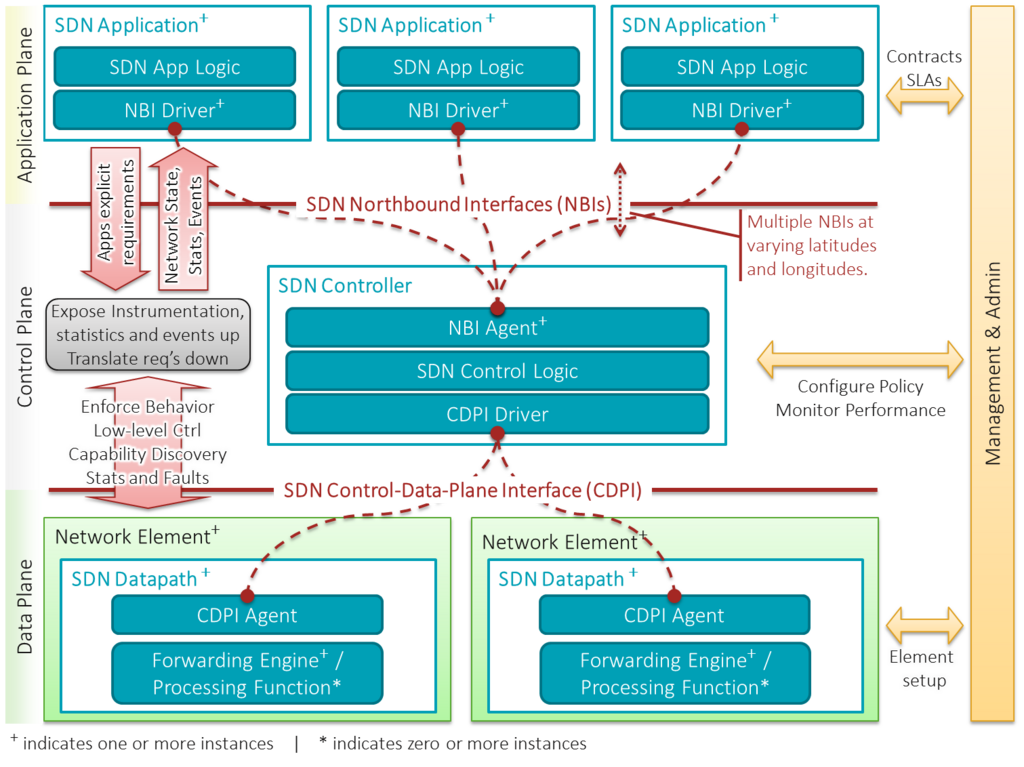
The magic of SD-WAN comes from separating the network's brain from its muscle. In traditional networking, the hardware at each location made its own routing decisions. SD-WAN centralizes this decision-making process. This separation is organized into three distinct layers, or planes.
- The Management Plane: This is the high-level dashboard for the entire network. It's where administrators define policies, configure devices, and monitor performance. It's the single pane of glass for network visibility and management.
- The Control Plane: This is the centralized brain. It takes the policies from the management plane and calculates the best path for application traffic across the network. It communicates these decisions to the individual network devices.
- The Data Plane: This is the muscle. It consists of the physical and virtual devices at each branch office that actually forward the data packets along the paths determined by the control plane.
Why Businesses Choose SD-WAN
By rethinking network architecture, SD-WAN provides significant advantages over traditional WANs, especially for organizations embracing digital transformation.
| Feature | Traditional WAN | SD-WAN |
|---|---|---|
| Traffic Path | Backhauled to a central data center | Direct, optimized path to the cloud or data center |
| Connectivity | Relies on expensive, private MPLS lines | Uses any available connection (Broadband, LTE, MPLS) |
| Management | Complex, device-by-device configuration | Centralized, policy-based management |
| Agility | Slow to deploy new sites and services | Rapid deployment and configuration |
| Cost | High operational and circuit costs | Lower costs by using affordable internet links |
The most important shift is how SD-WAN supports cloud integration. Instead of forcing cloud-bound traffic through the corporate data center, an SD-WAN solution can identify traffic heading for a trusted cloud application and send it directly to the internet from the branch office. This direct path dramatically improves performance for applications like video conferencing and cloud storage.
For companies undergoing digital transformation, SD-WAN provides the agile, secure, and high-performing network foundation needed to support new initiatives. It simplifies the complexity of connecting a distributed workforce to applications that can be located anywhere—in a private data center, a public cloud, or delivered as a SaaS application.
Let's test your understanding of these core concepts.
What was the primary driver for the shift from traditional WANs to SD-WAN?
In the SD-WAN architecture, which plane is responsible for calculating the best path for application traffic based on defined policies?
Understanding these fundamentals shows how SD-WAN provides a powerful, software-driven approach to building and managing networks for the modern, cloud-centric world.