Sculpting Your Artistic Career
Developing Artistic Identity
Finding Your Artistic Voice
Technical skill is the foundation of sculpting, but what you build on that foundation is your artistic identity. This is your unique voice, your perspective on the world expressed through form and material. It’s the common thread that runs through your work, making it instantly recognizable as yours. Developing this identity isn’t about picking a style from a catalog; it's a process of discovery that starts with looking inward.
Understanding your unique perspective is crucial as it sets the foundation for your brand as an artist.
Think about what genuinely moves you, angers you, or fills you with wonder. What stories do you find yourself returning to? Your deeply held beliefs, personal history, and unique experiences are the raw material for your art. Don't shy away from them.
From Insight to Object
Once you have a sense of your core themes, the next step is to explore how they can take physical shape. This involves a conversation between your ideas, your chosen materials, and your hands. The material you work with is not just a passive substance; it has its own voice. The roughness of reclaimed wood tells a different story than the smooth coolness of marble or the earthy pliability of clay.
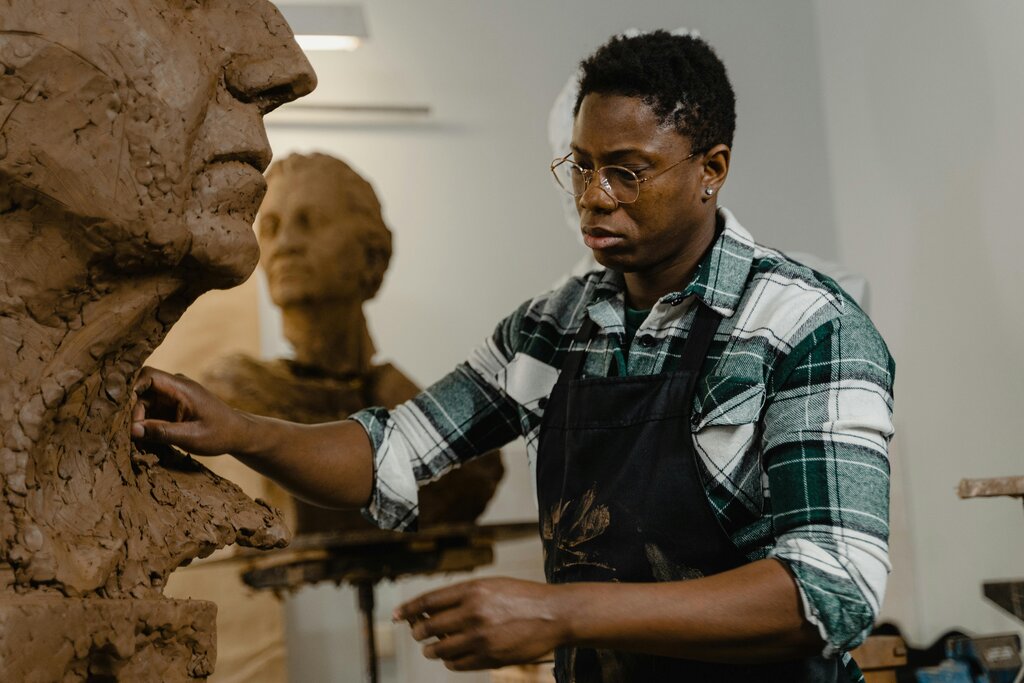
Experimentation is key. Try working with different materials to see how they respond to your touch and how they express your ideas. Does your interest in the human condition lead you to sculpt expressive portraits? Does your fascination with nature guide you toward abstract, organic forms? Let your chosen themes guide your exploration of form and material, and vice versa. This interplay is where a unique style begins to emerge.
Your theme provides the 'what' and 'why' of your art. Your materials and technique provide the 'how'.
Building a Body of Work
A single sculpture is a statement. A collection of sculptures becomes a conversation. A cohesive body of work is a series of pieces linked by a consistent vision. This doesn't mean creating the same sculpture over and over. Instead, it means exploring a set of related ideas, materials, or aesthetic questions across multiple pieces. This consistency is what builds recognition and demonstrates a mature artistic vision.
Imagine each piece as a chapter in a book. While each chapter can stand on its own, they all contribute to a larger narrative. This narrative is your artistic identity. It shows your audience not just what you can make, but how you see.
Ready to test your understanding of how an artistic identity is formed? This quiz will cover the core ideas of self-assessment, exploration, and building a cohesive portfolio.
What is the primary source of a sculptor's artistic identity?
According to the text, the relationship between an artist and their material should be viewed as a 'conversation.'
Defining your voice is an ongoing journey, not a final destination. Your identity will evolve as you do, but by starting with this foundation of self-reflection and exploration, you create work that is not only skilled but also deeply authentic.