Sculpting the Earth The Science of Geomorphology
Geomorphic Process Models
Landscapes in Motion
Landforms aren't just static features on a map. They are the result of an ongoing tug-of-war between powerful forces. Geomorphologists view landscapes as process-response systems. A process, like a river flowing, is an action. The response is the resulting shape of the land, like a canyon being carved. The core of understanding geomorphology is figuring out the rules of this relationship.
This constant battle is between two types of forces: driving and resisting.
| Driving Forces (Promote Change) | Resisting Forces (Inhibit Change) |
|---|---|
| Climate: Rain, wind, ice | Lithology: Rock type and hardness |
| Gravity: Pulls material downslope | Structure: Faults, folds, rock layers |
| Tectonics: Uplift and subsidence | Vegetation: Roots bind soil and rock |
Driving forces provide the energy. Think of a rainstorm lashing a hillside. Gravity wants to pull the wet soil down. Tectonics can slowly push the entire mountain range higher, making slopes steeper and giving gravity more to work with.
Resisting forces push back. A hillside made of hard granite (lithology is a key factor) will resist erosion far better than one made of soft clay. The way the rock is structured, with its layers and fractures, also dictates how and where it will break. And never underestimate the power of plants—their roots act like a natural net, holding the land together.
The Search for Balance
Landscapes are always adjusting to these competing forces, seeking a state of balance called dynamic equilibrium. It's a bit like a thermostat in your house. If the temperature drops (a change in input), the furnace kicks on to bring it back to the set point. A landscape does the same.
Imagine a river. For centuries, it might carry a certain amount of sediment downstream. The river's slope, width, and depth are perfectly adjusted to handle this load. This balanced state is sometimes called a steady state, where, over the long term, the amount of sediment entering a stretch of river equals the amount leaving it. But what if a massive landslide dumps a huge amount of new sediment into the channel? The system is disrupted. The river responds by changing its form—perhaps becoming wider and steeper—to gain enough energy to transport the new load. It seeks a new equilibrium.
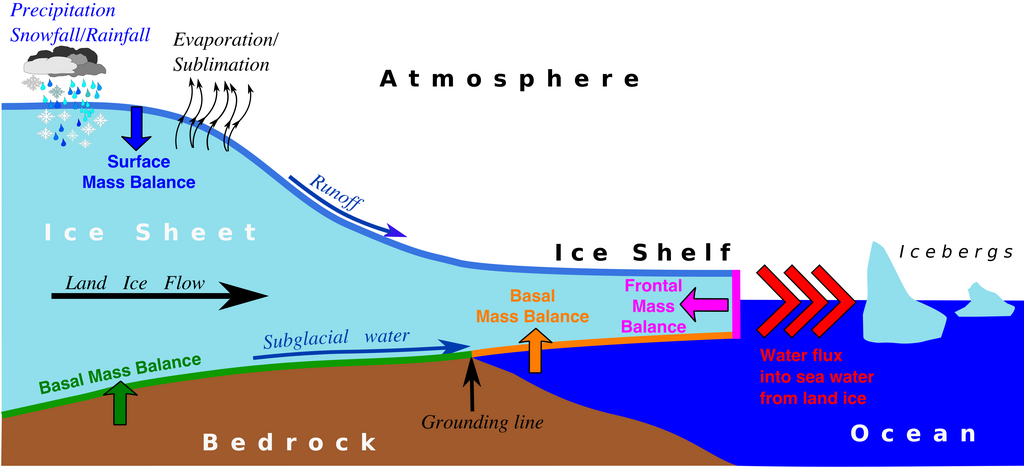
These adjustments happen across vast scales of time and space. A single grain of sand might be moved by a gust of wind in an instant. A landslide can reshape a valley in minutes. But the uplift of a mountain range—an orogenic cycle—unfolds over millions of years. Understanding the relevant scale is crucial for making sense of the process.
Thresholds and Tipping Points
Landscapes don't always change gradually. Often, they can absorb stress for a long time without any visible change. Then, a critical limit is crossed—a geomorphic threshold—and the system changes dramatically and quickly.
A classic example is a hillside slope. Rain can fall on it day after day, and the soil soaks it up. The slope remains stable. But with each drop, the pore water pressure inside the soil increases, reducing friction. At some point, one final drop of rain is enough to cross the threshold. The resisting force of friction becomes weaker than the driving force of gravity, and a landslide occurs.
Some landscapes are more sensitive than others. A fragile desert environment might be completely altered by a single off-road vehicle track, which can disrupt the stable surface crust and trigger widespread wind erosion. A dense, wet forest might absorb much more disturbance before showing any significant change.
This concept of thresholds is why geomorphic change can seem so unpredictable. It explains how a system can appear unchanged for decades or centuries, only to transform overnight. By studying the balance of forces, the constant adjustments of equilibrium, and these critical tipping points, we can begin to read the story written on the land.
Which of the following best describes the relationship between a geomorphic process and its response?
A hillside made of soft clay is subjected to a heavy rainstorm. In this scenario, what acts as a primary driving force and what is a key resisting force?