Sculpt Your Six-Pack Abs
Understanding Body Composition
More Than Just the Scale
When we talk about fitness, the number on the bathroom scale is often the first thing that comes to mind. But that number doesn't tell the whole story. Imagine two people who are the same height and weight. One might look lean and muscular, while the other looks softer and less defined. The difference isn't their weight; it's their body composition.
Body Composition
noun
The proportion of fat and non-fat mass in your body. It describes what your body is made of.
Thinking about your body in terms of composition, rather than just weight, is a huge step forward. It shifts the focus from simply losing pounds to building a stronger, healthier body.
Fat vs. Lean Mass
Your body is primarily made of two types of mass: fat mass and lean mass.
Fat Mass is exactly what it sounds like. It's the adipose tissue in your body. We all need some fat for essential functions like energy storage and hormone regulation. Excess fat, however, is what can obscure muscle definition.
Lean Mass includes everything else: your muscles, bones, organs, and water. Muscle tissue is metabolically active, meaning it burns calories even when you're at rest. This is why preserving or building lean muscle is so important for both health and appearance.
For abs to be visible, the goal is to lower your overall body fat percentage, which reduces the layer of fat covering your abdominal muscles.
Losing weight without paying attention to what you're losing can be counterproductive. If you lose muscle along with fat, you might end up with a lower number on the scale but not the defined look you're after. The key is to decrease fat mass while maintaining or even increasing lean muscle mass.
How to Measure It
So, how do you know what your body composition is? While you can't see it directly, several methods can give you a good estimate. None are perfect, but they provide valuable data to track your progress.
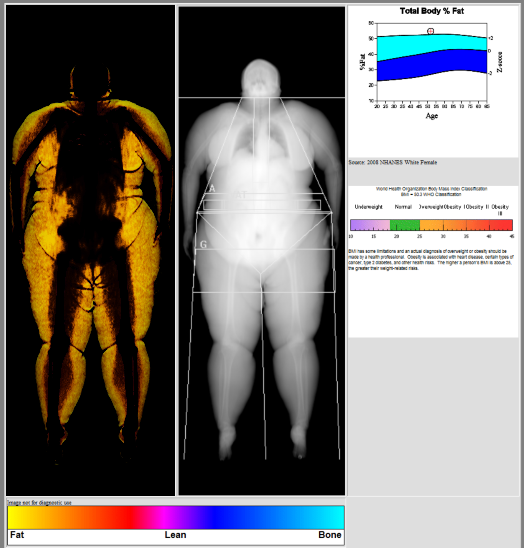
DEXA (Dual-Energy X-ray Absorptiometry) Scan: Often considered the gold standard, this scan uses low-dose X-rays to give you a highly accurate breakdown of your bone mass, fat mass, and lean mass. It's precise but can be expensive and requires a visit to a specialized facility.
Bioelectrical Impedance Analysis (BIA): This is the technology used in most smart scales and handheld devices. It sends a tiny, harmless electrical current through your body. Since fat, muscle, and water conduct electricity differently, the device can estimate your body composition. Its accuracy can vary based on your hydration levels, when you last ate, and the quality of the device.
Skinfold Measurements: This low-tech method uses calipers to pinch the skin and underlying fat at several points on your body. A trained professional can use these measurements in a formula to estimate your body fat percentage. It's affordable and accessible, but its accuracy heavily depends on the skill of the person taking the measurements.
| Method | Accuracy | Accessibility | Cost |
|---|---|---|---|
| DEXA Scan | Very High | Low | High |
| Bioelectrical Impedance | Moderate | High | Low to Moderate |
| Skinfold Calipers | Moderate | Moderate | Low |
While these tools offer great insights, you don't need to get measured constantly. For many people, simpler methods work just as well for tracking progress. How your clothes fit, how you look in the mirror, and progress photos can be powerful indicators that you're moving in the right direction.
Ready to check your understanding of these core concepts?
What are the two primary types of mass that make up your body composition?
Why is preserving or building lean mass important when trying to change your body composition?
Understanding body composition gives you a much smarter way to approach your fitness goals. It's not about chasing a number on a scale, but about building a body that's strong and healthy.