Scuba Diving Certification
Introduction to Scuba Diving
A Brief Dive into History
Humans have always been fascinated by the world beneath the waves. For centuries, the only way down was to hold your breath. Early attempts at staying longer involved cumbersome diving bells or helmets tethered to the surface with air hoses. These were clunky, dangerous, and offered very little freedom.
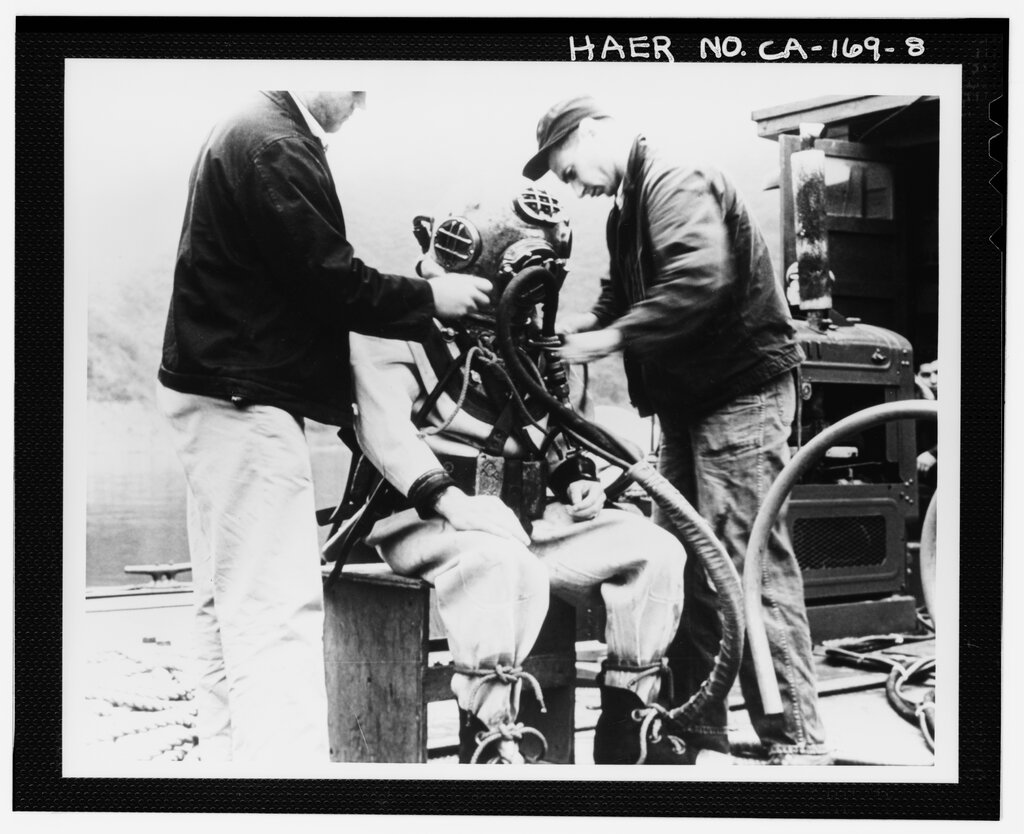
Everything changed in the 1940s. A French naval officer named Jacques-Yves Cousteau and an engineer named Émile Gagnan co-invented the Aqua-Lung. This was the first self-contained underwater breathing apparatus, or SCUBA. For the first time, a diver could carry their own air supply in a tank on their back and breathe through a regulator that adjusted the air pressure automatically. This invention opened up the oceans to exploration, science, and recreation in a way never before possible.
Why Get Certified?
Jumping into scuba diving isn't like learning to swim. Breathing compressed air underwater subjects your body to dramatic pressure changes. Without proper training, you can face serious injuries, from ruptured eardrums to lung-expansion injuries, which can be fatal. Certification isn't just a piece of paper; it's proof that you've learned the essential knowledge and skills to dive safely.
Nearly all reputable dive shops around the world will refuse to rent you gear, fill your tanks, or take you on a dive boat unless you can show a valid certification card.
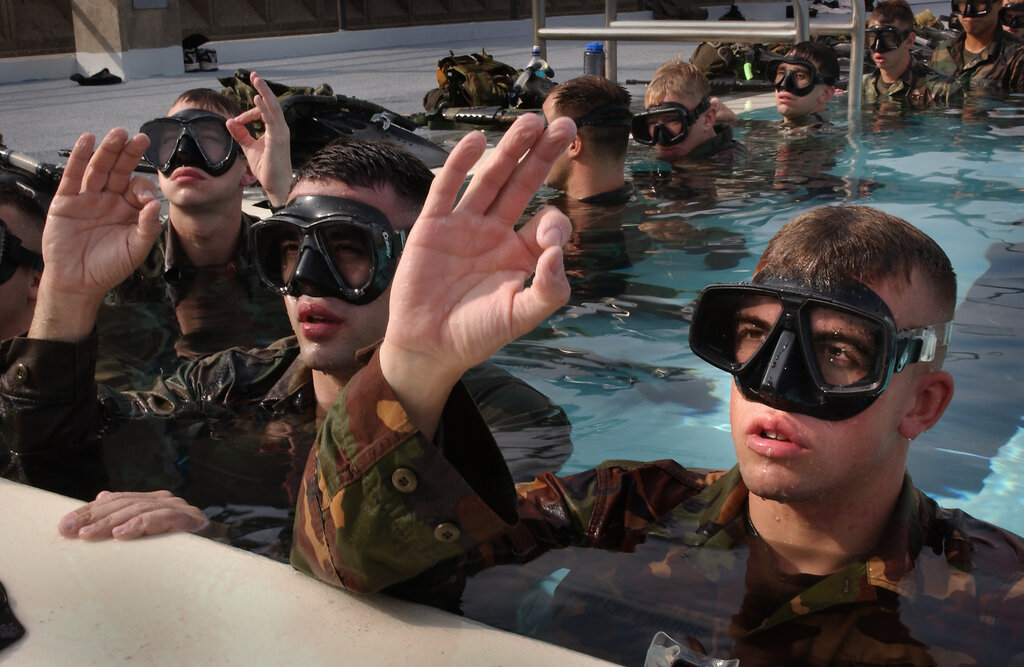
Your training will teach you how to use the equipment, plan your dives, manage your air supply, and handle potential emergencies. You'll practice skills in a pool or calm water before ever venturing into the open ocean, building both competence and confidence.
The Agencies
When you look into getting certified, you'll see a few acronyms pop up again and again. These are the international agencies that create the training standards and curricula for scuba diving. While their teaching methods might differ slightly, they all adhere to the same global safety standards. Your certification from any major agency will be recognized worldwide.
| Agency | Full Name | Key Feature |
|---|---|---|
| PADI | Professional Association of Diving Instructors | Largest agency, focuses on a modular, performance-based curriculum. |
| NAUI | National Association of Underwater Instructors | Oldest recreational agency in the US, known for its motto "Dive Safety Through Education." |
| SSI | Scuba Schools International | Strong focus on partnering with dive shops, offering a flexible training program. |
No single agency is universally "the best." The most important factor in your training is the quality of your individual instructor. It's wise to talk to local dive shops and find an instructor whose teaching style resonates with you.
The Science of Staying Safe
A huge part of your training involves understanding the basic physics of the underwater world and how it affects your body. Three key concepts are pressure, buoyancy, and the behavior of gases.
Pressure Water is much heavier than air. As you descend, the weight of the water above you increases, exerting pressure on your body. For every 10 meters (or 33 feet) you go down, the pressure increases by one atmosphere (ATM). This is why you feel a squeezing sensation in your ears and need to learn to equalize the pressure in your air spaces.
Buoyancy Buoyancy is the upward force exerted by water that opposes an object's weight. To be a good diver, you must learn to control it perfectly.
- Positive Buoyancy: You float.
- Negative Buoyancy: You sink.
- Neutral Buoyancy: You hover, weightless, like an astronaut in space.
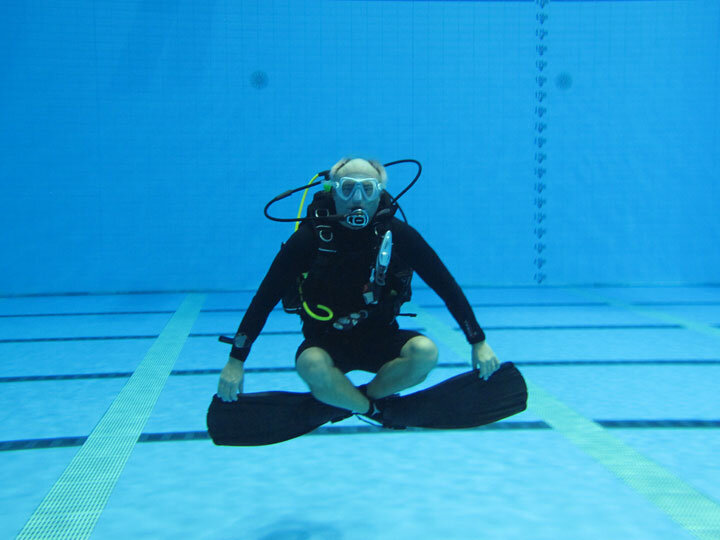
Achieving neutral buoyancy is the goal. It allows you to glide effortlessly, conserve energy, and avoid damaging fragile marine life by accidentally kicking it.
Gas Laws The air in your tank is a gas, and its behavior changes under pressure. The most critical rule to understand is Boyle's Law. It states that as pressure increases, the volume of a gas decreases proportionally.
Imagine taking a balloon down with you. As you descend, the increasing pressure will squeeze the balloon, making it smaller. The opposite happens as you ascend. The decreasing pressure allows the air to expand.
This has a huge implication for your lungs. It's the single most important rule in scuba: never hold your breath. If you hold your breath and ascend, the expanding air in your lungs could cause a serious, life-threatening injury. You must always breathe continuously to let the expanding air escape safely.
Time to see what you've learned.
Who are the co-inventors credited with creating the Aqua-Lung, the first self-contained underwater breathing apparatus (SCUBA)?
What is the primary reason that scuba certification is considered essential before diving?
Understanding these core principles is the first step toward safely exploring the incredible world that lies beneath the surface.