SCS Curve Number and Unit Hydrograph in SI Units
Hydrologic Fundamentals
The Water Cycle
Water is constantly on the move. It flows in rivers, sits in lakes, and fills vast oceans. It's also in the air we breathe and beneath our feet in the ground. This continuous journey of water on, above, and below the Earth's surface is called the hydrologic cycle, or water cycle.
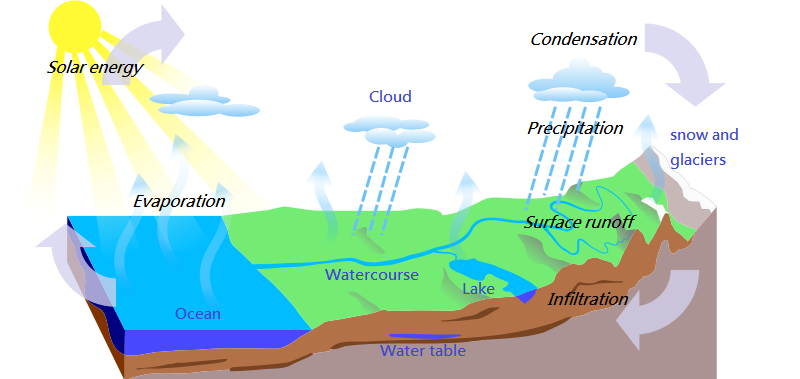
Think of it as a massive recycling program powered by the sun. The sun's energy drives the whole system, causing water to change form and location. This cycle has no starting or ending point, but it's made up of several key processes that all fit together. Let's break them down.
From the Sky to the Ground
Water vapor in the atmosphere cools and condenses to form clouds. When the water droplets or ice crystals in these clouds become too heavy, they fall to the Earth. This process is called precipitation.
Precipitation
noun
Any form of water—liquid or solid—that falls from the atmosphere and reaches the Earth's surface.
While we often think of precipitation as just rain, it also includes snow, sleet, and hail. The form it takes depends on the temperature of the atmosphere. This is the primary way water is delivered from the atmosphere to the Earth.
What Happens When Water Hits Land
Once precipitation reaches the ground, it faces two main paths. It can soak into the ground or it can flow over the surface.
Infiltration is the process of water seeping into the soil. The rate at which this happens depends on several factors, including the type of soil (sand absorbs water faster than clay), how much moisture is already in the soil, and the type of land cover. A dense forest floor, for example, will absorb much more water than a paved parking lot.
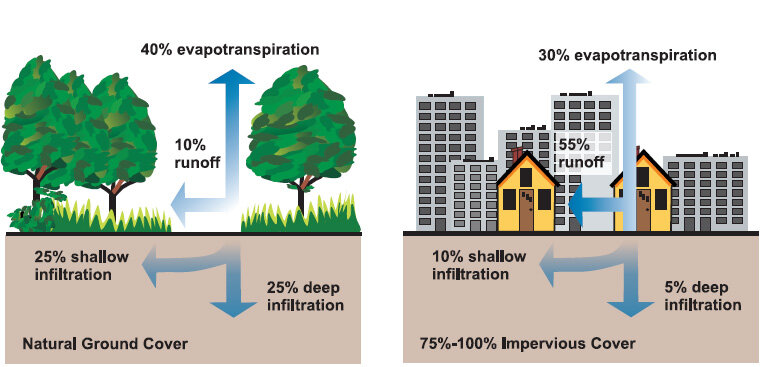
When rain falls faster than the ground can absorb it, or when the ground is already saturated, the excess water begins to flow over the land. This is called runoff. Runoff travels downhill, collecting in small channels, then streams, rivers, and eventually making its way back to larger bodies of water like lakes or the ocean.
Runoff is a key component of the water cycle because it's the main pathway by which water travels across the land to return to the oceans.
Water's Return Trip
So how does water get back into the atmosphere to start the cycle over again? Two major processes are responsible: evaporation and transpiration.
Evaporation is the process where liquid water turns into a gas, called water vapor. The sun's heat provides the energy for this to happen. Most evaporation occurs from the surface of oceans, lakes, and rivers, but it also happens from wet soil and other surfaces.
Plants also play a vital role. They pull water from the soil through their roots and release it as water vapor through tiny pores in their leaves. This process is called transpiration. It's essentially the plant-version of breathing out.
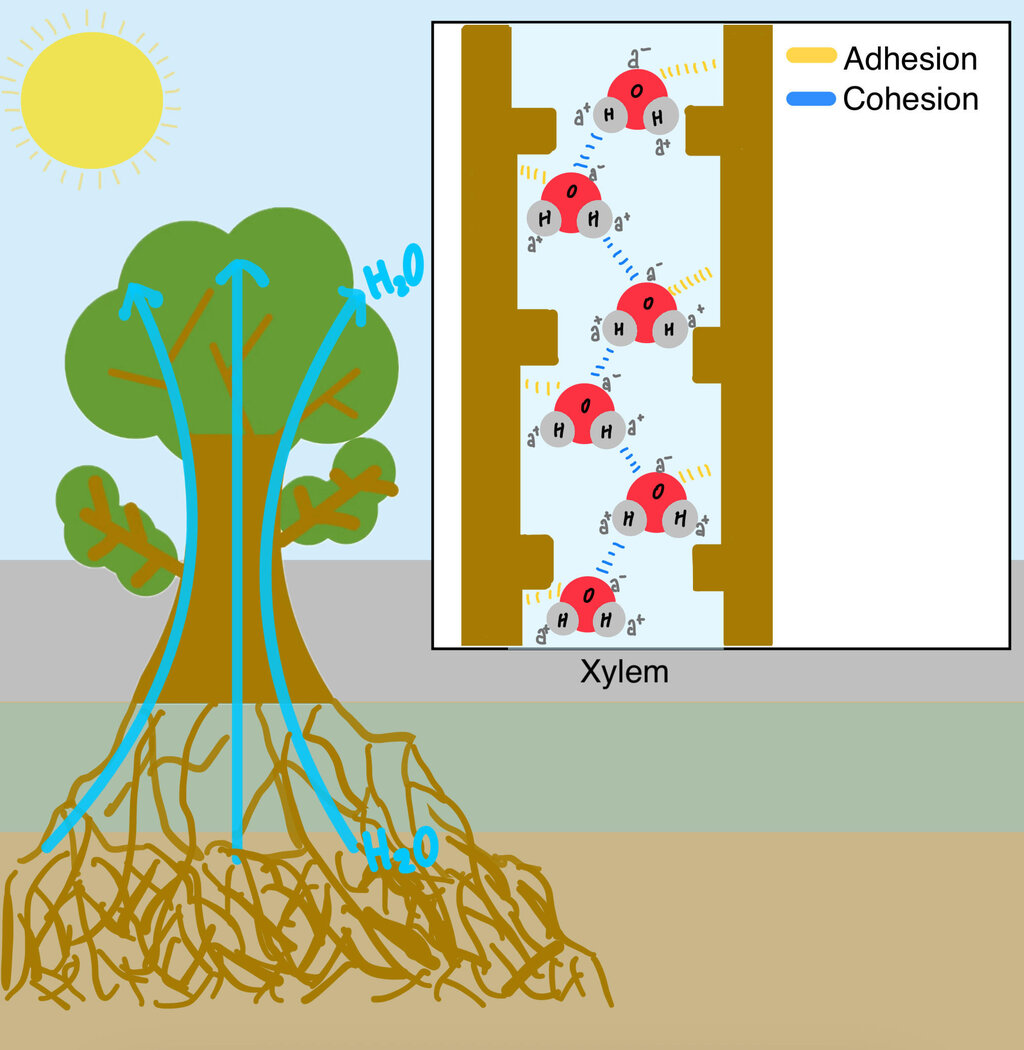
Together, evaporation and transpiration (often grouped together as evapotranspiration) send a huge amount of water vapor back into the atmosphere, where it can condense to form clouds and begin the cycle anew. Understanding these fundamental steps is the first step in analyzing how water moves through a landscape.
Ready to check your understanding? Take this short quiz.
What is the primary energy source that drives the water cycle?
Plants release water vapor into the atmosphere through their leaves. What is this process called?