Science of Hair Density and Growth Serums
Follicle Biology and Cycles
The Follicle's Rhythm
Hair doesn't grow continuously. Each of the roughly 100,000 follicles on your scalp operates on its own independent, repeating schedule. This ensures you don't shed all your hair at once. This process, known as the hair growth cycle, is a dynamic loop with three main phases.
The hair growth cycle is a continuous and dynamic process consisting of four main phases: anagen (growth), catagen (regression), telogen (rest), and exogen (shedding).
First is Anagen, the active growth phase. This is when the cells in the follicle are rapidly dividing to form a new hair shaft. Next comes Catagen, a brief transitional phase where growth stops and the follicle shrinks. Finally, the follicle enters Telogen, a resting period. The old hair remains in place until it is pushed out by a new Anagen hair beginning its cycle. The shedding of this old hair is sometimes called the Exogen phase.
The key to visible thickness isn't just growing new hair, but managing the timing of these cycles across the entire scalp. Density is a function of how many follicles are in the growth phase at the same time.
Anagen is Everything
The Anagen phase is where the magic happens. It can last anywhere from two to seven years, and its duration determines the maximum length of your hair. For those seeking more volume and density, the goal is twofold: extend the Anagen phase and shorten the Telogen phase.
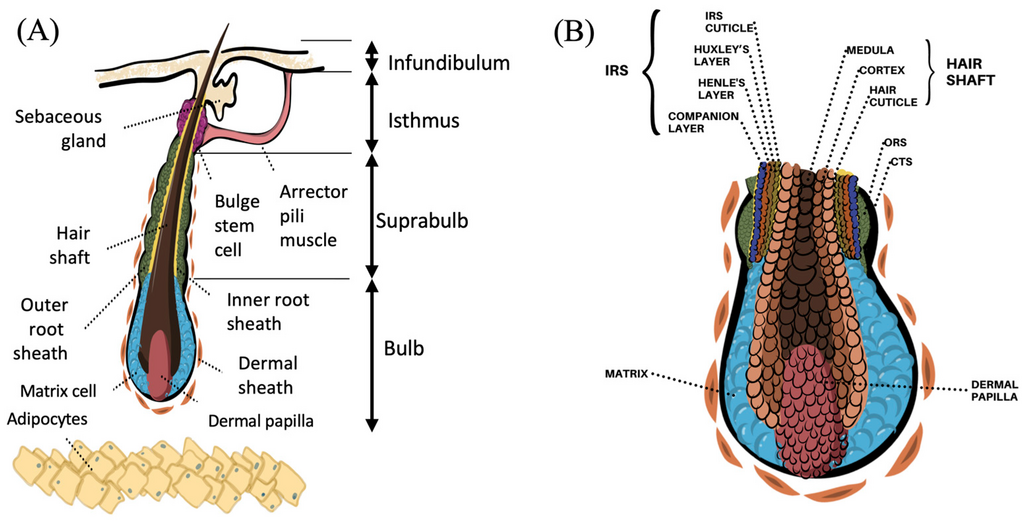
When more follicles remain in the Anagen phase simultaneously, the total number of active, growing hairs on your head increases. This creates a fuller, denser appearance. This process is orchestrated deep within the follicle, primarily by two key components: the dermal papilla and a cluster of stem cells located in an area called the bulge.
The dermal papilla acts as the follicle's command center, connecting it to the blood supply and delivering the nutrients needed for growth. It signals the stem cells in the bulge to divide and differentiate, forming the new hair. Growth-stimulating serums work by targeting this signaling pathway, providing the dermal papilla with the biochemical cues it needs to keep the Anagen phase going.
From Rest to Action
Just as important as prolonging the growth phase is waking up follicles that are "stuck" in the Telogen resting phase. It’s normal for 5-10% of your follicles to be in this state at any time. However, factors like stress, hormonal changes, or poor nutrition can push more follicles into this dormant state, leading to noticeable thinning.
Serums often contain ingredients that help kickstart the transition from Telogen back to Anagen. By stimulating the dermal papilla and providing a nutrient-rich environment, they encourage resting follicles to re-enter the growth cycle sooner than they would on their own.
Beyond the number of active hairs, the volume of each individual strand plays a major role in overall thickness. This is directly related to the size of the follicle itself. A large, robust follicle will produce a thick, strong hair. Over time, follicles can shrink in a process called , leading them to produce finer, weaker hairs. This is a hallmark of androgenetic alopecia (pattern baldness).
Effective serums often include components aimed at combating this miniaturization, helping to maintain or even increase the size of the hair follicle to ensure each strand contributes maximum volume.
Ultimately, achieving and maintaining hair density is a game of numbers. It’s about maximizing the count of follicles in the Anagen phase while ensuring each of those follicles is large and healthy enough to produce a thick hair shaft.
Ready to check your understanding?
Which phase of the hair growth cycle is the active growth period where cells are rapidly dividing to form a new hair shaft?
What is the primary goal for someone trying to increase their overall hair density?
Understanding the science behind the hair cycle provides the foundation for evaluating how different treatments and serums claim to work.