Science in Arts and Sports
Sound Waves
What is Sound?
Sound is a form of energy that travels as a wave. Think of a ripple in a pond. When you toss a stone in, the energy from the stone's impact creates waves that spread out. Sound works similarly, but instead of water, the waves are vibrations moving through a medium like air, water, or even a solid object.
This is a key characteristic of sound: it is a mechanical wave. This means it needs a substance, or medium, to travel through. The vibrations that make up a sound wave are passed from particle to particle within that medium. Without particles to vibrate, there's no sound. This is why there's no sound in the vacuum of space. Light, on the other hand, is an electromagnetic wave and can travel through a vacuum just fine.
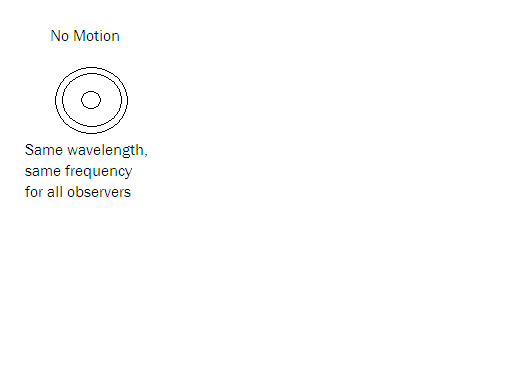
How Sound Travels
Sound waves are a specific type called longitudinal waves. In a longitudinal wave, the particles of the medium vibrate back and forth in the same direction that the wave is moving.
Imagine a Slinky. If you push one end, a pulse of compressed coils travels down its length. This is a great way to visualize a longitudinal wave.
As a sound wave moves through the air, it creates areas where the air particles are squeezed together and areas where they are spread apart. The squeezed-together parts are called compressions, and the spread-out parts are called rarefactions.
Describing a Wave
To talk about sound waves more precisely, we use a few key terms. The first is wavelength, which is the distance from one compression to the next compression (or one rarefaction to the next). It’s essentially the physical length of one complete wave cycle. We use the Greek letter lambda () to represent it.
The second is frequency. This measures how many complete wave cycles (one compression and one rarefaction) pass a certain point per second. Frequency is measured in Hertz (Hz). A sound with a frequency of 440 Hz means 440 wave cycles are passing by every second.
Wavelength and frequency are inversely related. When one is high, the other is low. A long wavelength means a low frequency, and a short wavelength means a high frequency.
These two properties are connected by the speed of the wave. The relationship can be expressed with a simple formula:
Or, using symbols:
Sound in Different Mediums
The speed of sound isn't constant. It changes depending on the medium it’s traveling through. Specifically, the speed of sound is affected by the density and stiffness of the medium. Stiffer materials with more tightly packed particles, like solids, transmit sound vibrations much more efficiently than less dense materials like gases.
This is why sound travels fastest through solids, slower through liquids, and slowest through gases.
| Medium | Speed of Sound (approx.) |
|---|---|
| Air (at 20°C) | 343 m/s |
| Water (fresh) | 1,480 m/s |
| Steel | 5,960 m/s |
Notice how much faster sound travels in water compared to air, and even faster in steel. This is because the particles in liquids and solids are much closer together, allowing them to pass the vibration along more quickly.
Temperature can also affect the speed of sound. In general, sound travels faster in a warmer medium because the particles have more energy and can vibrate more readily.
Now let's check your understanding of these core concepts.
Why is there no sound in the vacuum of space?
In a sound wave, the areas where particles of the medium are spread farthest apart are called __________.
Understanding these physical properties of sound waves is the first step toward exploring the more complex elements of music and sound.