Science Exam Mastery for 7th Class
Nutrition in Organisms
The Ultimate Energy Exchange
All life runs on energy. Organisms have developed two primary strategies to get it. Autotrophs, like plants, are self-feeders. They harness an external energy source, like sunlight, to build their own food from simple inorganic molecules. Heterotrophs, like us, must consume other organisms to get the complex organic molecules they need.
This isn't just about eating; it's about fundamental chemical energy conversion. Autotrophs convert light energy into chemical energy, and heterotrophs break down that chemical energy to fuel their own life processes.
Plants: The Original Solar Panels
Photosynthesis is the cornerstone of almost every ecosystem on Earth. It's the process plants use to convert light energy into chemical energy, stored in the bonds of a sugar molecule called glucose. This chemical reaction is remarkably efficient and elegant.
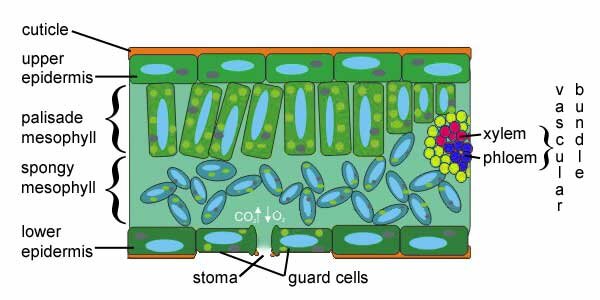
For this reaction to occur, a plant needs to take in carbon dioxide from the atmosphere. It does this through tiny, adjustable pores on the surface of its leaves called stomata. Each stoma is flanked by two guard cells that can swell or shrink to open or close the pore, regulating the flow of gases and preventing the plant from losing too much water.
Animals: The Chemical Disassembly Line
Heterotrophs get their energy by breaking down the complex molecules built by autotrophs. In humans, this process occurs along the alimentary canal, a long tube running from the mouth to the anus. It's essentially a sophisticated disassembly line, using chemical tools called enzymes to break down large food molecules into smaller units the body can absorb.
Enzymes are highly specific. An enzyme that breaks down starch cannot break down protein. This specificity is crucial for controlled digestion. Here are some of the key players in the human gut.
| Enzyme | Where It Works | Acts On | Product(s) |
|---|---|---|---|
| Salivary Amylase | Mouth | Starch | Simpler sugars (maltose) |
| Pepsin | Stomach | Proteins | Smaller polypeptides |
| Pancreatic Lipase | Small Intestine | Fats (Triglycerides) | Fatty acids & glycerol |
| Trypsin | Small Intestine | Proteins & polypeptides | Even smaller peptides |
Specialist Digestive Systems
Not all heterotrophs digest food the same way. Ruminants, like cows and sheep, have a much different challenge: breaking down tough plant cellulose. They manage this with a four-chambered stomach and a symbiotic relationship with billions of microbes. These microbes ferment the cellulose, breaking it down into fatty acids that the ruminant can absorb and use for energy. This multi-step process allows them to extract nutrients from material that is indigestible to humans.
The first stomach chamber, the rumen, acts as a large fermentation vat where microbes do the initial work of breaking down cellulose before the food is regurgitated, chewed again as 'cud', and re-swallowed for further digestion.
At the other end of the complexity scale, single-celled organisms like the have the simplest digestive process. It engulfs food particles by extending its cytoplasm to form pseudopods, creating a food vacuole. Enzymes are secreted into this vacuole, which acts as a temporary stomach. Digested nutrients are absorbed into the cytoplasm, and the vacuole moves to the cell surface to expel the waste in a process called egestion.
Ready to test your knowledge on how different organisms get and process their energy? Let's see what you've learned.
An organism that must consume other organisms to obtain energy is known as a(n)...
What is the primary function of the stomata on a plant's leaves?
Whether it's a plant harnessing the sun, a cow digesting grass, or an amoeba engulfing a food particle, the goal is the same: to acquire and convert energy to sustain life.