Science and the Transformation of European Culture
Empiricism and Authority
A New Kind of Truth
For centuries, European thought was dominated by scholasticism, a system that sought to reconcile Christian theology with the philosophy of ancient thinkers, primarily Aristotle. If you wanted to understand why a rock falls, you'd consult Aristotle. He argued that the rock's nature, its purpose or telos, was to be at the center of the universe. So, it fell not because of a force, but to fulfill its intrinsic purpose. This was a world of 'whys'.
The Scientific Revolution introduced a profound shift. It wasn't just about discovering new facts; it was about discovering a new way to establish what a fact is. This fundamental change in how knowledge is created and validated is called an epistemological break. Thinkers began to ask 'how' things happen, not just 'why'. They were less interested in a rock's purpose and more interested in the mechanical rules governing its motion.
This shift moved the source of truth from ancient texts and divine revelation to observable, measurable reality.
Two Paths to Knowledge
Two major figures championed new methods for arriving at truth: Francis Bacon and René Descartes. They offered different, yet complementary, approaches to escaping the confines of old authority.
Bacon championed inductive reasoning. He argued that knowledge should be built from the ground up. You start with specific, careful observations of the world, conduct experiments, and only then do you try to form broader generalizations. If you observe thousands of swans and all of them are white, you might induce the general principle that all swans are white. It's a process of moving from the particular to the general, based on empirical evidence.
Descartes, on the other hand, advocated for deductive reasoning. He began with doubt, stripping away everything he couldn't be certain of. He arrived at a single, unshakable truth: "I think, therefore I am." From this foundational axiom, he believed one could logically deduce other truths about the world, much like a mathematician derives complex theorems from simple postulates. Deduction moves from the general principle to the specific instance. If you accept the general premise that all humans are mortal, and that Socrates is a human, you can deduce the specific conclusion that Socrates is mortal.
Induction builds theories from evidence; deduction tests theories with logic. Modern science uses a powerful combination of both.
The Clockwork Universe
This new focus on 'how' led to the mechanization of the worldview. The universe was no longer seen as a living organism filled with purposes and desires, but as an intricate and impersonal machine. Like a vast clock, it operated according to fixed, mathematical laws set in motion by a divine clockmaker. The job of the natural philosopher, the precursor to the modern scientist, was to figure out the gears and levers of this grand machine.
This created a new gold standard for truth: experimental reproducibility. A claim was no longer considered true because a respected authority said so. It was true if anyone, anywhere, could follow a prescribed method and replicate the results. This was a radical idea. It democratized knowledge, taking it out of the exclusive hands of the Church and academia and placing it into the hands of anyone capable of conducting an experiment. This principle directly challenged the authority of institutions whose power was based on tradition and dogma, creating a crisis that would reshape politics and religion across Europe.
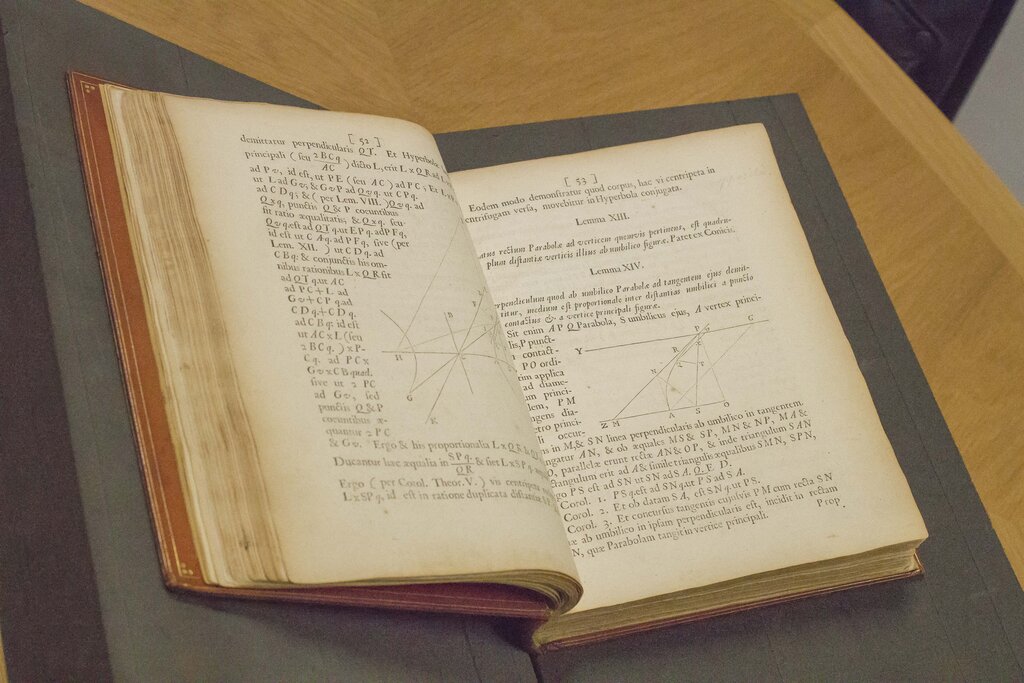
Now, let's test your understanding of these foundational shifts in thought.
According to the scholastic view that dominated pre-Scientific Revolution Europe, why does a rock fall to the ground?
A scientist believes the general principle that all metals conduct electricity. She then predicts that a specific piece of copper, being a metal, will conduct electricity. This method of reasoning from a general principle to a specific instance is known as:
The move from scholasticism to empiricism was more than a change in scientific facts. It was a revolution in the very definition of truth, setting the stage for the modern world by establishing observation and reason as the primary tools for understanding reality.