Science and Technology in the 21st Century
Introduction to Science and Technology
Science, Technology, and Us
Science is our organised attempt to understand the world. It’s a process of asking questions, observing, experimenting, and building models to explain how things work. It's driven by curiosity and a desire for knowledge.
Science
noun
The systematic study of the structure and behaviour of the physical and natural world through observation, experimentation, and the testing of theories against the evidence obtained.
Technology, on the other hand, is about application. It's the use of scientific knowledge to create tools, techniques, and systems that solve problems or make tasks easier. If science is the book of recipes, technology is the meal you cook from it.
Technology
noun
The application of scientific knowledge for practical purposes, especially in industry. This includes machinery, equipment, and methods of organisation developed from such knowledge.
A Journey Through Time
Humans have always been technologists. Our earliest ancestors created stone tools and learned to control fire. These innovations weren't born from formal scientific theories, but from trial, error, and observation. The wheel, appearing around 3500 BC, revolutionised transport and pottery-making, demonstrating a deep intuitive grasp of physical principles.
The formal practice of science emerged much later. The Scientific Revolution, from the 16th to 18th centuries, introduced a systematic way of testing ideas. Figures like Nicolaus Copernicus, who proposed the sun-centred model of the solar system, and Isaac Newton, who formulated the laws of motion and gravity, laid the groundwork for modern science. They showed that the universe could be understood through reason and evidence.
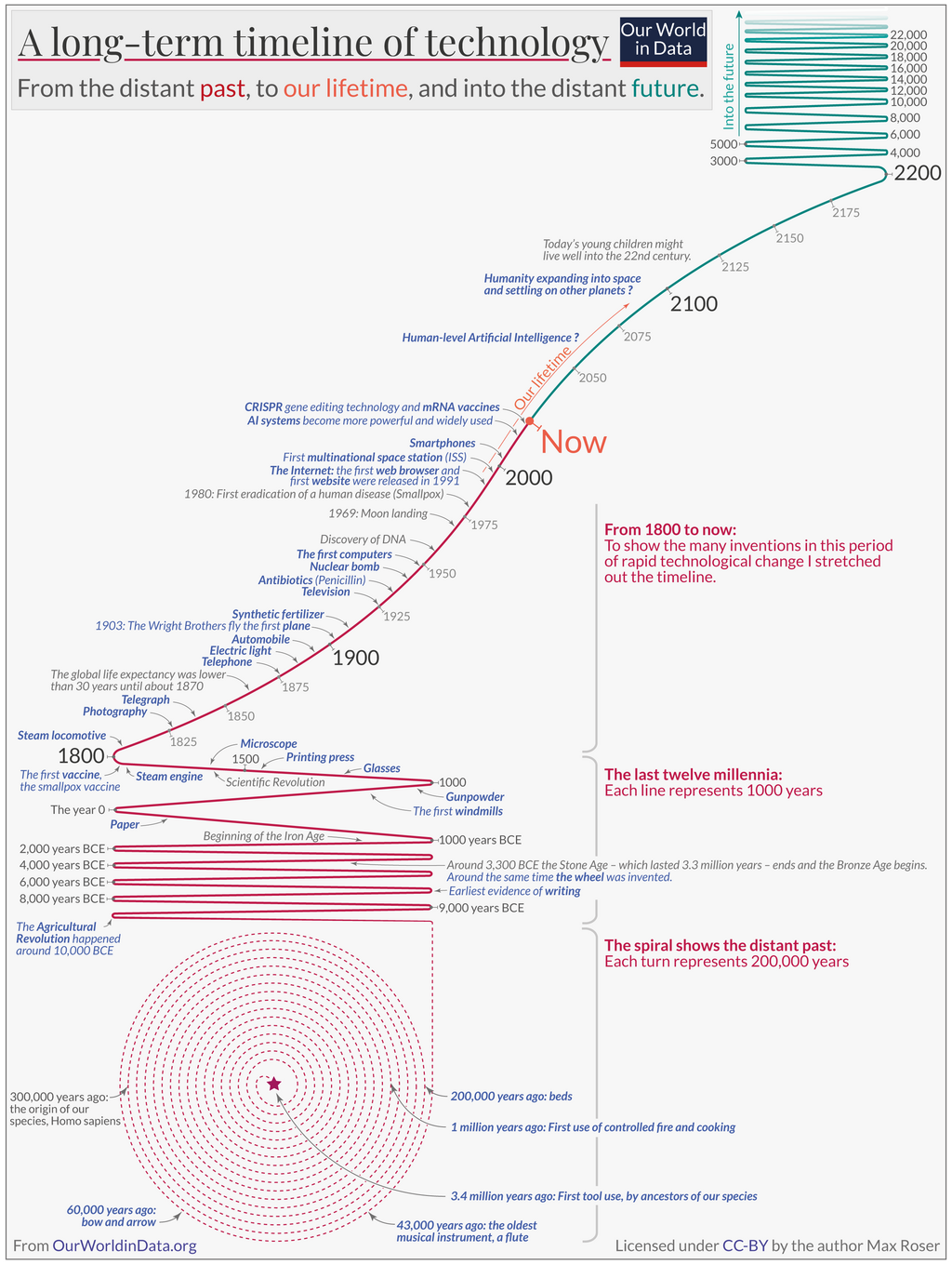
This new scientific understanding fuelled the Industrial Revolution in the 18th and 19th centuries. James Watt's improvements to the steam engine, for example, were based on an understanding of thermodynamics. This period saw an explosion of new machines and factories that reshaped society.
A Two-Way Street
Science and technology are locked in a productive cycle. Scientific discoveries provide the raw material for new technologies. The discovery of electromagnetism in the 19th century wasn't immediately useful, but it eventually led to the invention of the electric motor, generator, and telegraph.
At the same time, new technologies provide the tools for new scientific discoveries. The invention of the telescope allowed astronomers like Galileo Galilei to see the moons of Jupiter, providing crucial evidence for the sun-centred model of the solar system. The microscope opened up the previously invisible world of cells and microorganisms, revolutionising biology.
Science drives technology by providing new knowledge. Technology drives science by providing new tools.
This feedback loop accelerates progress in both fields. Better computers (technology) allow scientists to model complex systems, from weather patterns to protein folding, leading to new insights (science). Those insights, in turn, can lead to even more powerful computers.
What is the primary goal of science, as described in the text?
The development of the telescope, which allowed Galileo to see the moons of Jupiter, is a classic example of: