Schwitzgebel's Splintered Skepticism
Splintered Belief
The Fragmentation of Belief
Do you believe that all people are created equal? Most of us would say yes without hesitation. It's a clear, conscious endorsement of a value. Yet, studies on implicit bias consistently show that our automatic reactions and snap judgments often betray this stated belief. We might unconsciously favor one group over another in hiring decisions or feel a flash of unfounded suspicion toward someone from a different background. This is not hypocrisy in the simple sense of lying. It's something far more complex.
This is the territory of 'splintered belief,' a concept from philosopher Eric Schwitzgebel that challenges our tidy, binary understanding of belief. We tend to think we either believe something or we don't. But Schwitzgebel argues that our minds are not so neat. Instead, we exist in messy, 'in-between' states of believing. Our actions, our gut feelings, and our spoken words are often out of sync, pointing to a self that is fragmented rather than whole.
Actions vs. Assent
The traditional view of belief, often called intellectualism, holds that believing a proposition—like 'chocolate is delicious'—is a matter of mentally endorsing it. If you assent to the idea in your mind, you believe it. Simple.
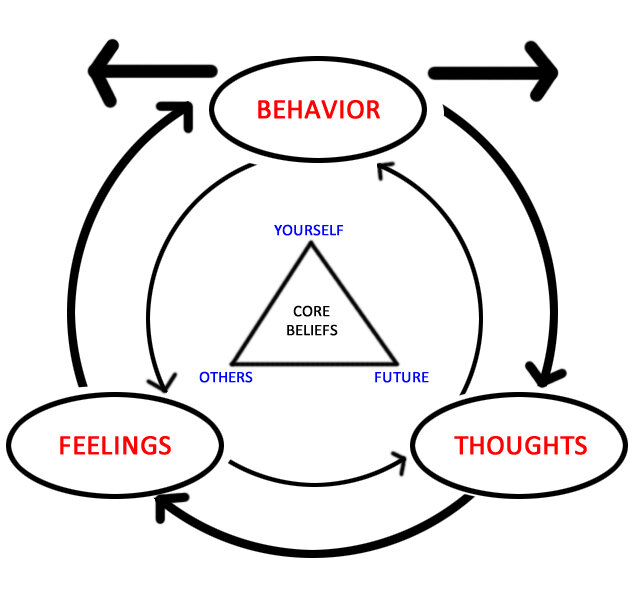
A different view, called dispositionalism, argues that belief isn't about what you say or think you believe. It's about your dispositional profile: your patterns of action, reaction, emotion, and thought. To believe 'chocolate is delicious' is to be disposed to eat it, to feel happy when you see it, and to recommend it to friends. Your belief is what your behavior reveals over time.
Schwitzgebel favors a 'liberal dispositionalist' view. He acknowledges that intellectual assent matters, but it's just one part of a much larger picture. When your dispositions are splintered—when you say one thing but your automatic reactions suggest another—you are in a state of 'in-between believing.' You don't quite believe that all races are equal, but you don't quite not believe it either. Your cognitive and behavioral state is a contradictory mess.
The Unreliable Inner Map
We often think of our beliefs as a kind of mental map that guides us through the world. An intellectualist might say we consult this map to decide what to do. But Schwitzgebel argues this metaphor is misleading. If we had a clear map, our behavior would be more consistent. The reality of splintered belief suggests our 'maps' are often contradictory, smudged, and have entire sections missing.
Consider Juliet, who says she values her physical health above all. This is her stated belief. However, her dispositional profile tells a different story. She smokes, rarely exercises, and eats poorly. She feels a pang of guilt when she sees a gym (an emotional reaction), but she also feels a strong craving for a cigarette (a conflicting emotional and physiological reaction). Her actions, thoughts, and feelings are not aligned.
Is it fair to say Juliet truly believes she values her health? According to the liberal dispositionalist view, she is in an in-between state. Part of her cognitive and behavioral system is organized around the idea of valuing health, but other significant parts are not. There is no single, unified 'belief' to be found, only a fractured pattern of dispositions.
Self-knowledge isn't a clear window into a unified mind. It's more like piecing together a mosaic from scattered, often conflicting, fragments of behavior and thought.
This framework reveals why changing beliefs is so difficult. It's not just a matter of accepting a new fact. It requires rewiring a complex web of habits, emotional responses, and automatic judgments. Understanding belief as a splintered, dispositional pattern helps us see ourselves and others more accurately. We are not simple, logical beings whose actions always follow from our stated convictions. We are complicated, contradictory creatures, often navigating the world with a fragmented sense of self.
According to philosopher Eric Schwitzgebel, what does the concept of 'splintered belief' describe?
How does the 'dispositionalist' view of belief primarily define what it means to believe something?